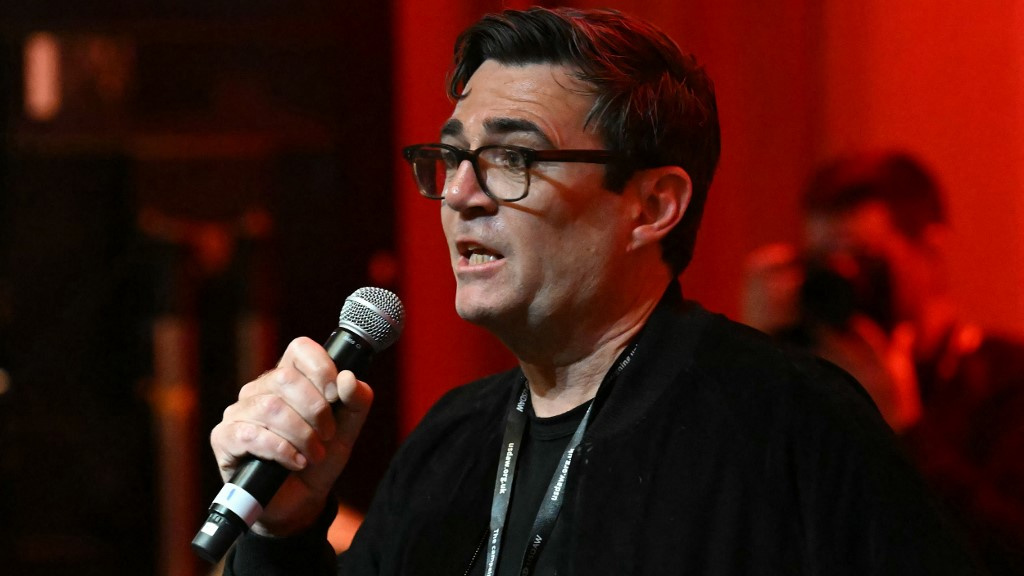
Just two years after securing a landslide general election victory, UK Prime Minister Keir Starmer finds himself trapped in an existential battle for his political future, triggered by catastrophic, unexpected losses for the Labour Party in last week’s local elections. This challenge to his leadership has been months in the making: earlier this year, Starmer already nearly fell from power following the Peter Mandelson scandal, when damning connections between the now-former US ambassador, a close Starmer ally, and convicted sex offender and financier Jeffrey Epstein came to light. Back then, internal Labour sources confirm, party figures opted to hold off on a leadership challenge solely to avoid upheaval ahead of the local elections, allowing Starmer to cling to his position. Today, that reprieve is over, and Starmer is surrounded by potential successors ready to step in if he steps down or is forced out. Whitehall insiders name four leading contenders for the top job: Health Secretary Wes Streeting, former deputy prime minister Angela Rayner, Energy Secretary Ed Miliband, and Greater Manchester Mayor Andy Burnham. What is most notable about this unfolding leadership crisis is its likely ripple effect on British foreign policy, particularly regarding Israel — a topic that has dominated UK political discourse for more than two years amid Israel’s military campaign in Gaza and the recent economic shocks stemming from the US-Israeli war on Iran. Leading pollster Sir John Curtis has confirmed that the Green Party, the most prominent UK political voice opposing British support for Israel, inflicted far more damage on Labour’s local election vote share than right-wing challenger Reform UK. With left-wing and progressive voters abandoning Labour in droves over its Israel policy, any new leader will be forced to shift course to win back disaffected voters and undercut the Green Party’s growing momentum. That shift would almost certainly mean a far firmer stance against documented Israeli war crimes, analysts say. Of the four main contenders, Andy Burnham has staked out the most distinct position on Israel, diverging sharply from Starmer’s pro-Israeli stance over the last two years. A popular soft-left figure within Labour, Burnham’s history on the issue is layered: he voted for the 2003 UK invasion of Iraq under Tony Blair, joined the pro-Israel lobby group Labour Friends of Israel in 2015, and during that year’s Labour leadership campaign described the Boycott, Divestment and Sanctions (BDS) movement as “spiteful”, called Israel a “democracy with a long history of protecting minorities”, and argued the Balfour Declaration should be celebrated in UK schools as an example of British values. But even in his early career, Burnham positioned himself as a critic of hardline Israeli government policy. A little-documented 2012 trip to the occupied West Bank with the pro-Palestine group Labour Friends of Palestine foreshadowed his later shift. After Benjamin Netanyahu’s 2015 re-election, he called the result “depressing” on social media, noting Netanyahu had run on a pledge to expand illegal settlements and arguing the Palestinian people would need increased international support. That same year, he told the Palestine Solidarity Campaign he backed full recognition of Palestinian statehood as a right, not a gift, called for an end to Israeli occupation and illegal settlement expansion, and condemned Hamas rocket and terror attacks. In the wake of the 7 October 2023 Hamas attack on Israel and Israel’s subsequent siege and bombardment of Gaza, Burnham openly broke with Starmer’s approach. While the then-opposition Labour Party aligned with the Conservative government to give Israel unqualified support — with Starmer infamously backing Israel’s “right” to cut off all power and water to Gaza’s 2 million Palestinian civilians — Burnham released a statement just two days later that drew a clear line between himself and his leader. He condemned Hamas’ attacks but only backed Israel’s right to self-defense “in line with international law”, explicitly ruling out carte blanche for Israel and calling for urgent humanitarian access to Gaza. As the Palestinian death toll climbed into the thousands, Burnham went even further, joining London Mayor Sadiq Khan and Scottish Labour leader Anas Sarwar in breaking ranks to call for an immediate bilateral ceasefire, at a time when Starmer was still pressuring rebel MPs to fall in line. In a column explaining his decision, he warned Starmer against labeling dissenting MPs as disloyal, argued Israel’s response to 7 October had to be targeted to avoid being seen as disproportionate and indiscriminate, and publicly recanted his 2003 vote for the Iraq War, acknowledging the US-led invasion had caused massive harm to innocent civilians and fueled terrorist recruitment rather than rooting out extremism. This positioning paid off electorally in 2024: while Labour lost a third of its vote share in UK areas with majority Muslim populations, Burnham comfortably retained his Greater Manchester mayoral post, just as Khan held London despite both having large Muslim constituencies. Over the following two years, Burnham continued to push the Starmer government for bolder action on Palestine, joining a group of senior Labour figures in June 2025 to urge immediate recognition of Palestinian statehood, noting the UK’s historic role in carving up the Middle East via the Sykes-Picot agreement created a moral obligation to endorse Palestinian self-determination. The Starmer government ultimately granted recognition that September. Burnham also remains a prominent supporter of the Council for the Advancement of Arab-British Understanding, which organizes parliamentary trips to the occupied Palestinian territories. His stance puts him sharply at odds with the other three leading contenders, all of whom have largely stuck to Labour’s official pro-Israel line on Gaza. While Ed Miliband, a figure seen as more left-leaning on foreign policy, privately opposed British participation in the recent US-Israeli war on Iran before it launched, he has not broken with the party’s public stance. For his part, Wes Streeting — who narrowly held his seat in 2024 against a challenge from British Palestinian independent candidate Leanne Mohamad — privately acknowledged earlier this year that Israel was “committing war crimes before our eyes” and accused Israel of “rogue state behavior” in leaked text messages with disgraced former ambassador Mandelson, but he has yet to repeat these claims publicly or push for concrete action such as sanctions. Even under Starmer, UK-Israel diplomatic relations have been strained, with London imposing a partial arms embargo on Israel, but the British government has continued deep military and political collaboration with Israel throughout its campaign in Gaza. If Starmer departs, analysts agree that any replacement will face overwhelming electoral pressure to ramp up criticism of Israel, and the UK government could finally move forward with sanctions on goods produced in illegal Israeli settlements in the occupied West Bank. Burnham’s path to the premiership does face significant barriers: as a sitting mayor, he would first need to secure a parliamentary seat to be eligible for the Labour leadership. Even so, he remains the candidate most likely to pull Labour back to its traditional center-left roots if he clears those hurdles. Regardless of which candidate ultimately prevails, all contenders will be forced to take a public stance on Starmer’s handling of the Gaza conflict, and a fundamental shift in British foreign policy is all but guaranteed in the coming months.
How Andy Burnham stood up to Starmer over Israel and could now reshape UK foreign policy