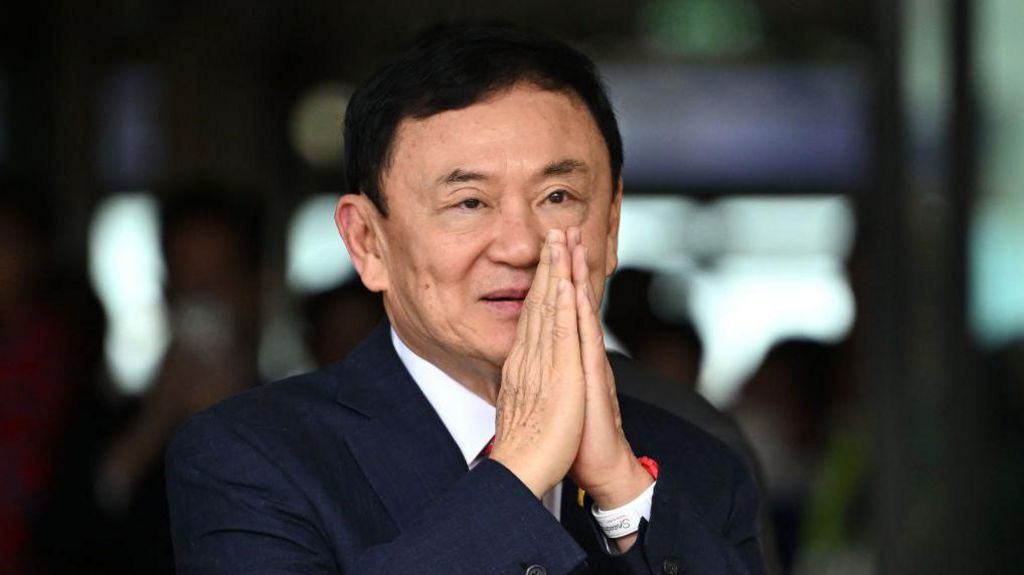
At 76 years old, after two decades of self-imposed exile and eight months behind bars, former Thai prime minister Thaksin Shinawatra has walked out of a Bangkok prison, tagged with an electronic ankle monitoring bracelet to serve the remainder of his one-year sentence for corruption and abuse of power convictions tied to his 2001-2006 tenure in office. His release dominated national headlines this week, and despite repeated assurances from Thaksin’s long-dominant Pheu Thai Party that the former leader will step away from frontline politics, widespread media and public speculation continues to swirl over what influence he may still wield over Thailand’s fractious political sphere.
Thaksin’s outsized impact on Thai politics over the past quarter-century is impossible to overstate. A charismatic, self-made billionaire who won a landslide election in 2001, he rapidly reshaped the country’s policy landscape, building a deeply loyal base of working-class and rural supporters while drawing fierce opposition from Thailand’s established conservative and royalist institutions. Even after a 2006 military coup ousted him from power, political parties aligned with Thaksin continued to win every subsequent national election – a streak that triggered repeated interventions from the courts, mass violent street protests, and a second military coup in 2014.
For years after 2014, Thaksin operated his political movement from exile abroad, until a high-profile 2023 “grand bargain” with his long-time conservative opponents allowed him to return to Thailand to resume informal leadership of his party after it returned to government. Despite public claims that he intended to retire to spend time with family, political observers have long noted Thaksin has repeatedly shown an unwillingness to cede control of the movement he built.
This release, however, comes at a moment of profound change for Thai politics that could mark the definitive end of Thaksin’s decades-long dominance. Just months after his 2023 homecoming, Thailand’s Supreme Court ruled that Thaksin’s six-month stay in a police hospital shortly after his return was a deliberate ploy to avoid serving his prison sentence, and ordered him jailed last September. The ruling came only two weeks after Thailand’s Constitutional Court dismissed Thaksin’s daughter Paetongtarn Shinawatra from the prime ministership, over a leaked private phone call with Cambodian Prime Minister Hun Sen regarding bilateral border dispute negotiations.
During Thaksin’s time in prison, Pheu Thai suffered its worst ever electoral performance in the country’s February general election. The party fell to third place, outperformed by both the reformist People’s Party and the conservative Bhumjaithai Party, which capitalized on a surge in nationalist sentiment following a border conflict with Cambodia. Reduced to a junior coalition partner in the new administration, Pheu Thai now holds far less political sway than it did for most of the past two decades.
Political analyst Ken Lohatepanont notes that Thaksin is re-entering public life in a Thailand unrecognizable from the political order he once dominated. “Thaksin emerges from prison to a new political environment,” he explained. “Pheu Thai has been sidelined as just a mid-sized party. You can never count Thaksin out, but the challenge that he and his Party face is of a different magnitude to those he has faced in the past. Pheu Thai will have to decide whether a public comeback for Thaksin will boost the party, or whether the party might be better served by placing the spotlight on their newer generation leaders.”
Debate remains ongoing over why the 2023 grand bargain between Thaksin and Thailand’s royalist conservative establishment collapsed so rapidly. Some observers question whether conservative factions always intended to use judicial rulings to dismantle the Pheu Thai government, pointing to the earlier court dismissal of Pheu Thai’s first prime ministerial pick on a minor technicality. Others argue that the collapse was triggered by Thaksin’s own refusal to stay on the political sidelines, and his insistence on advancing his own policy and business agenda that clashed with conservative interests.
Regardless of the cause, decades of conflict have left irreconcilable mistrust between Thaksin and Thailand’s conservative power brokers. Even if Thaksin still seeks a return to prominent public office, institutional barriers will almost certainly block any such path. For 25 years, Thai politics was defined by the battle over Thaksin’s legacy and influence. Political analysts broadly agree that the Thaksin era is now all but certainly over.