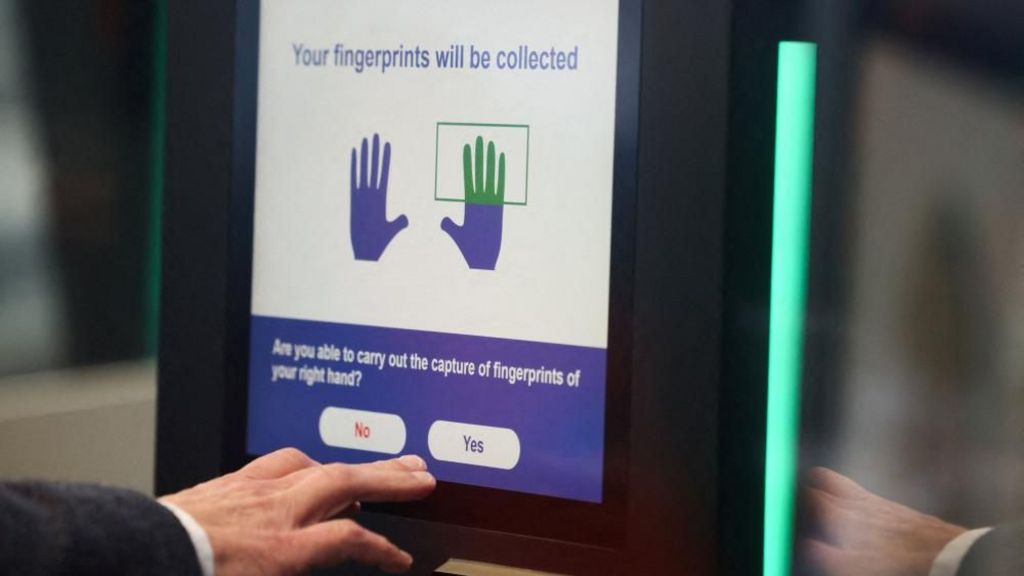
As the peak summer travel season approaches, Greece’s tourism minister has moved to reassure British visitors that they will face no extended border waits even during the busiest travel periods, easing widespread concerns over disruptions tied to the European Union’s new entry-exit border system.
In an interview with the BBC, Olga Kefalogianni emphasized that the Greek government is committed to preventing unnecessary bureaucratic hurdles from ruining travelers’ entry or exit experiences. She explicitly confirmed that British tourists will not be subject to mandatory biometric screenings at any point throughout the 2025 summer travel season, and that the nation is working to cut all border processing times to under two minutes per passenger.
The EU rolled out its much-debated new digital Entry-Exit System (EES) across member states back in April, a regulation that requires short-term travelers from non-EU and non-European Economic Area nations to submit biometric data including fingerprints and facial scans on their first entry to the Schengen Area, with repeat verification at every subsequent border crossing. While the system has functioned smoothly in some regions, it has sparked major disruptions elsewhere: multiple airports in Italy saw massive queues stretching up to three hours last month, leading more than 100 EasyJet passengers bound for Manchester from Milan Linate Airport to miss their flights, with additional Ryanair passengers from Milan Bergamo also facing missed trips due to backlogs. The airline called the extended wait times “unacceptable.”
Though Greece officially announced it had launched full operations of the EES successfully, the country already paused biometric checks for British travelers in early April after crippling queues formed at Corfu Airport. While unconfirmed reports had circulated that Italy and Portugal would follow Greece’s lead in waiving checks for UK nationals, the European Commission confirmed last week that both countries have no plans to issue such exemptions.
Kefalogianni has pushed back against claims that Greece is violating EU regulations, noting that current rules allow temporary suspensions of EES biometric checks during periods of extreme airport congestion, even as blanket exemptions for specific nationalities are prohibited. “What we’re doing is not actually an exemption,” she explained. “It’s just that we have made sure that we facilitate the procedure in a way that means visitors are not burdened.” Despite this, the EU stated last week that it is in contact with Greek authorities to clarify the country’s policy and remind officials of existing regulatory requirements.
Beyond border processing concerns, Kefalogianni acknowledged that swirling rumors of regional jet fuel shortages, which have been linked to potential price hikes and flight cancellations, have made some potential tourists more hesitant to book trips to the country. The ongoing conflict between the United States, Israel and Iran that erupted more than two months ago has drastically reduced jet fuel shipments from the Gulf region, a key import source for most European nations, creating widespread supply uncertainty across the continent.
“I think that this is a trend that you would see everywhere,” she said. “People are being much more reluctant. But at the same time, they realise that Greece is always a country which has upgraded its tourism offering and that it provides a very good balance when it comes to price and the offering.” She added that Greece is already welcoming strong visitor numbers early in the season, and expects even more travelers as the summer progresses.
Last week, the UK government also moved to reassure British travelers, advising that there is no need to cancel or amend planned travel to Greece or other European destinations amid the jet fuel concerns. Officials noted that the UK currently faces no domestic jet fuel shortages, and contingency plans have been put in place to address any potential supply disruptions in the coming months.