A large-scale, coordinated repatriation operation got underway Sunday to evacuate passengers and crew from the Dutch-flagged cruise ship MV Hondius, which has been tied to a deadly hantavirus outbreak that has triggered international health concerns. The vessel docked at the Port of Granadilla on the Spanish island of Tenerife, Canary Islands, after weeks of transiting the Atlantic Ocean amid the public health emergency.
Three passengers on board have already died from complications of the virus: a Dutch couple and a German national. Multiple other people have also fallen ill with the rare pathogen, which most commonly spreads through rodent populations, but the strain identified on the ship — the Andes virus — is the only variant capable of human-to-human transmission, a detail that amplified global alarm. With no licensed vaccines or specific targeted treatments currently available for hantavirus, and the outbreak originating after the ship departed Ushuaia, Argentina — a country where the virus is endemic — in early April, health agencies have been working around the clock to contain the spread.
Spanish Health Minister Monica Garcia confirmed that all remaining passengers and crew, numbering close to 150, will be evacuated via chartered repatriation flights by the end of Monday. The final flight is scheduled to carry the last group of evacuees to Australia, after which the empty vessel will set sail for the Netherlands.
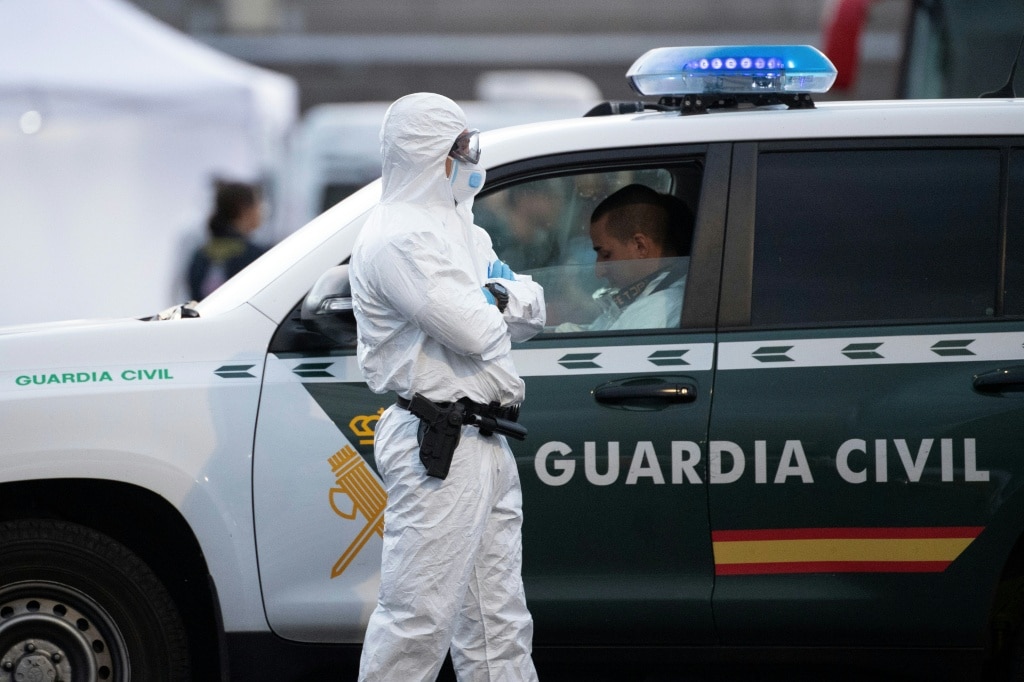
On-site reporting from Agence France-Presse shows that evacuees, clad in full blue medical protective suits, boarded smaller transfer boats from the anchored cruise ship to reach the Tenerife quay, before being transported via sealed buses to Tenerife South Airport for their outbound flights. Regional authorities originally resisted allowing the vessel to dock, only granting permission for it to anchor offshore initially, and strict protocols have been put in place to eliminate any contact between evacuees and the local Tenerife population. White medical screening tents have been erected along the port, and sections of the small industrial port have been cordoned off by police officers, many of whom are also wearing personal protective equipment.
Garcia confirmed that all passengers are currently asymptomatic and passed a final comprehensive medical screening before disembarkation was cleared. The evacuation follows a pre-planned order: the 14 Spanish nationals on board were the first to leave, followed by a charter flight for Dutch citizens that will also carry passengers from Germany, Belgium, Greece and additional crew members. Separate chartered flights for passengers from Canada, Turkey, France, the United Kingdom, Ireland and the United States were scheduled to depart throughout Sunday.
World Health Organization Director-General Tedros Adhanom Ghebreyesus is on site in Tenerife alongside Spanish health officials to oversee the high-stakes containment and evacuation operation. Regional officials have imposed a hard deadline of Monday for the operation to wrap up, as forecasted adverse weather conditions will force the vessel to leave the anchorage area after that point.
Earlier last week, the WHO confirmed that six of the eight previously suspected hantavirus cases on board have tested positive, and there are no remaining suspected cases among people still on the vessel. The MV Hondius arrived off Tenerife’s coast early Sunday after departing Cape Verde, where three infected passengers were already evacuated to Europe for medical treatment earlier this week. The ship had embarked on its Atlantic crossing from Ushuaia on April 1, and WHO investigators believe the initial infection occurred before the cruise officially began, with secondary spread occurring between people on board the cramped vessel. That conclusion has been disputed by Argentine provincial health official Juan Petrina, who argues that based on the virus’s multi-week incubation period and other epidemiological factors, there is an “almost zero chance” that the initial index case — a Dutch passenger linked to the outbreak — contracted the virus in Ushuaia.
Despite the international concern, global and Spanish health officials have repeatedly stressed that the overall risk to global public health remains low, pushing back against comparisons that draw parallels between this outbreak and the global Covid-19 pandemic. Health authorities across multiple countries are currently monitoring any passengers who disembarked the MV Hondius at previous stops, as well as all close contacts of those confirmed cases to prevent any secondary spread off the vessel.