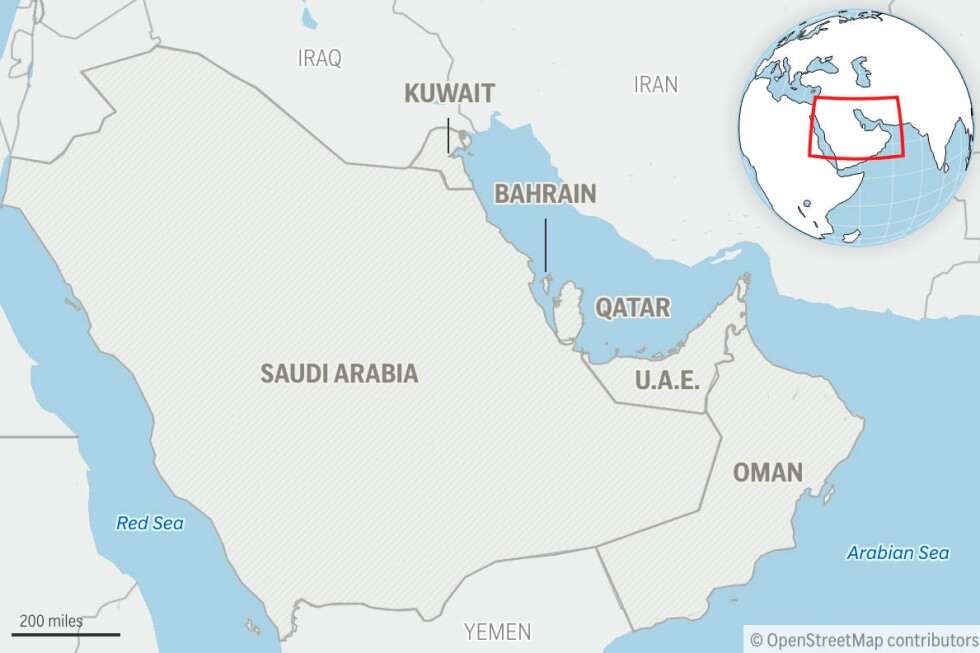
DUBAI, United Arab Emirates – A new flare-up of maritime violence has hit the Persian Gulf, with British military officials confirming that a commercial bulk carrier suffered a projectile strike and subsequent fire off Qatar’s northeastern coast on Sunday. The United Kingdom Maritime Trade Operations Centre (UKMTO), the body that monitors security for international shipping in the region, confirmed the incident took place roughly 23 nautical miles, or 43 kilometers, northeast of Doha, Qatar’s capital. Following the impact, a small blaze broke out aboard the vessel, but crews were able to quickly contain and extinguish the fire, with no injuries or fatalities reported among the ship’s crew as of Sunday’s update.
This attack marks the latest in a string of maritime assaults that have rocked the already unstable Persian Gulf region, coming into effect after a fragile temporary ceasefire between the United States and Iran failed to resolve long-simmering hostilities. Just over 48 hours before the Qatar coast incident, the U.S. military launched strikes against two Iranian-owned oil tankers, with U.S. officials claiming the vessels were attempting to violate a Washington-imposed naval blockade on Iranian commercial ports.
In response to that U.S. action, Iran’s Revolutionary Guard Navy issued a sharp warning, stating that any future attack on Iranian oil tankers or other commercial vessels operating under Iranian jurisdiction will be met with an overwhelming, heavy retaliatory strike targeting U.S. military bases in the Middle East and enemy commercial and military ships operating in the region.
Tensions have remained elevated in the region since the United States and Israel launched a joint military campaign against Iran on February 28. In the wake of that campaign, Iran has severely restricted traffic through the Strait of Hormuz, the critical strategic waterway that carries roughly a fifth of the world’s daily global oil supplies. The restriction has triggered a sharp spike in global fuel prices and sent volatility through international financial and energy markets.
Former U.S. President Donald Trump has repeatedly issued public threats to resume full-scale bombing campaign against Iran unless the Iranian government agrees to a deal that would fully reopen the Strait of Hormuz and roll back Tehran’s nuclear development program, further raising the stakes for a potential wider regional conflict.