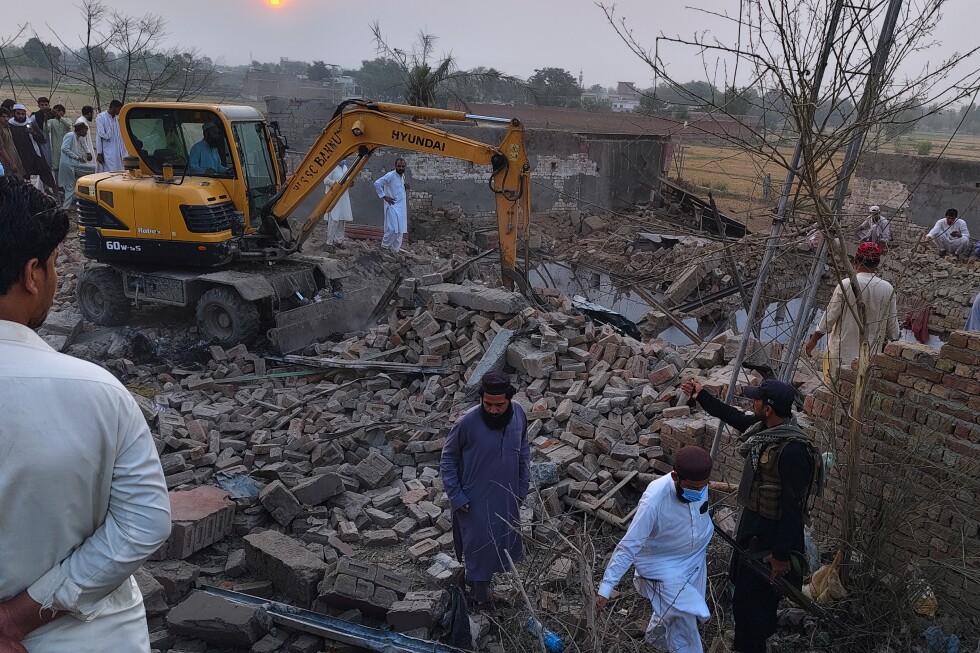
In the early hours of Sunday, Pakistani authorities confirmed a grim update to a devastating weekend attack: the death toll from a suicide bombing targeting a security outpost in the country’s northwest has climbed to 14 police officers, with a breakaway Taliban-aligned militant faction claiming credit for the violence. The assault unfolded late Saturday near the town of Bannu, a district in Khyber Pakhtunkhwa province that sits along Pakistan’s porous border with Afghanistan, according to senior police commander Sajjad Khan.
Khan detailed that the attack combined multiple layers of assault: a suicide bomber driving a vehicle packed with explosives detonated the device close to the security post, before several armed gunmen moved on the position. The blast and subsequent incursion sparked a fierce, close-quarters gunfight between the attackers and responding officers. Some law enforcement personnel were killed during the exchange of fire, while others lost their lives when the security post’s structure collapsed under the force of the explosion.
Rescue teams launched a protracted search operation spanning multiple hours, deploying heavy construction equipment to clear rubble and recover the remains of fallen officers. Khan confirmed that three additional officers were injured in the attack, and that Pakistani security forces have already initiated a manhunt to locate and apprehend any surviving perpetrators linked to the assault.
Shortly after the attack, a newly established militant organization calling itself Ittehad-ul-Mujahideen Pakistan issued a statement to journalists claiming responsibility for the bombing. While the group frames itself as an independent coalition formed by breakaway factions of Tehrik-e-Taliban Pakistan (TTP) – Pakistan’s primary domestic Taliban insurgent group – Pakistani government officials have long alleged that Ittehad-ul-Mujahideen operates as a front organization for the TTP to obscure its direct involvement in attacks.
The bombing comes amid a marked resurgence of militant violence across Pakistan over the past several years, with the vast majority of major attacks attributed to the TTP. The TTP is a distinct insurgent group aligned with the Afghan Taliban, which regained national control of Afghanistan following the U.S. military withdrawal in 2021. The Pakistani government has repeatedly leveled accusations that the Afghan Taliban administration provides safe haven and logistical support to TTP fighters operating from Afghan territory, claims that Kabul has consistently denied.
Cross-border tensions between the two neighboring countries have simmered at dangerous levels for months, with open armed clashes between Pakistani and Afghan forces claiming hundreds of lives on both sides since late February. In an attempt to de-escalate the standoff, senior diplomatic and security officials from both nations held peace talks mediated by China in early April. While the talks succeeded in reducing the intensity of cross-border violence, sporadic small-scale clashes have continued along the shared border in the weeks since the diplomatic meeting.