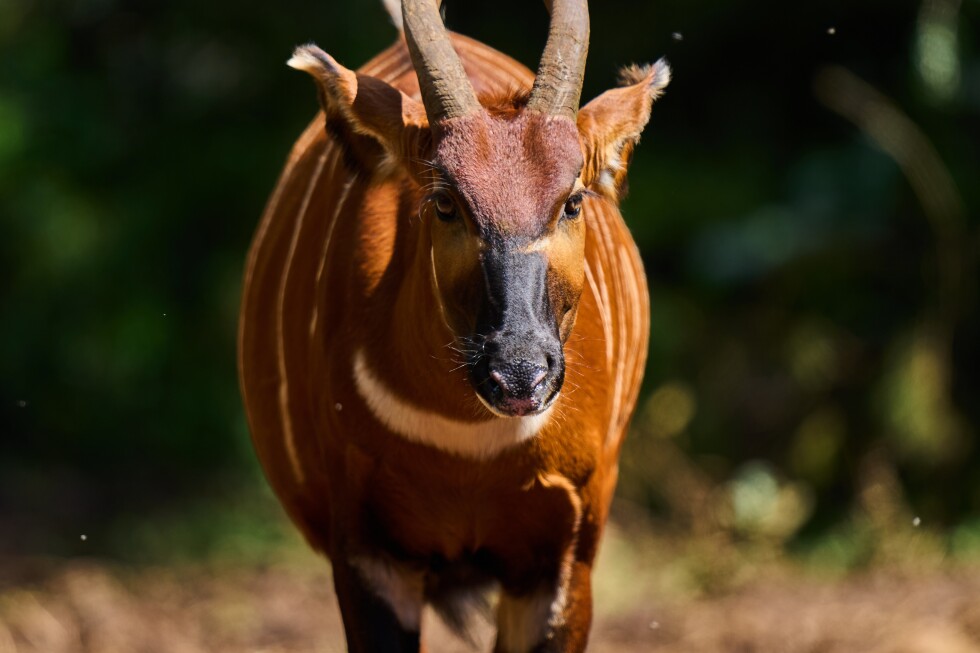
Deep within the dense, mist-shrouded forests of Kenya, an elusive creature once known only as the “ghost of the forest” is one step closer to making a lasting comeback. The mountain bongo, a rare striped antelope unique to East Africa’s highland woodlands, has teetered on the edge of extinction for decades, but a dedicated team of Kenyan conservationists is working to reverse its decline through a carefully managed captive breeding and rewilding initiative.
Characterized by its rich chestnut-brown coat, distinct vertical white stripes, and spiraled horns, the mountain bongo is a master of camouflage, able to disappear into thick undergrowth in seconds. This shy nature helped it evade predators for centuries, but it could not escape the dual threats of disease outbreak and habitat loss that collapsed its wild population by the late 20th century. Today, fewer than 100 mountain bongos remain in undisturbed wild habitats across Kenya, making the conservation program at the 1,250-acre Mount Kenya Wildlife Conservancy—perched on the forested slopes of Mount Kenya near Nanyuki—one of the most critical endangered species recovery efforts on the African continent.
Last week, the initiative gained a major boost with the arrival of four new male bongos, imported from the European Association of Zoos and Aquaria via the Czech Republic. The new arrivals are currently undergoing strict quarantine and round-the-clock veterinary monitoring, before they are integrated into the conservancy’s existing breeding population. Their addition is intentional: the conservancy’s existing herd traces its roots to 18 bongos imported from the United States in 2004, and introducing new genetic lines will eliminate the risk of harmful inbreeding, a common threat to small captive populations of endangered animals.
Dr. Robert Aruho, head of the Mount Kenya Wildlife Conservancy, emphasized that genetic diversity is as important as overall population size for long-term survival. “We want bongos that are not only strong in body, but strong in the genes they pass to the next generation,” he explained. This focus on genetic health builds on a recovery plan that stretches back to the 1980s, when conservationist Don Hunt made the controversial decision to export 36 wild mountain bongos to U.S. zoos as an “insurance population” after disease outbreaks in the 1960s had killed thousands of individuals in Kenya. That proactive move saved the species from total extinction, creating a global captive population that could be used to rebuild wild herds once habitat conditions improved. When the conservancy launched its formal program in 2004, it received the first 18 descendants of those original exported bongos, growing the captive herd to 102 individuals today. The long-term goal is bold: establish a sustainable wild population of 750 mountain bongos across their native range by 2050.
Before any bongo is released into the wild, the conservancy’s team puts each candidate through months of rigorous training and monitoring to prepare it for life outside human care. Captive-bred bongos must learn to forage for their own food, recognize and escape native predators, and build natural immunity to wild diseases—skills their wild ancestors knew instinctively. Program officials also prioritize shyer, more elusive individuals for release: more docile bongos are far more likely to fall prey to leopards and other predators in the open forest.
That preparation is already paying off. In 2022, the conservancy made history by releasing the first 10 bongos into the Mount Kenya Forest, the first time the species had roamed its native slopes here since the last confirmed wild sighting in 1994. Today, those released bongos thrive among the orange climber vines and dense shrubs they prefer, and the program celebrated a major milestone last year with the birth of the fourth wild bongo calf on conservancy-managed protected land. For the team, that calf’s birth was more than a win for the bongo—it was proof that rewilding works.
Beyond its importance for the species itself, the recovery of the mountain bongo is deeply tied to Kenya’s environmental health. The antelope is native to four key Kenyan forest ecosystems: Mount Kenya, Aberdare, Eburu, and Mau, all of which are critical sources of the country’s fresh water supply. Protecting habitat for the bongo also safeguards these vital watersheds that support millions of Kenyans. The project has also changed local perspectives on the rare antelope: for Caroline Makena, a gardener at the conservancy who grew up in the Mount Kenya region, she only heard stories of bongos as a traditional source of bush meat from her grandmother, until she saw the animals in person at the conservancy. “I never knew the bongos were this beautiful, and I think my community loved them not just for the meat but because of their beauty,” she said.
Challenges remain: mountain bongos have a nine-month gestation period, which slows population growth, and the species is far more sensitive to changes in vegetation and weather than other antelope species that share its ecosystem. The conservancy team continues to supplement the diet of released and captive bongos with nutrient-dense pellets to support their health. But for conservationists, local community members, and the thousands of tourists who visit the conservancy each year to catch a glimpse of the “ghost of the forest,” the slow progress offers hope: a species once written off can return to its native home, if humans act proactively to save it.