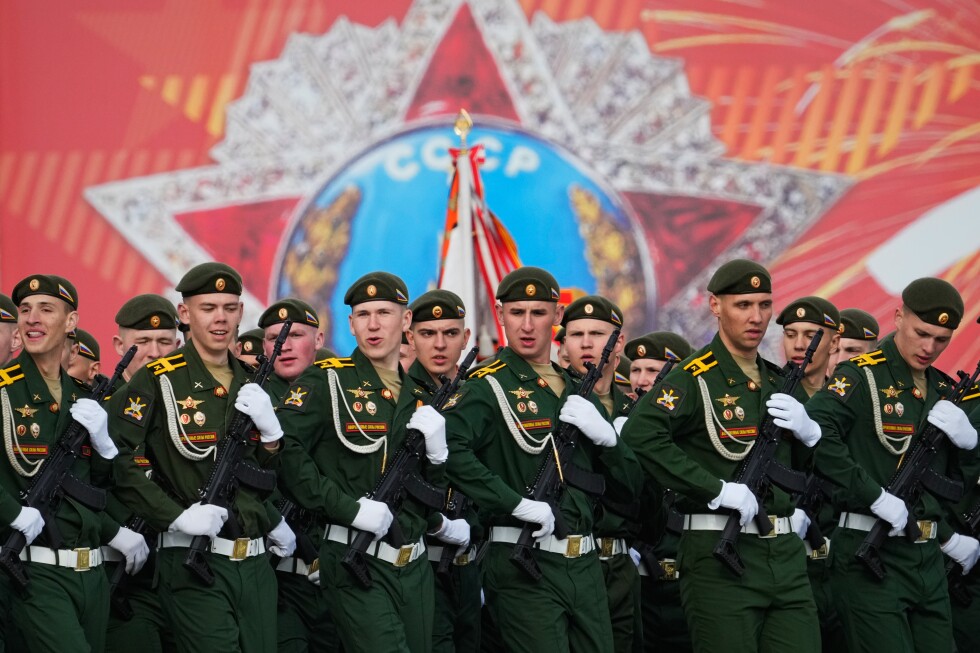
MOSCOW — Tens of thousands of security personnel fanned out across central Moscow on Saturday as the city prepared to host one of the most unusual Victory Day parades in modern Russian history, a stripped-down commemoration of the 1945 defeat of Nazi Germany held against the backdrop of a newly agreed three-day ceasefire between Russia and Ukraine brokered by the United States.
Victory Day, marking the Soviet Union’s victory over Nazi Germany in World War II, holds unmatched cultural and political weight in Russia as the nation’s most sacred secular holiday. The conflict, known domestically as the Great Patriotic War, claimed an estimated 27 million Soviet lives, a collective sacrifice that has shaped Russian national identity and remained one of the few unifying cultural touchstones across decades of political upheaval. For more than 25 years, President Vladimir Putin has leveraged this national reverence to showcase Russia’s military power, rally public support for his government, and galvanize backing for the ongoing military campaign in Ukraine, now in its fifth year.
This year’s event breaks with two decades of tradition: for the first time since 2008, no heavy military hardware — including tanks, armored vehicles, and intercontinental ballistic missiles — will roll across Red Square’s cobblestones. The only traditional military display will be a flyover of Russian combat jets. Regional parades across the country have also been scaled back or canceled outright, a decision Russian officials openly tie to the threat of Ukrainian long-range strikes.
Kremlin spokesman Dmitry Peskov confirmed that authorities have implemented sweeping additional security measures to protect the event, framing the format shift as a necessary response to the “current operational situation.” Ahead of the parade, Moscow authorities imposed widespread restrictions on mobile internet access and text messaging services across the capital, a security move that comes as the Russian government has steadily tightened online censorship and control over digital activities, sparking rare, muted public discontent in recent months.
The new U.S.-brokered ceasefire, which runs from Saturday through Monday, has lowered immediate fears that Ukraine would attempt to disrupt the parade with drone or missile attacks. This truce marks the third attempted ceasefire in as many weeks: previous unilateral truces declared by Russia and Ukraine failed to hold, with both sides trading blame for continued offensive operations along the 1,000-kilometer front line. U.S. President Donald Trump announced the deal Friday, alongside an agreement for a prisoner exchange, calling the pause in fighting the potential “beginning of the end” of the war.
Ukrainian President Volodymyr Zelenskyy responded to the ceasefire announcement with biting sarcasm, issuing a decree that mockingly granted Russia permission to hold its Victory Day celebrations and declared Red Square a temporarily no-strike zone for the day. Peskov dismissed the gesture as a “silly joke” Saturday, telling reporters, “We don’t need anyone’s permission to be proud of our Victory Day.”
In the lead-up to the event, Russian authorities issued a stark threat in response to any potential disruption: if Ukraine attempts to attack the Red Square festivities, Russia will launch a massive missile strike on central Kyiv. The Russian Defense Ministry also urged civilian residents and foreign diplomatic staff to evacuate the Ukrainian capital immediately. The European Union rejected the warning, announcing that its diplomatic mission would remain in Kyiv despite the threat.
The front line has seen incremental but steady Russian gains in recent months, as Russia’s larger, better-supplied military pushes forward across eastern and southern Ukraine. Ukraine, however, has expanded its long-range strike capabilities dramatically since 2022, developing domestic drones that can hit targets more than 1,000 kilometers inside Russian territory — far beyond the country’s previous strike range. Ukrainian forces have regularly targeted Russian energy infrastructure, military depots, and manufacturing facilities in deep strikes in recent months.
A small cohort of foreign leaders traveled to Moscow for the festivities, including Malaysia’s King Sultan Ibrahim Iskandar, Laos President Thongloun Sisoulith, Kazakhstan’s President Kassym-Jomart Tokayev, Uzbekistan’s President Shavkat Mirziyoyev, and Belarus’ authoritarian leader Alexander Lukashenko. In a notable break, Slovakia Prime Minister Robert Fico — the leader of an EU member state — planned to meet Putin and lay flowers at the Tomb of the Unknown Soldier outside the Kremlin walls but opted not to attend the Red Square parade itself.