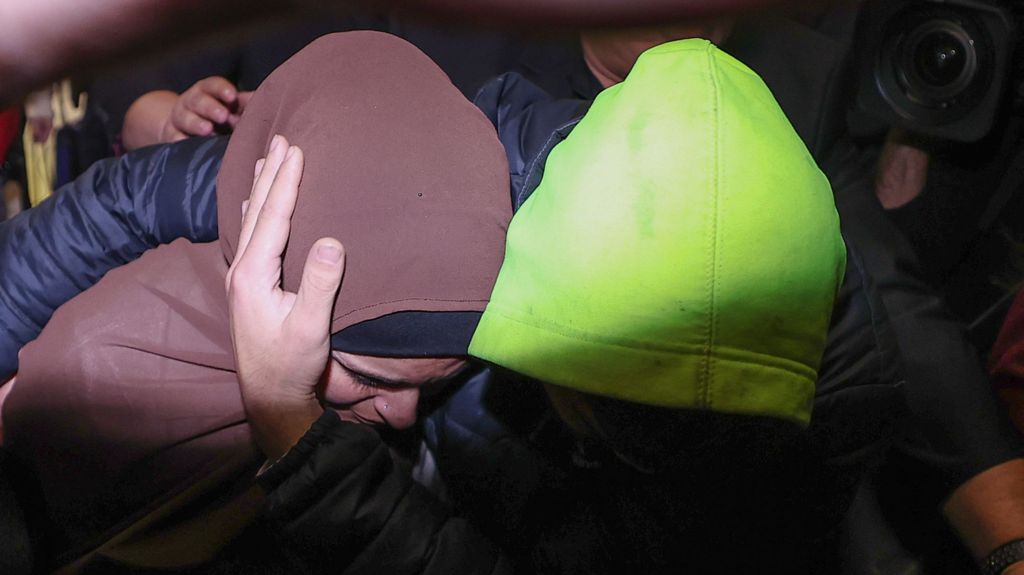
After years of indefinite detention in overcrowded, conflict-ridden camps in northeastern Syria, four Australian women and nine children with ties to the Islamic State (IS) touched down on Australian soil on Thursday, marking the latest flashpoint in a years-long national debate over citizenship, security and legal responsibility. Three of the four women were taken into custody on terrorism-related charges within hours of landing, while the fourth was left to navigate a crush of aggressive media outside the airport, her small children beside her, facing the constant threat of imminent arrest.
This repatriation comes after half a decade of Australian government resistance to bringing home more than 30 of its citizens trapped in former IS detention camps. When the US-led coalition and local allies defeated IS’s self-declared “caliphate” in 2019, thousands of foreign citizens—including family members of IS fighters—were confined to heavily guarded camps, where they have since endured chronic humanitarian shortages, systemic violence and widespread radicalization risks. Australia is far from unique in its reluctance to repatriate these groups: the United Kingdom and dozens of other nations have similarly refused to take back their citizens, leaving roughly 2,000 people from dozens of countries stranded in the only remaining camp, Al-Roj, including British citizen Shamima Begum, who was stripped of her citizenship after traveling to Syria to marry an IS fighter at 15. Al-Hol, the larger of the two original camps, was closed by Syrian government forces in February, increasing pressure on nations to resolve the fates of remaining detainees.
Public sentiment in Australia has hardened dramatically against repatriation in the wake of the country’s deadliest terrorist attack in recent history: a December mass shooting at a Bondi Beach Jewish community event that killed 15 people, which authorities say was inspired by IS ideology. Prime Minister Anthony Albanese has repeatedly stated his open contempt for the detained IS-linked families, repeating his well-known mantra: “If you make your bed, you have to lie in it.” Despite this official stance, human rights advocates and community leaders warn that deteriorating security in Al-Roj has made the predicament of the 21 remaining Australian citizens—seven women and 14 children, many of whom were born or raised entirely in the camps—growing more urgent by the day, describing the facility as a “ticking time bomb” for extremism and humanitarian disaster.
Among those who returned Thursday was 32-year-old Janai Safar, a former nursing student who arrived in Sydney with her 9-year-old son. In 2019, Safar told local media she did not regret traveling to join IS, though she maintains she never participated in training or violence. She now faces formal terrorism charges. Also returning were 33-year-old Zahra Ahmed, her 31-year-old sister Zeinab, and 54-year-old mother Kawsar Abbas, who landed in Melbourne. The three have long claimed they traveled to Syria solely for a family wedding and were trapped after discovering the groom had sworn allegiance to IS, though authorities suspect the family’s patriarch funneled financial support to the group. Zeinab and Kawsar have been charged with crimes against humanity linked to slavery, while Zahra remains under active investigation. This group’s journey to Australia was not straightforward: an initial attempt at repatriation in February was halted within hours over what officials described as “technical issues,” with camp sources indicating Syrian authorities backed out after learning Australia would not welcome the detainees.
Australian federal authorities confirmed the nine returning children will be placed into community integration and countering violent extremism de-radicalization programs, noting many have never experienced life outside of detention camps. Among the 21 Australians who remain stranded in Al-Roj is 14-year-old Kirsty Rosse-Emile, who was groomed by an older extremist and married him before leaving Australia as a teenager.
This week’s repatriation is not the first time IS-linked Australians have returned home: the government facilitated the repatriation of a group of orphans in 2019 and 17 additional women and children in 2022, but amid widespread public backlash, officials formally announced they would end all future repatriation efforts, despite two additional women quietly returning in September. Thursday’s arrivals have reignited fierce public division across the country. Many ordinary Australians, including survivors of IS atrocities who fled to Australia for safety, have expressed deep anger over the decision to allow the group to return. “Imagine a Yazidi survivor encountering ISIS brides here,” Sami, a refugee who escaped IS atrocities, told public broadcaster SBS. Speaking to the BBC at Melbourne Airport, local resident Peter Cockburn summed up the views of many opponents: “They made their choice to go over there and be with their terrorist husbands, so let them stay there. It’s a disgrace that both governments, state and federal, are letting them come back.”
But advocates and interfaith leaders argue Australia has a legal and moral obligation to repatriate its citizens, particularly children who bear no responsibility for the actions of their family members. Jamal Rifi, a prominent Sydney doctor who became a public hero for his interfaith work and public health advocacy, has spent years supporting the detained families, providing remote health care and helping the group secure emergency travel documents to return home. Rifi argues that repatriation and prosecution within Australia’s legal system makes the country safer than leaving detainees to radicalize in Syrian camps. “If those women have done anything wrong by our legal system… if the prime minister wants to ‘throw the book’ at them, let him throw the book. We’re not going to stop him. But while they are staying in Syria, he can’t throw anything at them, except words. We believe those children should not continue to pay the heavy price for the sins of their fathers and mothers… It’s not what we understand of Australian values,” Rifi told the BBC in February. For his work, Rifi has gone from celebrated public figure to a target of political backlash, with the federal opposition even proposing legislation that would criminalize his support for the families.
Other legal and community leaders echo Rifi’s argument, noting that all Australian citizens hold a legal right to return to their home country, and that bowing to public pressure to restrict that right sets a dangerous precedent. “Once politicians start… deciding how citizens should be treated, what right citizens should have, that is a dangerous and slippery slope,” said Jana Fevaro, who works with the Asylum Seeker Resource Centre. Aftab Malik, Australia’s special envoy to combat Islamophobia, acknowledged that public fear and anger is “entirely understandable” and that the repatriation has placed the Australian Muslim community in a uniquely difficult position, but added that the rule of law must take precedence over public anger, calling for cooler heads in the national debate.
Though the ruling Labor government faces intense criticism from opposition parties who have demanded officials block all future arrivals at any cost, Home Affairs Minister Tony Burke noted that the government has little legal power to stop citizens from returning. Burke confirmed that the government did not assist this group in returning and will not assist future repatriations, but added that there are “very serious limits” on what can be done to block Australian citizens from entering the country. The legal threshold to bar a citizen from entry on national security grounds is extremely high, and only one unnamed woman from the larger group of remaining detainees has met that standard, Burke explained.
Rodger Shanahan, a Middle East expert at the Lowy Institute, noted that the issue has become far more politically volatile in the wake of the December Bondi Beach attack, arguing that if the government had resolved the repatriation issue years earlier, public backlash would have long faded. For advocates who have spent years fighting to bring all Australian detainees home, Thursday’s arrivals brought only temporary relief. 21 citizens remain trapped in Al-Roj, with conditions growing so desperate that some mothers have offered to send their children home alone—an outcome Rifi calls unthinkable. Rifi says his current priority is correcting widespread misinformation about the detained group to win over public opinion, noting that leaving detainees in the camps for another decade will only worsen risks of radicalization and mental health harm. “If you bring them right now, it’s easier to rehabilitate. It is easier to educate. And if there is any danger of radicalisation, it’s easier to de-radicalise,” he said.