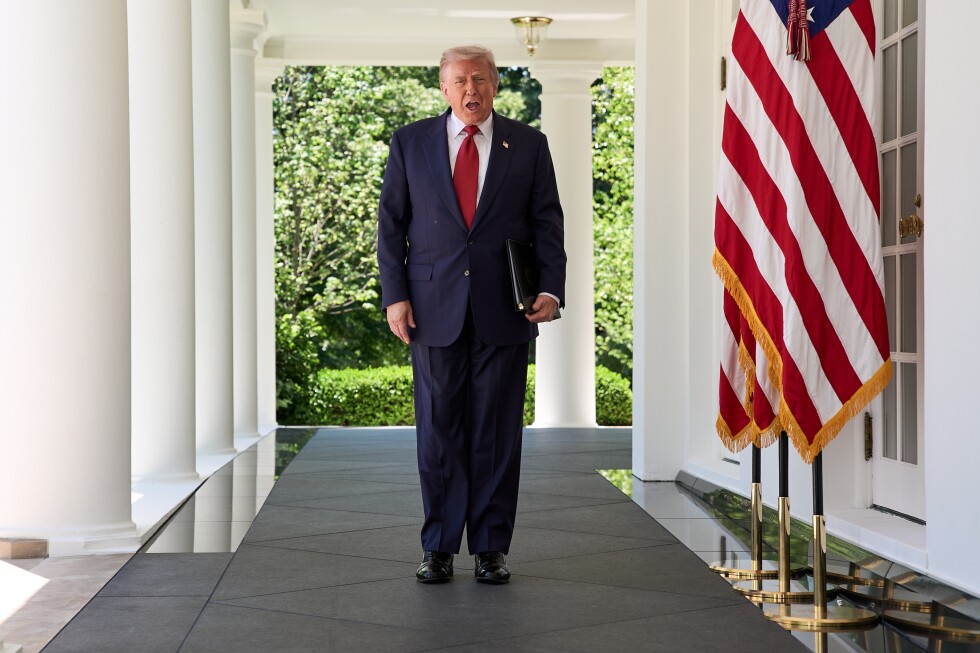
In a surprise diplomatic announcement from Washington D.C. on Friday, former and current U.S. President Donald Trump said he had secured a tentative agreement from both the Russian and Ukrainian leadership for a 72-hour ceasefire and a large-scale prisoner of war exchange, framing the temporary halt to hostilities as a potential turning point in the three-year conflict between the two nations.
Ukrainian President Volodymyr Zelenskyy quickly confirmed the deal in his own public statement, though as of Friday evening, no official confirmation or comment had been issued by Russian President Vladimir Putin or the Kremlin. Per Trump’s social media announcement, the ceasefire will run from Saturday through Monday, aligning with Russia’s annual Victory Day holiday marking the Soviet Union’s defeat of Nazi Germany in World War II.
“I am pleased to announce that there will be a THREE DAY CEASEFIRE (May 9th, 10th, and 11th) in the War between Russia and Ukraine,” Trump wrote on his social platform. “The Celebration in Russia is for Victory Day but, likewise, in Ukraine, because they were also a big part and factor of World War II.”
The Republican president outlined that the ceasefire terms call for a full suspension of all offensive kinetic military operations across the front lines, paired with a reciprocal exchange of 1,000 prisoners of war from each side. The announcement comes on the heels of two earlier, short-lived unilateral ceasefire attempts — one from Russia earlier last week, and one from Ukraine — both of which collapsed within hours, with each side blaming the other for continued combat operations.
Trump told reporters that he personally delivered the ceasefire request directly to both heads of state, adding, “Hopefully, it is the beginning of the end of a very long, deadly, and hard fought War.” The president also noted that broader negotiations to end the full conflict, which first erupted in February 2022, remain ongoing, saying, “we are getting closer and closer every day.” This marks a shift from Trump’s earlier inconsistent framing of the war: he has alternated between optimistic promises of a quick end to fighting and public statements suggesting Russia and Ukraine should be left to fight until one side achieves total victory.
For Zelenskyy, the primary draw of the agreement is the chance to repatriate hundreds of Ukrainian prisoners of war, a core policy priority for the Kyiv government throughout the entire conflict. In a post on his official Telegram channel, Zelenskyy emphasized that freeing captured Ukrainian personnel outweighs any strategic concerns about Russia’s holiday celebrations. “Red Square matters less to us than the lives of Ukrainian prisoners of war who can be brought home,” he wrote.
Shortly after his initial confirmation, Zelenskyy issued a formal presidential decree authorizing Russia to hold its traditional Victory Day military parade on Moscow’s Red Square, declaring the site a no-strike zone for Ukrainian forces for the duration of the event. Analysts view the decree’s framing as a deliberate choice to highlight Kyiv’s proven ability to strike targets deep within Russian territory, including the capital, while tying Ukraine’s military restraint directly to the new ceasefire agreement.
Zelenskyy confirmed the deal was negotiated through U.S.-mediated diplomatic channels, publicly thanking Trump and the American negotiation team for what he called effective diplomatic engagement. He added that Kyiv is relying on Washington to enforce Russian compliance with the agreed terms. “We are counting on the United States to ensure that Russia fulfills its commitments,” Zelenskyy said, noting he had already instructed his national security team to complete all necessary preparations for the prisoner exchange without delay.
Trump’s optimistic announcement comes just hours after U.S. Secretary of State Marco Rubio offered a far more pessimistic assessment of ongoing peace talks during a press availability at the end of an official visit to Rome and the Vatican. Rubio told reporters that U.S. mediation efforts to end the four-year war had not yet yielded a productive breakthrough. “While we’re prepared to play whatever role we can to bring it to a peaceful diplomatic resolution, unfortunately right now, those efforts have stagnated,” Rubio said. “But we always stand ready if those circumstances change.”
This report included contributions from Associated Press correspondents Hanna Arhirova in Kyiv and Giada Zampano in Rome.