MIAMI – In the final chapter of one of the most damaging espionage cases in U.S. diplomatic history, federal prosecutors have launched a civil action to strip U.S. citizenship from imprisoned former American ambassador Manuel Rocha, a Colombian-born double agent who secretly worked for Cuba’s communist government for more than 50 years.
The U.S. Attorney’s Office for the Southern District of Florida filed the civil denaturalization complaint on Thursday, a legal step that would formally complete Rocha’s dramatic fall from influence. Rocha relocated to New York City at age 10 alongside his widowed mother and two siblings, and he obtained U.S. citizenship in 1978 – a status prosecutors now argue was gained through deliberate fraud.
Now 75, Rocha was arrested in late 2023 and later sentenced to 15 years in federal prison after pleading guilty to 15 federal counts of espionage-related crimes. His guilty plea avoided a public trial that would have forced the disclosure of full details of his decades-long covert work for Havana, even as he rose to the most senior ranks of the U.S. foreign service. During his career, Rocha served as U.S. Ambassador to Bolivia and held senior diplomatic postings in Argentina, Mexico, at the White House, and other high-level roles within the U.S. State Department.
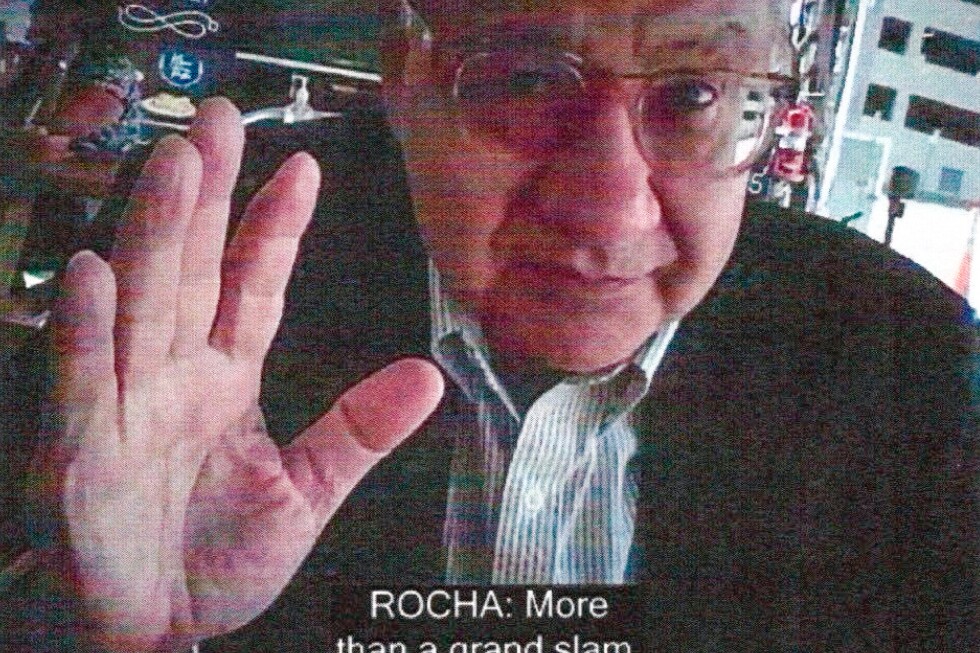
Secret recordings captured by an undercover FBI agent capture Rocha praising former Cuban leader Fidel Castro as “El Comandante” and bragging that his espionage work against the United States was “more than a grand slam” against the American “enemy.”
Court records outline that Rocha first made contact with Cuban intelligence operatives in 1973, half a decade before he submitted his application for U.S. citizenship. The connection came during a student program Rocha attended in Chile, at the tail end of socialist president Salvador Allende’s presidency. Following instructions from Cuban intelligence officials, Rocha enrolled in graduate programs at Harvard University and Georgetown University, successfully built a career, and ultimately secured a position with the U.S. State Department.
Under U.S. federal law, prosecutors carry a high legal burden to revoke citizenship: they must present clear, convincing evidence that an applicant obtained naturalization through illegal means, or by willfully misrepresenting or concealing a material fact during the application process. In this case, prosecutors argue Rocha committed perjury during his 1978 citizenship application, when he swore under oath that he supported the U.S. Constitution and had no affiliation with the Communist Party of Cuba.
U.S. Attorney Jason A. Reding Quiñones, head of the Southern District of Florida, framed the legal action as the concluding phase of a major national security investigation. “The Southern District of Florida helped take down one of the most prolific Cuban spies ever uncovered in the United States,” he said. “This civil denaturalization case is about finishing the job.”
The move comes amid a broader shift at the U.S. Department of Justice, which has sharply increased its focus on denaturalization cases in recent years. In 2023, the department issued an internal memo directing federal prosecutors to prioritize denaturalization actions against individuals who pose a national security threat, including through espionage or terrorist activity.
An independent investigation by the Associated Press has uncovered multiple unaddressed warning signs about Rocha that were missed by U.S. intelligence agencies over decades. Nearly 20 years ago, a senior CIA operative received an explicit tip that Rocha was operating as a double agent. Declassified intelligence also shows the agency was aware as early as 1987 that Fidel Castro had placed a “super mole” deep within the U.S. government, with multiple senior officials naming Rocha as a prime suspect even before his arrest.
To date, the full scope of the damage Rocha inflicted on U.S. national security remains unclear. Over the past two years, teams from the FBI, CIA, and U.S. State Department have worked to piece together what classified information Rocha passed to Cuban handlers. Rocha has undergone months of debriefing by federal officials since he entered prison, but authorities have not disclosed what new information, if any, was obtained from those sessions.