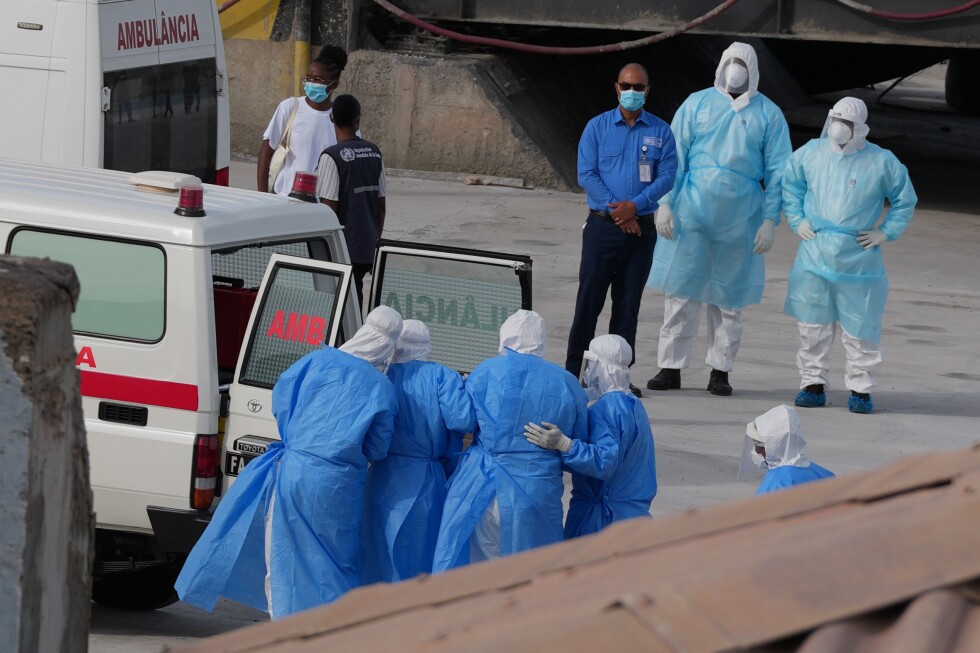
In an unfolding global public health incident, a cruise ship carrying 140 passengers and crew members, already struck by a deadly hantavirus outbreak, is nearing its scheduled arrival at the Spanish island of Tenerife in the Canary Islands early Sunday, prompting coordinated international response preparations. As of current reports, at least three passengers have already succumbed to the virus, with multiple additional people confirmed infected, leaving public health agencies across multiple nations racing to address gaps in critical information about the incident.\n\nHantavirus, a pathogen most commonly transmitted to humans through inhalation of air contaminated with rodent droppings, typically presents symptoms between one and eight weeks after initial exposure. The World Health Organization has assessed that the overall risk of widespread community transmission from this outbreak remains low, but the specific Andes variant linked to the cruise ship cases carries a rare but documented potential for human-to-human spread, raising additional safety concerns.\n\nDespite incremental updates from local authorities and the vessel’s operator, Netherlands-based Oceanwide Expeditions, several core questions about the outbreak remain unanswered, slowing coordinated containment efforts.\n\nFirst, the origin of the outbreak has not been definitively confirmed. Argentine investigators have put forward a preliminary hypothesis that an infected Dutch couple may have contracted the virus during a bird-watching excursion prior to boarding the MV Hondius in Ushuaia, Argentina’s southernmost town, on April 1. Argentina’s Ministry of Health has centered its traceback investigation on Ushuaia, and announced plans to deploy investigative teams to the region in the coming days — though the statement provided to the Associated Press gave no explanation for the planned delay in the team’s arrival. No official body has yet verified where or how the index case acquired the virus.\n\nSecond, the full timeline for what happens next for the remaining passengers and crew on board remains unclear. Spanish emergency authorities are currently on standby to receive the vessel in Tenerife, and confirmed Friday that disembarkation will only proceed once repatriation flights for all people on board are fully arranged, with passengers evacuated via small boats to dedicated buses waiting to transport them directly to airports. The U.S. and U.K. governments have already confirmed they will send dedicated aircraft to retrieve their respective citizens from the Canary Islands, but most other nations have not publicly released their repatriation plans, leaving it unknown how long the remaining people on the ship will need to wait before they can leave. Virginia Barcones, head of Spain’s national emergency services, added that Spanish officials have requested medically equipped aircraft to transport symptomatic passengers, but it remains unconfirmed whether these specialized planes will be available in time.\n\nThird, the full scope of potential exposure remains unaccounted for, with conflicting data sowing confusion. According to Oceanwide Expeditions, the MV Hondius departed Ushuaia on April 1, made two intermediate stops before the outbreak was declared. Six additional passengers boarded at the remote South Atlantic island of Tristan da Cunha, after which the ship stopped at St. Helena, where 30 passengers disembarked — including a Dutch woman and the body of her husband, who had died from the virus on board. The operator says two of those 30 disembarked passengers are believed to be Chileans who boarded at Tristan da Cunha, but their nationalities have not been definitively confirmed. On Friday, a U.K. overseas territories government official confirmed that a Tristan da Cunha resident has been hospitalized with suspected hantavirus symptoms, but it remains unclear whether this person had any contact with the cruise ship. Initial passenger counts provided by the operator were inconsistent: the company first reported 114 passengers departed Argentina with an unlisted number of crew, before updating figures to confirm 61 crew from 12 countries on board, with no clarity on whether any crew changes occurred during the voyage. The operator was forced to correct passenger and nationality counts for those who disembarked at St. Helena after discovering errors in initial reporting, and the final total of people potentially exposed still differs from the estimate provided by the Dutch Foreign Ministry, with no explanation for the discrepancy.\n\nFourth, the full whereabouts of all disembarked passengers and the extent of their potential contacts remain unknown. Many of the passengers who got off at St. Helena continued onward travel to other countries. The Dutch woman whose husband died on board flew to Johannesburg, South Africa, before boarding a flight bound for Amsterdam; she was removed from the flight due to severe illness and later died. Public health officials in South Africa and the Netherlands are currently working to trace every individual who came into contact with the woman during her travels. One flight attendant who developed symptoms after interacting with the woman has already tested negative for hantavirus. Some national governments, including the U.K., have confirmed the locations of their citizens who disembarked early: British health officials say two are self-isolating at home, four remain on St. Helena, and one has been located outside of the U.K. Even so, officials have not disclosed how many additional people these citizens may have been in contact with since leaving the ship, leaving open the possibility of unmonitored exposure.
What we don’t know about the hantavirus outbreak as the cruise ship nears Spanish territory