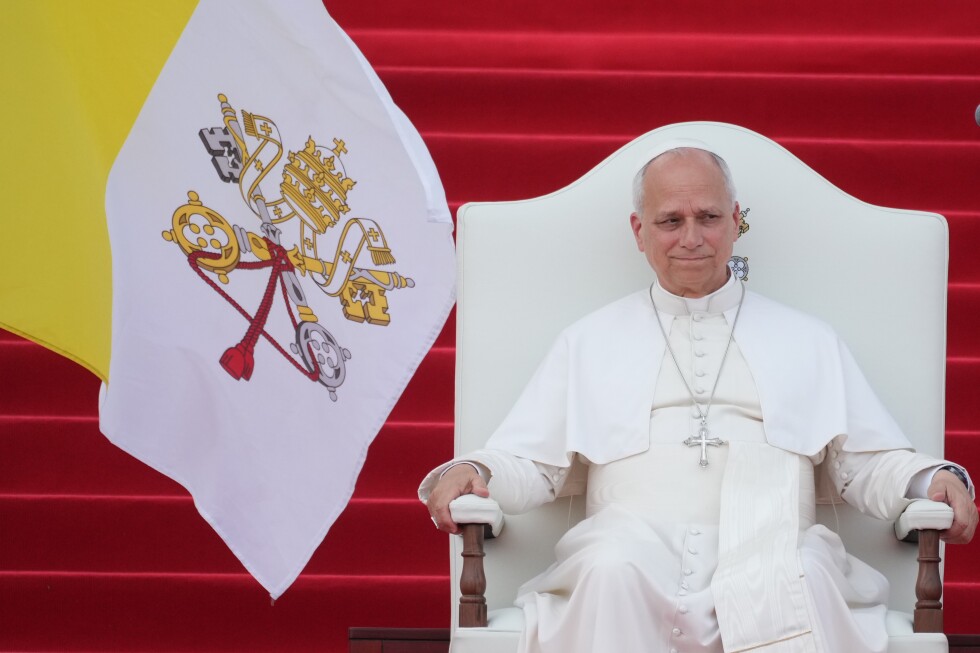
VATICAN CITY – When Pope Francis took the helm of the global Catholic Church, he launched his pontificate with an immediate flurry of institutional reforms, leadership reshuffles, and new governing structures that upended longstanding norms. In contrast, Pope Leo XIV has adopted a far more deliberate, methodical approach to his early tenure, prioritizing steady foundational work over rapid change as he charts a path for his papacy.
As Leo settles into his role, he has already finalized several notable leadership and policy shifts, while a handful of high-stakes challenges loom on the horizon that will test his authority and vision for the church.
### Upcoming Key Appointments to Reshape Church Leadership
A series of impending leadership vacancies in the United States and the Vatican will give Leo a unique opportunity to mold the church’s global hierarchy and central governance to align with his priorities.
In Chicago, one of the most prominent U.S. archdioceses, Cardinal Blase Cupich turned 77 in March – two years past the standard mandatory retirement age for Catholic bishops, leaving the door open for Leo to appoint a new leader to his home country’s major see. By the end of December, Los Angeles Archbishop José Gomez will reach the standard retirement age of 75, giving Leo the chance to name a new head of the largest archdiocese in the United States. He has already filled one top U.S. vacancy, appointing Archbishop Ronald Hicks to succeed retiring Cardinal Timothy Dolan of New York. According to Michael Moreland, a professor of law and religion at Villanova University – Leo’s alma mater – that appointment did not carry a strong ideological lean in either direction, reflecting the pope’s overall cautious, non-partisan approach to personnel decisions.
At the Vatican level, several senior leadership roles will soon open up. British Cardinal Arthur Roche, 76, leads the Vatican’s liturgy office, which oversaw Pope Francis’ highly controversial restrictions on the traditional Latin Mass. The selection of Roche’s eventual successor will be closely watched for clues about how Leo plans to address this deeply divisive issue within the church. American Cardinal Kevin Farrell, 78, who is well past retirement age, still heads the Vatican’s department for family and laity, and holds two other high-stakes posts: camerlengo, the official who oversaw the conclave that elected Leo, and chair of the Holy See’s most sensitive committees overseeing financial investments and the Vatican City State’s highest court of appeal. Canadian Cardinal Michael Czerny, head of the Vatican’s office for migrants, environment and development, will turn 80 in July. Once he turns 80, he will be ineligible to vote in future papal conclaves, dropping the total number of voting-age cardinals to 117 – below the traditional 120-person cap. That shift paves the way for Leo to announce his first slate of new cardinals within the next year, expanding the college of electors who will one day choose his successor.
### Policy Shifts: Rolling Back and Revising Francis-Era Initiatives
From the start of his pontificate, Francis encouraged young Catholics to disrupt diocesan institutions and “make a mess” to drive renewal. Leo has moved quickly to unwind and reorganize a number of these initiatives, addressing what he and other leaders see as unworkable structures born of Francis’ agenda.
In April, the Vatican canceled the World Day of Children, a signature Francis initiative that had drawn ongoing questions about its core mission and purpose. The cancellation followed Leo’s formal disbanding of the ad hoc pontifical commission Francis created to organize the event in 2024. In December, Leo dissolved a Holy See fundraising commission that had been established under questionable circumstances in 2025, during the final weeks of Francis’ life when he was hospitalized. The commission was composed entirely of Italian members with no professional fundraising experience, and its president was a senior official from the Secretariat of State – the same Vatican department Francis stripped of asset management authority after it lost tens of millions of euros in the infamous London property investment scandal. After disbanding the flawed commission, Leo launched a new, reorganized committee to develop transparent, effective fundraising strategies and structures.
Ward Fitzgerald, president of The Papal Foundation, a U.S.-based group of wealthy donors that funds papal charity projects across the developing world, noted: “The Holy Father was clearly paying attention. He realized that it was not going to be highly functional.”
Beyond organizational overhauls, Leo has also revised Francis-era financial policy: he revoked a 2022 law that concentrated all Holy See financial power in the Vatican bank, issuing a new regulation that allows the Holy See’s investment committee to work with external banks when it delivers better financial outcomes. Leo has also broken new ground on the long-running clergy sexual abuse crisis, meeting with activist survivor groups who advocate for institutional reform. Survivors say the pope promised ongoing dialogue as they push the Vatican to adopt a binding global zero-tolerance policy for abuse. While Francis met regularly with individual abuse survivors, he largely kept organized activist advocacy groups at arm’s length.
### Private Audiences Reveal Openness to Diverse Perspectives
Pope Leo’s closed-door private meetings with a range of stakeholders have offered insight into his priorities, showing he is willing to engage with groups across ideological divides even as he keeps his own final positions closely held. In mid-March, he met with Gareth Gore, author of a controversial book alleging widespread abuses within the influential conservative Catholic movement Opus Dei. In February, he held a private audience with a delegation from Courage International, a church-affiliated organization that supports people with same-sex attraction seeking to live in accordance with Catholic teaching on chastity. While critics have labeled the group anti-gay and accused it of promoting conversion therapy, the organization denies those claims. Earlier in March, he met with the authors of a new book on traditional Latin Mass Catholics in the U.S., who presented findings from their large-scale survey of the community. Leo has made clear he is well aware of the deep divisions sparked by Francis’ Latin Mass restrictions, and has expressed a desire to hear directly from traditionalist Catholics to better understand their perspectives as he works to heal rifts over the traditional liturgy.
### Two Major Looming Challenges
The ongoing dispute over the traditional Latin Mass is on track to reach a critical turning point on July 1, when four new traditionalist bishops are set to be consecrated without Pope Leo’s formal approval. The bishops belong to the Society of St. Pius X (SSPX), a breakaway traditionalist group, and an unsanctioned consecration would qualify as a schismatic act that automatically triggers excommunication for all involved. While the SSPX remains a fringe group within the broader traditionalist Catholic movement, traditionalists in full communion with the Holy See are closely watching how Leo responds to the provocation. On the opposite end of the ideological spectrum, the Vatican faces the threat of a major institutional split with the German Catholic Church over its years-long Synodal Path reform process. German leaders have proposed creating a permanent joint governing body made up of both bishops and lay Catholics to make collective decisions – a direct break from traditional Catholic ecclesiology, which reserves full governing authority for bishops. The Vatican has already publicly stated its opposition to this shared governance structure, and has also pushed back against German proposals to formalize public blessings for same-sex couples, a practice Francis only allowed on an informal, spontaneous basis. A direct confrontation is likely once the full German reform proposals are submitted to Rome for final approval.
### The Upcoming Landmark Encyclical on Artificial Intelligence
While many outside observers frame the most pressing issue for Leo as his relationship with U.S. President Donald Trump and the prospect of a papal visit to the U.S. (currently, no visit is scheduled for 2025), the pope himself has signaled his top near-term priority is his first encyclical. The document, which is expected to be released in the coming weeks, focuses on artificial intelligence and broader questions of global peace and justice. Leo has already drawn a parallel between the AI revolution and the industrial upheaval of the late 19th century, which his namesake Pope Leo XIII addressed in his landmark 1891 encyclical *Rerum Novarum* on workers’ rights. “Like his namesake Leo XIII with the Industrial Revolution, Leo clearly sees the church as having something important to offer in an era of what may turn out to be epochal technological change,” said Dan Rober, associate professor of Catholic studies at Sacred Heart University.
This reporting on religion was supported by a collaboration between the Associated Press and The Conversation US, with funding from Lilly Endowment Inc. The Associated Press holds sole editorial responsibility for this content.