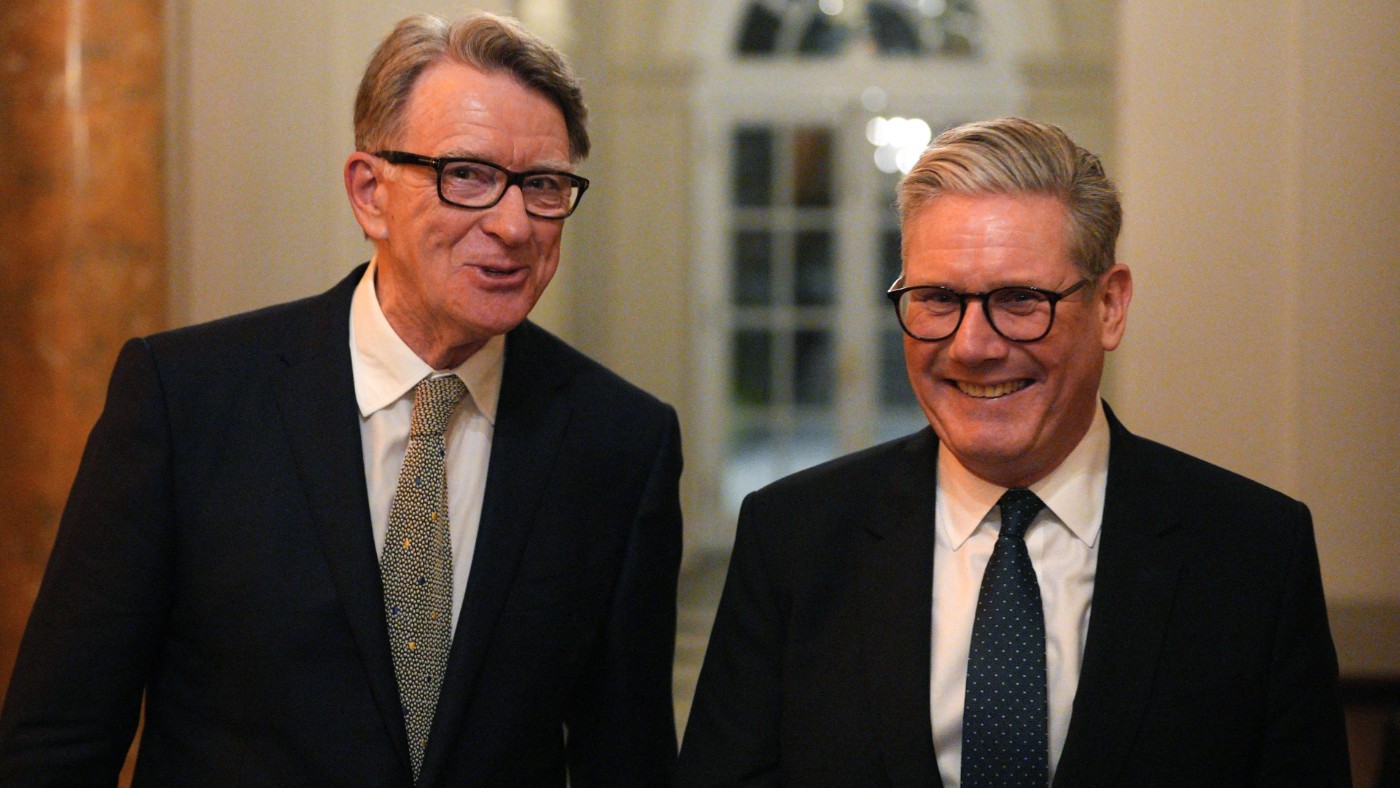
What began as a controversial diplomatic appointment has erupted into one of the most damaging political scandals to hit the United Kingdom’s new Labour government, exposing decades of factional infighting, opaque corporate ties, and institutional failure at the highest levels of the party.
At the center of the crisis is Peter Mandelson, a veteran Labour strategist hand-picked by Keir Starmer’s inner circle to serve as the UK’s ambassador to the United States — the first political appointee to the role in nearly 50 years. The appointment quickly collapsed after the unsealed Epstein files confirmed long-rumored close, long-standing ties between Mandelson and the late convicted paedophile financier Jeffrey Epstein. Mandelson resigned from his ambassadorship in February, and was later arrested on suspicion of misconduct in public office over allegations he leaked confidential market-sensitive government information to Epstein.
Multiple senior figures have already stepped down or been ousted in the wake of the scandal. Morgan McSweeney, Starmer’s former chief of staff and widely recognized as the architect of his rise from Labour leader to prime minister, resigned in February after acknowledging he made a “serious mistake” in pushing for Mandelson’s appointment. Senior Foreign Office civil servant Olly Robbins was fired after he was blamed for failing to alert Starmer that Mandelson had failed his mandatory security vetting. Further down the chain, Josh Simons, a former leader of the centre-left think tank Labour Together and a newly appointed Cabinet Office minister, resigned amid claims he paid a public relations firm to surveil investigative journalists probing the scandal.
Both McSweeney and Robbins have appeared before parliament’s Foreign Affairs Select Committee to answer questions about the broken due diligence process that allowed Mandelson to take office without proper screening. Revelations from the hearing have deepened public anger: while Robbins confirmed Starmer was never told about the failed vetting, records show Mandelson was named as ambassador before the vetting process even began. What is more, his close relationship with Epstein was already widely reported in public, and Mandelson had previously been forced to resign from two different cabinet posts over separate misconduct incidents — all information that was available to party leadership before the appointment.
Testimony and new reporting have also pulled back the curtain on the long-running project that brought Starmer to power, with Mandelson and McSweeney at its core. Labour Together, the think tank once led by McSweeney, was the driving force behind a campaign to oust former left-wing Labour leader Jeremy Corbyn, install Starmer as party leader, and permanently marginalize the party’s left wing. Between 2017 and 2020, the campaign received roughly £730,000 in undeclared donations, resulting in a £14,000 fine for the Labour Party from the Electoral Commission.
Long before that campaign, Mandelson had already shaped decades of Labour’s modern history. He served as the party’s communications director under Neil Kinnock in the 1980s, where he led the party’s “modernization” shift away from traditional socialist policies toward a pro-corporate agenda aligned with global capitalism. He was a key behind-the-scenes architect of Tony Blair’s successful 1994 leadership campaign, working secretly to rally support for Blair against other candidates. In 2017, he openly admitted he worked “every day” to undermine Corbyn’s leadership of the party.
Insiders close to the process have confirmed that Mandelson’s appointment was entirely McSweeney’s initiative, with Starmer barely involved. One anonymous civil service source told Middle East Eye that Starmer cannot publicly admit this reality “because it shows him to be impotent.” McSweeney himself testified that he viewed Mandelson as a trusted “confidante” on political strategy, and just days before Mandelson was forced to resign as ambassador, he was spotted inside Downing Street advising on Starmer’s first major cabinet reshuffle, which removed dozens of soft-left figures from senior roles. McSweeney claimed Mandelson’s recommendations for the reshuffle were not ultimately adopted, however.
The scandal has also shone a harsh light on Labour’s close ties to controversial corporate interests. In 2010, Mandelson co-founded the global lobbying firm Global Counsel, which counts U.S. spy-tech giant Palantir among its major clients. Palantir currently provides the technology that Israel uses to carry out military operations in Gaza, and already holds a £480 million contract to manage sensitive National Health Service patient data in the UK. Just weeks before Mandelson’s resignation, he accompanied Starmer on a visit to Palantir’s Washington headquarters. Shortly after that visit, the UK Ministry of Defence awarded Palantir a new £240 million contract without any open competition. No meeting minutes have been published, and full unredacted copies of the contract have not been released despite repeated Freedom of Information requests.
The controversy has expanded further in recent days: last week, a man was arrested on suspicion of stealing and selling McSweeney’s personal phone, raising fears that critical text messages related to Mandelson’s appointment could be destroyed or lost. Another of Starmer’s close aides, Matthew Doyle, who was connected to Mandelson and McSweeney, was suspended from the Labour whip in the House of Lords after it emerged he had campaigned on behalf of a friend charged with possessing child indecent images. Just last month, four Labour activists were charged with vote rigging in Croydon, adding to a string of allegations of internal party corruption.
Critics across the party are now demanding a full independent public inquiry into the entire affair, arguing the scope of the scandal extends far beyond Mandelson’s ties to Epstein. Former Labour leader Jeremy Corbyn, who was ousted by the Starmer-aligned faction, told Middle East Eye that “the scandal is bigger than Mandelson.” He noted that most of Labour Together’s donors and backers have no connection to the labour movement’s traditional socialist mission, and sought to redirect Labour toward a model of corporate interests, privatization, and patronage that Mandelson long embodied.
Left-wing Labour MP Apsana Begum, who has herself been targeted by the Starmer leadership and suspended from the party whip for over a year for opposing the two-child benefit cap, echoed the call for inquiry. She said that the no-bid Palantir contract and lack of transparency around the Starmer-Mandelson meeting raise fundamental questions about accountability in the new government, and argued that the prime minister will ultimately be forced to step down. “Regardless of when this happens, there does need to be a full and independent investigation into the actions of Labour Together,” she said.
Investigative journalist Paul Holden, whose book *The Fraud* details the origins of the Labour Together project, has condemned the parliamentary inquiry into the scandal as deeply flawed. He told Middle East Eye that the select committee was “plainly unprepared” for the hearings, committed basic errors in questioning, failed to follow up on obvious lines of enquiry, and allowed McSweeney to avoid accountability for omissions and misleading testimony. Holden argues this failure exposes a broader institutional breakdown, where no one has been held responsible for actions that reshaped the entire Labour Party.
Holden added that McSweeney “built his political career on misdirection and dishonesty,” a pattern that has defined Starmer’s leadership. He noted that Starmer ran for leader positioning himself as “Corbynism without Corbyn,” but abandoned all 10 of his progressive campaign pledges once he took control of the party. “Labour puts way more effort into investigating a left-wing person on social media than on Peter Mandelson’s entire political career,” Holden said.
That pattern of targeting left-wing figures has been widely documented. Jamie Driscoll, the former left-wing mayor of North of Tyne, was barred from standing for re-election after he appeared at an event with pro-Palestinian filmmaker Ken Loach, who was expelled from the party after Starmer took office. Driscoll told MEE that the party admitted he had not been accused of wrongdoing and had done a good job as mayor, but changed party rules to allow the National Executive Committee to block his candidacy anyway. He said the right-wing faction that installed Starmer “smeared and lied to undermine people who were socialists and social democrats as opposed to red Tories and neoliberals” because it was politically useful.
Driscoll recalled Mandelson openly saying he opposed giving party members control of the party, and wanted to end Labour’s reliance on member and trade union donations — because those groups generally oppose serving the interests of private corporations like Palantir. That shift toward corporate influence has been evident since Starmer took power: during the 2023 Labour conference, businesses could pay £2,500 for a private meal and direct access to Starmer, who has already declared more free gifts and hospitality than any other major UK party leader in recent years. Just months into the new government, major Labour donor Ian Corfield was forced to resign from his civil service role as an adviser to Chancellor Rachel Reeves amid widespread accusations of cronyism.
In response to the scandal, Mandelson has called his long friendship with Epstein a “terrible mistake” and apologized to the victims of Epstein’s abuse, claiming he had “no exposure to the criminal aspects” of Epstein’s activities. Neither Starmer, McSweeney, nor Labour Together have responded to requests for comment on the full scope of the revelations.