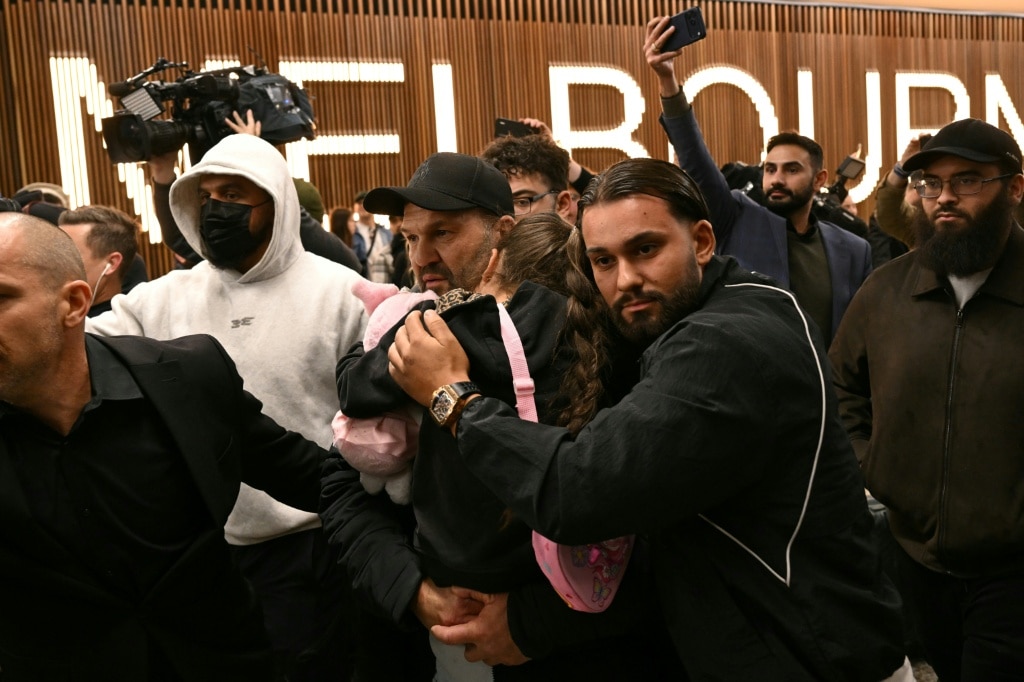
In a landmark counter-terrorism operation following the long-awaited repatriation of Australian citizens stranded in Syria, three women linked to the Islamic State (IS) terror group have been slapped with severe criminal charges, including allegations of crimes against humanity related to slavery.
Australian Federal Police (AFP) confirmed Friday that two of the women — a 53-year-old mother and her 31-year-old daughter — were taken into custody immediately after their Qatar Airways flight touched down at Melbourne International Airport Thursday evening. This marked the pair’s first return to Australian soil in almost a decade, after they were captured and detained by Kurdish forces in 2019 when IS’s self-declared caliphate collapsed across northern Syria. Before their repatriation, the two were held at the overcrowded, notoriously harsh Roj detention camp, where thousands of people with suspected IS ties are still held.
According to official police statements, the pair traveled to Syria in 2014 specifically to join and support the IS terror organization. The 53-year-old is accused of acting as an accomplice in the purchase of a female enslaved person for $10,000 USD, while her daughter is charged with knowingly holding that same woman as a slave in the IS-controlled household they shared. AFP counter-terrorism chief Stephen Nutt emphasized that the investigation into these grave allegations remains active and ongoing.
A third woman, 32-year-old Janai Safar, was arrested separately after her arrival in Sydney. Safar, who traveled to Syria in 2015 to join her IS fighter husband, faces charges of entering a declared restricted area and becoming a member of a listed terrorist organization. A fourth woman who traveled back with the group was not taken into custody upon arrival. In total, four women and nine accompanying children were on Thursday’s repatriation flight from the Middle East, which transited through Doha before reaching Australia.
The case has reignited long-running national debate over how Australia should handle citizens who left to join IS more than a decade ago. When IS seized large swathes of Syria and Iraq in the early 2010s, Australia criminalized travel to IS strongholds including Syria’s Raqqa province. Hundreds of Western women, many of whom followed partners who joined as jihadist fighters, migrated to the region during IS’s rise, and after the group’s territorial collapse, thousands of these citizens were left stranded in Syrian detention camps.
Countries including Australia, Canada, and the United Kingdom have struggled for years to reach a consensus on how to manage these remaining citizens. In Australia, human rights groups including the Australian Human Rights Commission have repeatedly urged the government to repatriate the roughly 34 women and children still stuck in Roj camp, arguing that stranded civilians, especially children, deserve the right to return home and face due process under Australian law. But critics argue that the women made a deliberate choice to abandon Australia and align with a terrorist organization, and should not be allowed to return, instead being forced to face the consequences of their decisions in the region.
Australian Home Affairs Minister Tony Burke echoed this critical stance following the arrests, saying all four returning women had made “a horrific choice to join a dangerous terrorist organisation”. Thursday’s repatriation is not the first time Australian citizens have returned from Syrian camps: small groups of women and children were repatriated in 2019, 2022, and earlier this year, with many of those returnees facing criminal prosecution upon arrival.