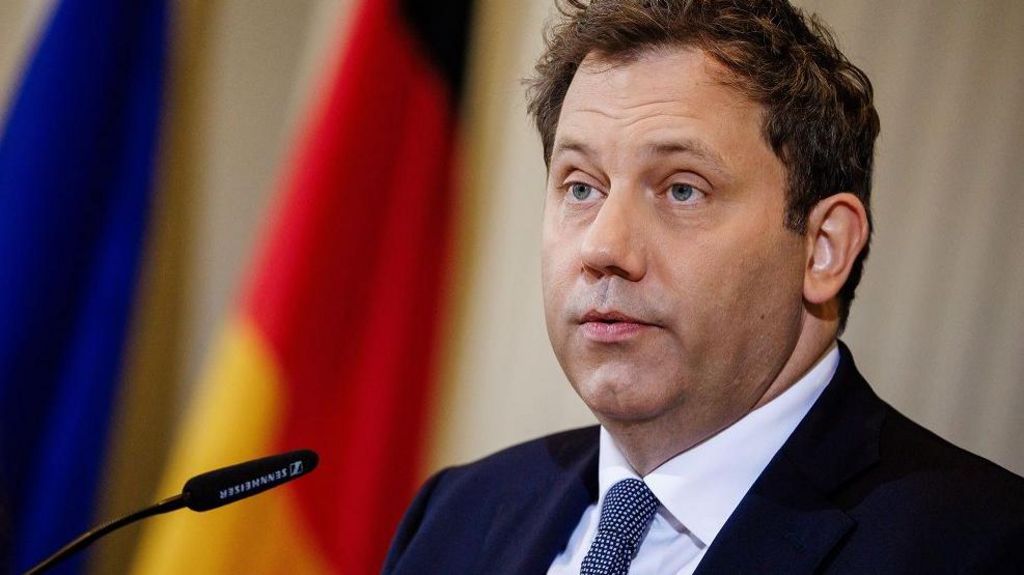
A fresh escalation in tensions between two key NATO allies has emerged after Germany’s top finance official blamed U.S. President Donald Trump’s handling of the war in Iran for a massive downward revision of the country’s projected tax revenues, piling more strain on already fractured transatlantic relations.
Lars Klingbeil, Germany’s finance minister, told reporters in Berlin that Trump’s “irresponsible war in Iran” has triggered a widespread global energy shock that has severely damaged German economic prospects. In response to shifting economic headwinds, German federal officials have cut their expected tax revenue forecasts for the 2026–2030 period by roughly €70 billion (equivalent to $82 billion or £60.52 billion). Klingbeil emphasized that the sharp downgrade makes clear how directly the ongoing conflict in the Middle East is weighing on Germany’s stagnant domestic economy.
Klingbeil’s remarks come just weeks after a public dispute between German Chancellor Friedrich Merz and President Trump that already led to a U.S. announcement of troop withdrawals from German soil. Last month, Merz drew Trump’s fury when he claimed the White House had been “humiliated” by Iranian negotiators, arguing that the U.S. had no clear exit strategy for the conflict and that Iran had outmaneuvered American diplomats. Merz added that it was humiliating for the U.S. to send negotiators to international talks only to return home without any tangible progress.
Trump hit back rapidly on his social platform Truth Social, dismissing Merz as misinformed, falsely claiming the German leader supported Iran developing nuclear weapons, and arguing that Germany’s own poor economic performance justified his criticism. The U.S. president doubled down on his rebuke, urging Merz to prioritize fixing Germany’s own domestic challenges – including immigration and energy policy – instead of criticizing U.S. foreign policy. Days after Merz’s original comments, the U.S. Department of Defense unveiled a plan to withdraw 5,000 American troops from Germany, a move linked to Defense Secretary Pete Hegseth. German defense officials have described the withdrawal as a foreseeable outcome of the growing diplomatic rift.
Currently, the U.S. maintains its largest European military footprint in Germany, with roughly 12,000 troops deployed in Italy and an additional 10,000 in the United Kingdom. Trump has a long record of criticizing NATO alliance members, and has repeatedly pressured European allies to back his efforts to reopen the Strait of Hormuz, a critical global oil shipping chokepoint that has been effectively closed by Iran since the outbreak of hostilities. Roughly 20% of the world’s oil and liquefied natural gas supplies transit through the strait, and the conflict has sent global energy prices skyrocketing, hitting Germany’s already fragile economy, which has struggled with stagnation, elevated energy costs and weak export demand for years.
Alongside other European nations, Germany has openly opposed the U.S.-Israeli war against Iran that began on February 28, warning that the conflict raises severe risks of a full-blown global economic recession. While Merz has repeatedly acknowledged that Trump’s policy agenda has opened a “deep divide” between the United States and Europe since he took office a year ago, the German chancellor has also made two trips to the White House in 12 months in an effort to repair damaged bilateral ties.
At present, a fragile ceasefire is in place between warring parties, framed as a stepping stone to a formal peace deal. President Trump claimed this week the conflict would end quickly, and Iranian officials have confirmed they are reviewing a U.S. peace proposal. However, negotiations have stalled amid a U.S. naval blockade of Iranian ports, even as American work continues to clear the Strait of Hormuz to allow the nearly 2,000 commercial ships stranded in the Gulf since February to transit safely.