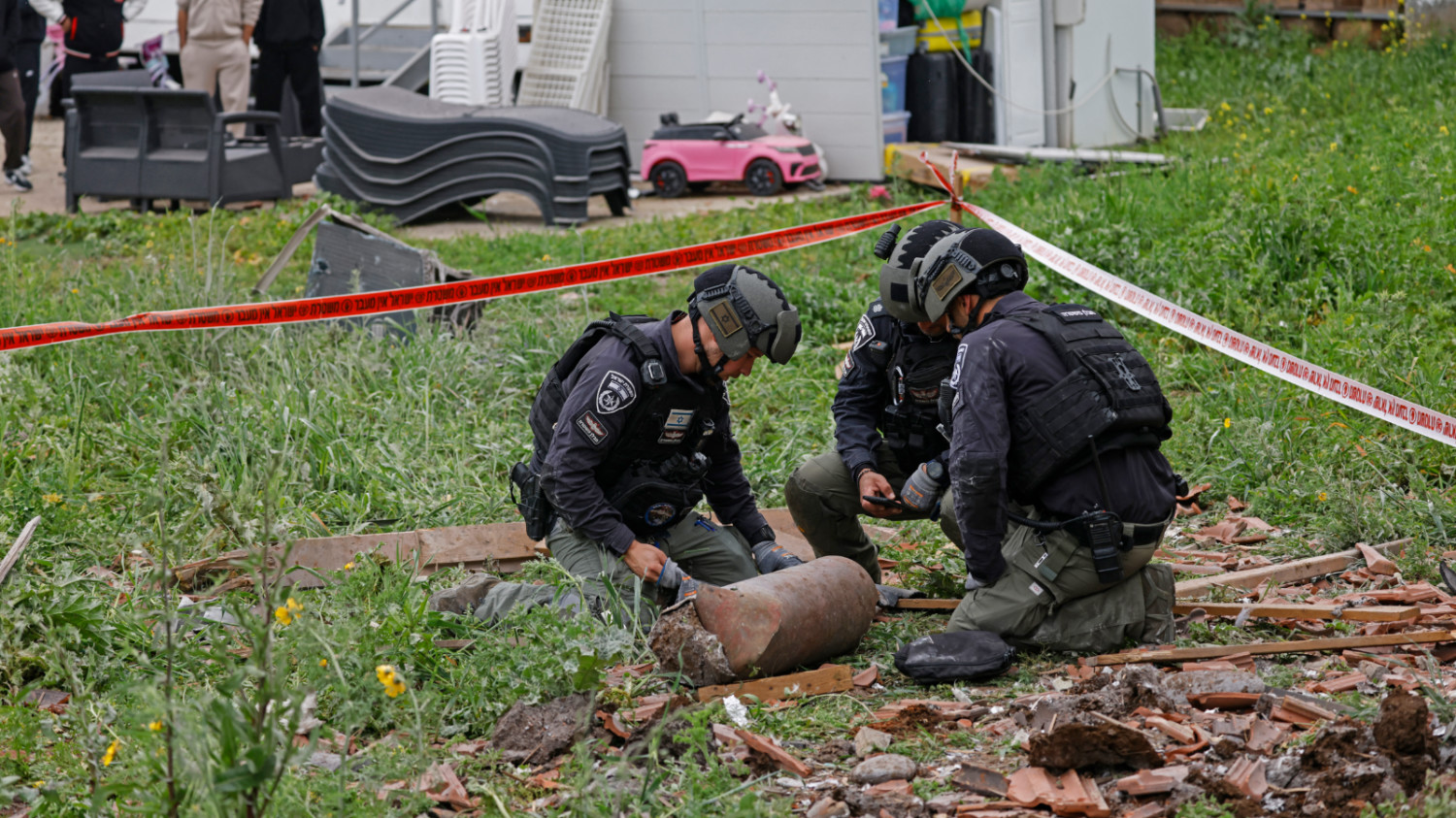
Amid ongoing low-intensity hostilities along Israel’s northern border and growing national anxiety over Iranian intelligence infiltration, a controversial decision by the Israeli Home Front Command to cut access to a critical missile impact alert system has sparked fierce backlash from local leaders and security officials across northern Israeli communities, Israeli outlet Ynet reported Thursday.
The disabled infrastructure, which once shared real-time data on potential missile strike impact zones with local first responders and municipal leadership, was taken offline by military authorities over explicit concerns that Iranian intelligence operatives could exploit the platform to harvest precise location data. Military officials argue that this information would allow Iran and its regional proxy militia Hezbollah to refine the accuracy and destructive power of future attacks against Israeli targets.
Strict military censorship rules have governed all reporting of missile impact locations across Israel since the outbreak of open conflict between Israel and Iran in June 2025. International and domestic Israeli media outlets are already banned from disclosing the exact coordinates of strikes, particularly those targeting strategic and military infrastructure, and the military’s latest move extends this information control to frontline local response teams.
For years, the restricted system served as a core operational tool for local authorities, enabling them to rapidly deploy emergency rescue and response teams directly to sites hit by rocket and missile fire. But today, the shutdown has left northern response teams operating without critical situational awareness, according to local leaders.
Assaf Langleben, head of the Upper Galilee Regional Council, warned that the decision has created a state of “operational blindness” across the entire northern frontier. “It is absurd that Hezbollah knows where it is firing, so at least we should also know and be able to deal with the incidents and the responses we are required to provide,” Langleben said in an interview with Ynet.
Avichai Stern, mayor of the key northern border city Kiryat Shmona, echoed this criticism, emphasizing that the alert system had a proven track record of saving lives amid repeated cross-border fire. “Leaving us without [the system] means abandoning even more lives in an area where most residents already lack protection,” Stern said, adding that “now we are also not being given the ability to go out, rescue and save them during fire.”
Frontline civil security personnel in the region have described chaotic, dangerous working conditions in the wake of the shutdown. A civil security officer based in Kiryat Shmona told Ynet that in recent alarm events, response teams have “operated like blind mice.” The official added, “When I don’t have this tool, I don’t know where to run. We are ahead of another round, Hezbollah will again target our homes, and our residents will pay the price.”
Another civil security officer from a local northern council criticized military leadership for choosing a blanket shutdown over targeted security reforms, saying “No one talks to us, explains, or thinks they owe us answers. They simply cut us off. In the army, instead of dealing with how to handle and prevent leaks, they chose the easiest solution and shut everyone out. They irresponsibly chose to punish us.”
In an official statement to Ynet, an Israel Defense Forces spokesperson defended the order, noting that the platform “contains sensitive information, and during the war cases were identified that required adjustments to procedures and a reduction of access permissions in order to prevent harm to information security.”
Military concerns over Iranian infiltration come against a backdrop of a sharp rise in domestic espionage cases linked to Tehran. Israeli outlet Ma’ariv has reported that more than 40 indictments have been filed against roughly 60 Israeli civilians on espionage charges since October 2023. Iranian intelligence is known to recruit Israeli operatives through large financial incentives, in exchange for documenting strategic locations and facilitating attacks inside Israeli territory.
Just this week, Israeli leading outlet Haaretz exposed a major intelligence breach revealing that Iranian operatives have obtained secret sensitive data on researchers at the Institute for National Security Studies (INSS), Israel’s premier independent security think tank with formal ties to the Israeli military and Tel Aviv University. Over a six-year period, Iran collected personal identifiable information on dozens of INSS researchers — many of whom are retired senior Israeli security and military officials — alongside detailed records of closed-door meetings between INSS personnel and Israeli military leadership.