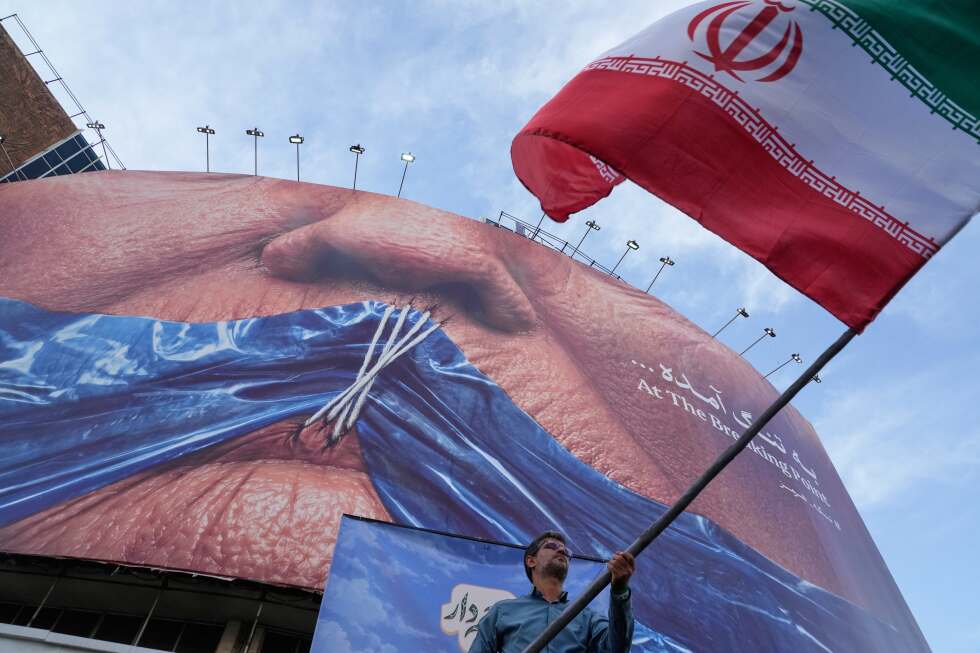
Nearly two months after the United States and Israel launched military strikes against Iran, a fragile ceasefire has held for more than a month, but intense diplomatic wrangling and lingering military tensions are keeping the global community on edge. As U.S. President Donald Trump issued a stark ultimatum that new, intensified bombing would resume unless Tehran agrees to a deal that reopens the strategically critical Strait of Hormuz, Iran confirmed it is reviewing Washington’s latest proposal, injecting cautious optimism into markets even as a fresh military confrontation took place just hours before.
The conflict, which began on February 28, has upended global energy markets and disrupted critical supply chains: Iran effectively closed the Strait of Hormuz, the chokepoint through which roughly 20% of the world’s traded oil flows, while the U.S. imposed a full naval blockade on Iranian ports. This standoff sent fuel prices soaring, roiled the global economy, and imposed heavy costs on international businesses: major shipping giant Hapag-Lloyd estimates the closure is costing the firm approximately $60 million per week, driven by spiking fuel and insurance premiums. By Thursday, Brent crude prices stabilized around $100 per barrel as traders bet on a diplomatic breakthrough, lifting sentiment across international markets.
Hours before markets reacted to the prospect of a deal, the U.S. military struck an Iranian oil tanker attempting to breach the American blockade in the Gulf of Oman, damaging the vessel’s rudder, according to U.S. Central Command. The clash follows the Trump administration’s messy, contradictory messaging on its Iran strategy in recent days, with shifting narratives that have left both allies and markets uncertain about Washington’s end goals.
Pakistan, which hosted in-person talks between U.S. and Iranian delegations last month that ultimately failed to produce an agreement, has emerged as a key mediator in the negotiations. On Thursday, Pakistani Foreign Ministry spokesperson Tahir Andrabi told reporters that Islamabad expects a peaceful settlement “sooner rather than later,” adding that a durable agreement would benefit not just the region, but global peace and security. He declined to share specific timelines or details of ongoing diplomatic backchannels, however, noting that Pakistan would keep sensitive negotiations confidential. “We remain positive, we remain optimistic, and we hope the settlement will be soon rather than later,” Andrabi said.
In a series of social media posts, Trump laid out his stark terms for ending the conflict. “The two-month war could soon end and oil and natural gas shipments disrupted by the conflict could restart,” he wrote, adding that the entire process hinges on Iran accepting an agreement that he did not publicly detail. “If they don’t agree, the bombing starts… and it will be, sadly, at a much higher level and intensity than it was before.”
According to Axios reporting, the White House believes it is close to finalizing a one-page memorandum of understanding with Tehran that would end the conflict. Key reported provisions include a moratorium on Iranian uranium enrichment, the lifting of U.S. economic sanctions on Iran, the release of billions of dollars in frozen Iranian assets, and the mandatory reopening of the Strait of Hormuz to international commercial shipping. The White House has not officially confirmed the details of the proposed agreement. For its part, Iran pushed back on earlier reporting of the draft deal: Iranian Foreign Ministry spokesman Esmaeil Baghaei told state television that Tehran “strongly rejected” the terms outlined by Axios, but confirmed that it is still reviewing the newest U.S. proposal delivered through diplomatic channels.
Just this week, Trump called off a short-lived U.S. military operation dubbed Project Freedom, which aimed to forcibly open a protected corridor for commercial shipping through the strait. The operation lasted less than 48 hours: only two U.S.-flagged commercial vessels traversed the U.S.-guarded route, and the U.S. military sank six small Iranian boats it said threatened civilian shipping during the operation. Hundreds of commercial ships remain stranded in the Persian Gulf, unable to exit to open waters without passing through the closed strait.
Major global powers have begun positioning themselves to respond to the ongoing crisis. On Wednesday, French President Emmanuel Macron announced that a French aircraft carrier strike group is moving toward the Red Sea to prepare for a potential joint Franco-British mission to restore maritime security in the Strait of Hormuz once conditions allow. China, which maintains close economic and political ties with Iran and holds unique influence in Tehran, has also stepped into the diplomatic fray. Ahead of a scheduled high-profile summit between Trump and Chinese President Xi Jinping in Beijing on May 14-15, Iranian Foreign Minister Abbas Araghchi traveled to Beijing to meet with Chinese Foreign Minister Wang Yi. During the talks, Wang called for an immediate comprehensive ceasefire, noting that China is “deeply distressed” by the ongoing conflict. The Trump administration has publicly pressured Beijing to use its influence to push Iran to agree to reopen the strait and roll back its nuclear program, a core U.S. demand in the negotiations. Araghchi confirmed to Iranian state media that the talks covered all key sticking points, including the Strait of Hormuz, Iran’s nuclear program, and ongoing U.S. sanctions.