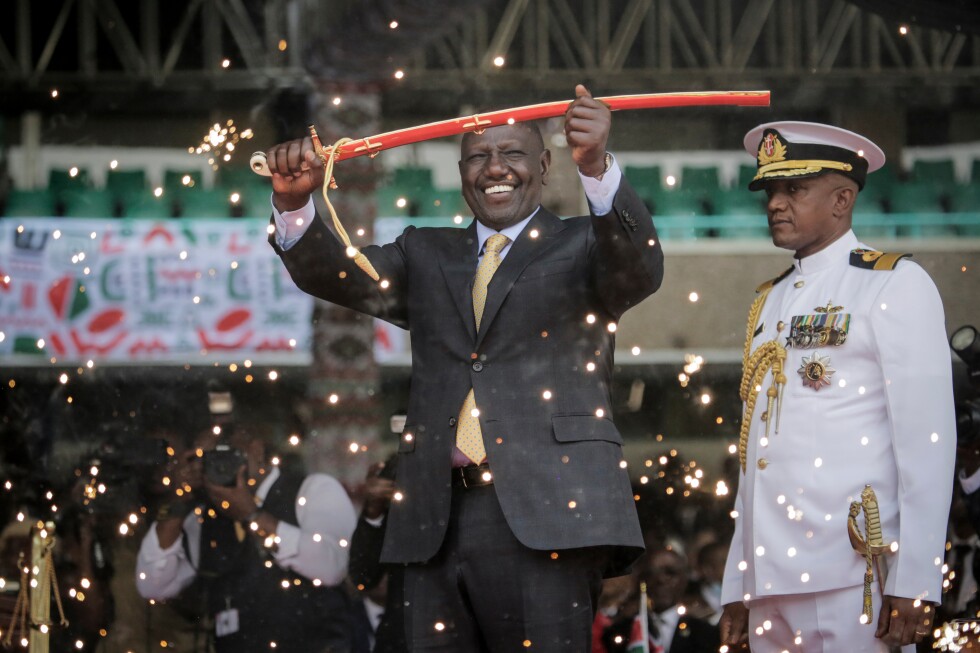
In the East African nation of Kenya, political tensions are hitting a fever pitch 12 months out from the 2025 general election, and a new term has come to dominate public discourse: ‘goonism.’ Coined by national leaders to criticize the growing trend of violent, intimidating gangs targeting opposing political groups, the phrase has revealed deep divides between President William Ruto’s administration and the country’s opposition, as the competition for power grows increasingly hostile and dangerous.
Ruto, who first swept into office in a tight 2022 race after campaigning as a devout born-again Christian promising to build a pious, peaceful nation centered on working-class Kenyans, now faces widespread accusations of breaking the values he once championed. Once nicknamed ‘Nabii’ – the Swahili word for prophet – for his public piety, Ruto framed his 2022 campaign as a rebellion against long-standing political dynasties, arguing his rise to power came solely through God’s grace rather than elite privilege. But many of his one-time supporters say a dramatic shift occurred immediately after his inauguration.
While Ruto still attends Sunday church services, critics note he no longer carries a Bible or quotes scripture regularly. Controversial decisions, from demolishing a small chapel on the Statehouse compound to build a newer facility to rolling out aggressive income tax hikes just months after taking office, have reinforced claims of betrayal. The tax proposals sparked mass protests by thousands of young Kenyans across the capital Nairobi that forced partial rollbacks, but failed to ease public anger. Later, additional unrest erupted after a popular blogger died in police custody, and a 2024 protest that saw demonstrators storm the parliamentary building left Ruto’s political standing damaged – and the president increasingly determined to project hardline strength. In a fiery response to anti-government protests where demonstrators carried signs demanding his resignation, Ruto infamously instructed police to ‘break’ protesters’ limbs, drawing widespread condemnation that framed the comment as a veiled threat against political dissent.
Today, both ruling and opposition figures decry goonism, but each side blames the other for the surge in political violence. Opposition leaders claim the gangs that disrupt their rallies and intimidate their supporters are directly state-sponsored. ‘We must say no, collectively, to the new specter, the new norm, of goonism,’ prominent opposition leader Kalonzo Musyoka told local media, rejecting government claims that opposition groups are behind the violence. Even ruling party allies have acknowledged the threat the trend poses to Kenya’s democracy: National Assembly Speaker Moses Wetang’ula, a close Ruto ally, recently stated that ‘the culture of goonism has no place in a democratic society.’ Interior Secretary Kipchumba Murkomen has also pledged to crack down on unauthorized armed gang activity targeting political gatherings.
The violence has already spilled into everyday public life: Last month, opposition Senator Godfrey Osotsi was violently assaulted by a group of men at a western Kenyan restaurant over his political views, leaving him with injuries serious enough to require hospitalization. The attack sparked local protests and drew widespread condemnation from religious leaders across the country.
Religious leaders have emerged as some of the most vocal critics of Ruto’s shift away from his stated Christian values, with one prominent megachurch pastor delivering a viral sermon that implicitly condemned the president’s ties to political violence. ‘Everyone who wants to rule this country by that kind of thing, I speak as a prophet of God: You shall fall,’ megachurch pastor Wilfred Lai, based in the coastal city of Mombasa, told his congregation during a recent Sunday service. ‘You can’t use goons and you are telling us that you are taking us into a better place. You are a liar and the truth is not in you.’ Though Lai never mentioned Ruto by name, the widely shared clip of the sermon left little doubt among Kenyans who he was targeting. Lai was one of multiple evangelical leaders who publicly supported Ruto during his 2022 campaign, making his rebuke all the more significant.
Public anger has been further stoked by a bitter, venomous public feud between Ruto and his former deputy Rigathi Gachagua, who was impeached earlier this year after falling out with the president. Gachagua now leads the ‘Wantam’ movement, which is pushing to limit Ruto to a single term. The pair have traded increasingly vulgar insults: In March, Gachagua called Ruto a thief who would ‘steal a funeral home,’ prompting Ruto to label Gachagua a ‘cold-blooded pig’ who stole from his own brother. The public spectacle drew a rare rebuke from Kenya’s top Catholic leadership. ‘Disagreement is OK, but insulting each other in public is a disgrace,’ said Archbishop Maurice Muhatia, head of the local Catholic bishops conference, at a recent gathering. ‘Give us a break.’
Political scholars and analysts warn that if both sides do not de-escalate tensions immediately, the 2025 election could be one of the most violent in Kenya’s modern history. Kenya has a long history of fractious, election-related violence – most notably the deadly 2007 post-election unrest that saw the criminal gang Mungiki play a major role in targeted attacks. Analysts say the current context is far more volatile than past elections, with Ruto’s uncompromising leadership style stoking fears of a shift toward authoritarianism, a break from past Kenyan presidents who were more open to accommodating opposition. ‘Goonism’ is ‘a product of gangster theology’ of which Ruto is the high priest, said Nairobi-based independent writer Christine Mungai, arguing the president has mastered ‘how to perform public piety’ while working ‘to make life harder for everyone.’
Karuti Kanyinga, a Kenyan development scholar and visiting professor at South Africa’s Stellenbosch Institute for Advanced Study, warned that if hostile rhetoric and gang activity continue, the 2025 election will devolve into widespread bloodshed. ‘If Ruto and opposition figures don’t tone down the rhetoric the election is going to be very bloody,’ Kanyinga said, adding that by next year, ‘everyone will have their own protection gangs.’
As the election draws closer, Ruto continues to court influential church leaders, who hold massive social and political sway across Kenyan communities. But with growing numbers of religious leaders turning against him, and opposition groups gaining traction amid widespread public anger, Ruto’s path to a second term remains uncertain. Though his position is precarious, adversaries acknowledge the president remains a cunning, formidable opponent who will be difficult to unseat in next year’s vote.