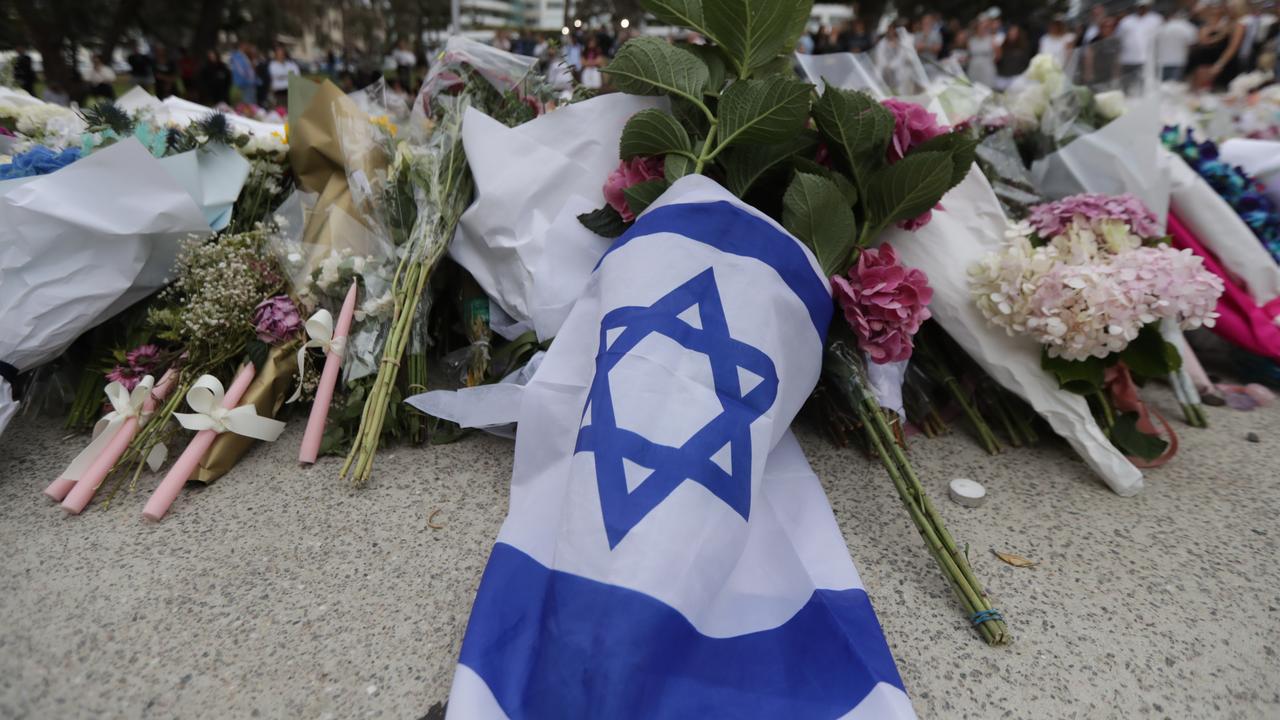
As Australia’s Royal Commission into Anti-Semitism and Social Cohesion enters its fourth day of public hearings, multiple witnesses have laid bare profound harm and broken trust stemming from rising anti-Jewish sentiment across Australian public institutions, media, and community spaces. The testimonies have cast a stark light on the deep-seated biases and systemic failures that have eroded safety for Jewish communities across the country. One dual Australian-Israeli citizen, identified only as AAV to protect her privacy, told the commission of crippling fear that preceded a scheduled knee surgery at a New South Wales (NSW) public hospital in February 2025. Four days before her procedure, she encountered a viral social media video — currently the subject of active criminal proceedings — in which nurses at Bankstown Hospital allegedly boasted about harming Israeli citizens. The revelation shattered her long-held trust in the state public health system, leaving her terrified that she could be killed while unconscious on the operating table. “I can’t even describe the terror that that created for me because of my knowledge of healthcare,” AAV told the hearing. “I spent the worst 24 hours of my life imagining all the ways I could be killed. I was paralysed with fear.” The witness shared that she already carried profound trauma from the October 7 2024 attacks on Israel: her cousin was taken hostage in that assault, and their remains were only returned to family this past January. Even before the pre-surgery panic, AAV’s faith in Australian institutions had already been shaken by a deeply upsetting experience with an NSW Health employee assistance program (EAP) counsellor following the December 2024 Bondi Junction attack. She had sought counselling to process overwhelming grief and anger over what she viewed as the government’s failure to protect Jewish and all Australian citizens, but the session left her reeling. Instead of providing support, the counsellor asked AAV to “put yourself in the position of those men and understand why they might have acted that way,” before prompting her to imagine a conversation with a Gazan mother who had lost family in the conflict. AAV said she stormed out of the session in a burst of rage, stunned by the questions. Reflecting on the broader shift in safety for Jewish Australians, she added: “What we have done in the Jewish community is made abnormal normal. It’s not normal for a person to go to the hospital and think ‘Is somebody gonna harm me while I’m here’?” She stressed that extensive, intentional work is required from NSW Health to begin repairing the damage done to trust within the Jewish community. Two people, Sarah Abu Lebdeh and Ahmad Rashad Nadir, have already pleaded not guilty to charges related to the social media video: Lebdeh faces counts of using a carriage service to menace, harass, offend and threaten group violence, while Nadir has pleaded not guilty to charges of menace, harassment, and offense. The pair is scheduled to go on trial in August 2025. Beyond healthcare, the hearings also brought sharp criticism of Australian media from veteran former Age editor-in-chief Michael Gawenda, who called the sector’s response to rising anti-Semitism “an enormous failure.” Gawenda argued that major media outlets have systematically downplayed the growing crisis of anti-Jewish bias in Australia, echoing long-running complaints from Jewish community groups that the scope of the problem has been underreported. He told the commission he was stunned by the breadth of harm shared by the more than 30 witnesses who have already testified, most of whose stories have never been reported in mainstream media. “Why was there a need to have a royal commission to tell these stories?” Gawenda asked. “It cannot be that they didn’t have the journalists to do it. Why didn’t they spend time in these communities, talk to ordinary people about what they’re experiencing?” Gawenda also condemned a growing trend of journalists abandoning long-held ethical norms to act as political activists, specifically calling out reporters who have publicly stated it is acceptable to side exclusively with one side of the Israeli-Palestinian conflict. “This was a denial of the ethical positions that have existed in journalism from the time I became a journalist in 1970: that we don’t be activists, that we don’t even belong to the Labor or the Liberal party,” he said. Another witness, Stephanie Cunio, a lifelong Jewish left activist and Bondi local who has worked with union and advocacy groups for decades, shared her experience of being marginalized by progressive communities for rejecting one-sided takes on the Israeli-Palestinian conflict. Cunio told the hearing she holds the nuanced view that both the October 7 Hamas attacks and the ongoing violence in Gaza are unacceptable atrocities, but that most of her left-leaning peers refuse to accept that both realities can coexist. “The left could only see one truth, which was the horrible things happening in Gaza,” she said. “So that truth was heartbreaking, and then further on the fact that broadly the left could not stand in solidarity with Jews as we are increasingly experiencing anti-Semitism. I don’t know if it’s naivety, but I don’t find it forgivable.” Cunio, who first joined the Jewish left in the 1990s, said she was “cancelled and gaslit” by a climate organization where she served on the board, after she refused to fully denounce Israel’s right to exist and adopt a framing that labeled the state entirely colonial. “There was a strong pressure to denounce completely the existence of Israel and to take the colonial view of the conflict, which I don’t completely disagree with,” she explained. “But Israel is my ancestral lands as well. If I wasn’t taking that position I was cancelled and gaslit.” She added that she feels humiliated by the widespread demonization of the word “Israel” in progressive spaces, noting that for her, the word evokes beautiful landscapes and beloved friends, not just the actions of the current Israeli government — while acknowledging that for Palestinians, the term is inextricably tied to war, displacement, and violence. After the December 14 2024 Bondi attack that killed 15 people, Cunio received an outpouring of support from community members, but she called the experience bittersweet. “It was a double edged sword: it was welcome, but where was it before, and where was it for those people who died on October 7th?” she asked. The commission also heard from the owners of Lewis Continental Kitchen, a beloved kosher deli in Bondi that was firebombed in October 2024. Mother-daughter co-owners Judith and Karyn Lewis described the arson attack as devastating to their family business, which had become a central community hub where customers became close friends. “For us it’s devastating because we’re not seeing all our friends because our customers very much became our friends,” Judith Lewis told the commission. The public hearing was briefly closed to allow the pair to speak freely about the attack, as three men facing charges over the arson are still before the courts. The Royal Commission into Anti-Semitism and Social Cohesion was called by Prime Minister Anthony Albanese on January 8 2025, following weeks of community pressure in the wake of the alleged December 2024 Bondi terror attack. This first block of hearings is scheduled to run for two weeks, focused on establishing a clear definition of anti-Semitism, mapping its prevalence across Australian society, and assessing how bias has taken root in major public and private institutions. The commission’s final report, including policy recommendations to address rising anti-Semitism, is due to be delivered to the government in December 2025, one year after the Bondi attack.
Health worker’s terror before surgery after nurses allegedly boasted killing Israeli patients