As one of the world’s most populous nations with a fast-expanding economy and unrivaled global influence in cricket, India is now laying the groundwork to extend its global footprint across the broader international sports landscape. Having already secured hosting rights for the 2030 Commonwealth Games in the western city of Ahmedabad, the country has set its sights on an even bigger prize: securing the right to host the 2036 Summer Olympic Games.
This push for international sporting leadership aligns with Prime Minister Narendra Modi’s broader national vision of building a fully developed India by 2047, a plan centered on upgrading public living standards, expanding transport infrastructure, advancing education, and establishing the country as a global hub for technology and innovation. These national development efforts form the core foundation of India’s growing sporting ambitions.
In an interview with The Associated Press, Union Minister of Youth Affairs and Sports Dr. Mansukh Mandaviya framed India’s current moment as one of newfound confidence. “India today reflects a confident and aspirational mindset, ready to lead and shape the future of global sport,” he said. “Our growing capability to host major international sporting events is a testament to how far we have progressed. At the same time, our athletes continue to make the nation proud across sports disciplines, signaling the steady rise of India as a formidable sporting force.”
On Thursday, Mandaviya was set to lead a national sports conclave in the capital New Delhi, where stakeholders will review India’s preparation for upcoming major events, including the 2026 Asian Games, 2026 Commonwealth Games, and the 2028 Los Angeles Olympics. The gathering will also address compliance requirements under the National Sports Governance Act, a 2025 law enacted to improve transparency across national sports federations and set clear standards for international event hosting and athlete participation.
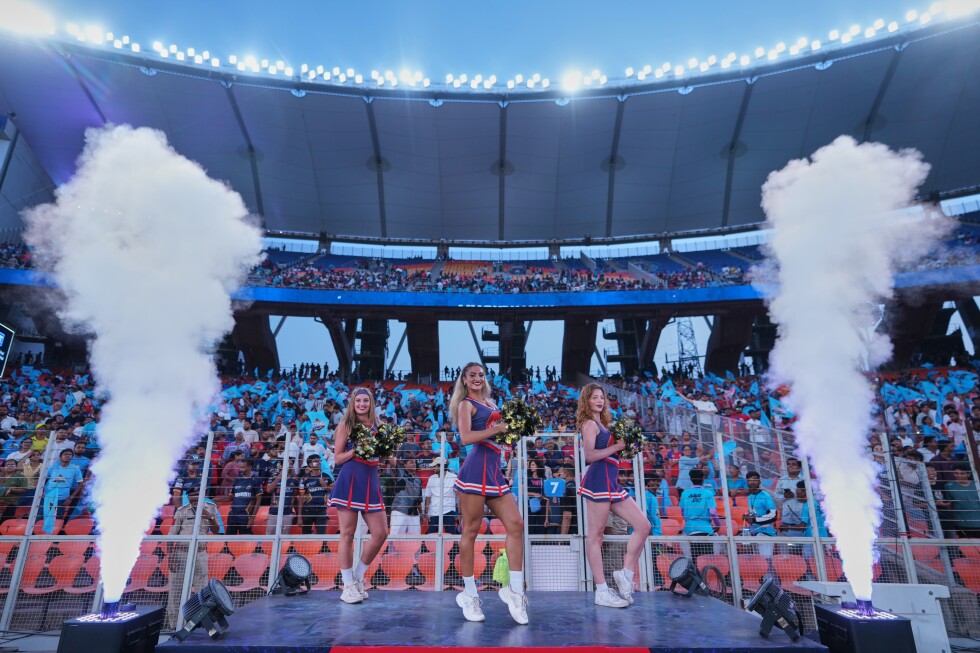
Already in 2026, India has hosted three high-profile cricket events: the men’s ICC Twenty20 World Cup, the second edition of the Women’s Premier League, and the ongoing season of the Indian Premier League — one of the wealthiest and most widely followed franchise sports leagues on the planet. Beyond cricket, New Delhi is playing host to the BWF World Badminton Championships, the eastern city of Bhubaneshwar is scheduled to welcome a World Athletics Continental Tour competition, and Ahmedabad will host the Asian Weightlifting Championships later this year. Indian authorities are also exploring options to bring Formula One racing back to the country for the first time since the last Indian Grand Prix was held in 2013, and national sports officials successfully campaigned for cricket’s reintroduction to the Olympic program for the 2028 Los Angeles Games.
For India, the 2030 Commonwealth Games in Ahmedabad will serve as a critical benchmark to demonstrate how far the country has come since its last major multi-sport event hosting experience. New Delhi previously hosted the 2010 Commonwealth Games, an event overshadowed by widespread logistical delays, unfinished facilities, and high-profile corruption scandals. Indian officials are confident the 2030 iteration will leave those past missteps far behind. The centerpiece of the 2030 Games will be the Sardar Patel Sports Enclave, a purpose-built complex that already houses the world’s largest cricket venue, the Narendra Modi Stadium, which can be reconfigured to host a range of Olympic and Commonwealth sports.
But India’s sporting transformation extends far beyond new infrastructure. Over the past decade, policymakers have made sustained investments to build a robust, inclusive domestic sports ecosystem that nurtures talent from the grassroots to the elite level. Today, more than 15 professional leagues across different sports operate across the country, creating pathways for young athletes to pursue competitive careers. The Sports Authority of India has also launched a network of specialized national centers of excellence, providing elite athletes with access to world-class training facilities and evidence-based, scientific coaching programs designed to produce Olympic and world championship medalists.
These investments are already delivering measurable results on the global stage. At the 2023 Asian Games, India recorded its best performance in history, finishing with a total of 107 medals. The country claimed its first Thomas Cup badminton world title in 2022, won its first-ever men’s squash World Cup crown, earned 29 medals (including seven gold) at the 2024 Paris Paralympics, and captured 20 medals at the 2025 World Boxing Cup finals. Individual standout Neeraj Chopra, the Olympic and world champion javelin thrower, has become a national icon and inspiration for young athletes across the country.
Sports advocates note that these high-profile success stories also play a key role in shifting cultural attitudes toward fitness and recreational participation across India’s vast population. “While the infrastructure is put in place, we are also working on our messaging,” said Hari Ranjan Rao, Sports Secretary for the Government of India. The national Khelo India (Play India) initiative, launched in 2018, has expanded rapidly to include youth competitions, university-level events, winter sports, para sports, beach and water sports, and even dedicated competitions for tribal athletes. “The aim is to draw out the masses into an active lifestyle,” Rao said, “As well as into participation.”
With growing grassroots participation and a pipeline of elite talent emerging, Indian officials are optimistic about the country’s sporting future. “As we prepare to host the 2030 Commonwealth Games and advance our bid for the 2036 Olympic Games, India stands ready to take center stage,” Mandaviya said. “We are determined to emerge as a global sporting powerhouse, both in producing champions and in hosting world class events.”