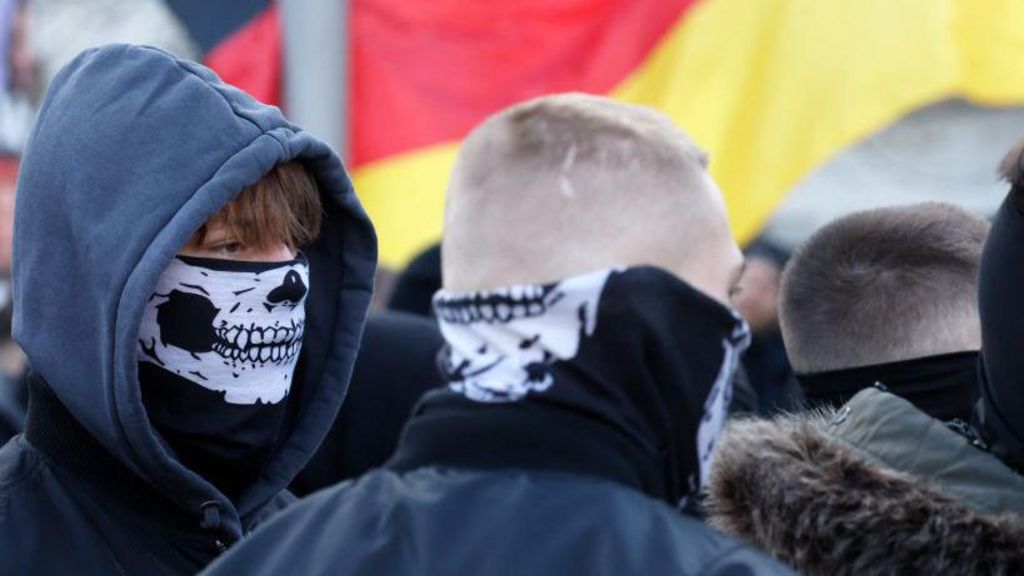
Over the past two years, a worrying new wave of explicitly neo-Nazi youth organizations has sprung up across multiple regions of Germany, prompting a large-scale coordinated law enforcement operation targeting two of the most prominent violent groups. On Wednesday, more than 600 police officers carried out raids across approximately 50 residential and commercial locations spanning 12 German states, with operations concentrated in the country’s eastern and southern regions including Bavaria, Berlin, Brandenburg, and Saxony. Federal prosecuting authorities confirmed that the operation targeted individuals linked to two groups: Jung & Stark (JS, translating to Young and Strong) and Deutsche Jugend Voran (DJV, or Forwards German Youth). While no arrests were made during the search operation itself, investigators have laid out detailed allegations of organized criminal violence and extremist networking against the suspects. According to a formal statement from federal prosecutors, the targeted individuals are suspected of coordinating violent attacks through encrypted social media platforms and building interconnected extremist networks that span the entire country. Prosecutors detailed that multiple accused group members have carried out brutal assaults on people they categorized as political enemies, including left-wing activists, as well as individuals they falsely accused of being pedophiles. In each documented attack, victims were beaten by multiple attackers and left with severe, lasting injuries. Internal group meetings, authorities add, regularly include open calls for violent action against political opponents and the groups’ perceived enemies. This is not the first time members of these networks have faced legal consequences: last year, a leading figure in DJV was sentenced to over three years in prison following a series of violent assaults on political opponents in Berlin. Twenty-four-year-old Julian M. was convicted alongside a cell of attackers aged 16 to 23 for brutally beating multiple people who displayed visible symbols associated with left-wing political movements. Unlike older generations of German far-right extremist groups, these new youth networks operate with unprecedented openness, maintaining active, public profiles on major mainstream and encrypted social platforms including Telegram and Instagram. Experts on extremism warn that this intentional openness is a deliberate recruitment strategy targeting young, disillusioned men who feel alienated from mainstream society. Jakob Guhl, a researcher at the Institute for Strategic Dialogue, notes that the majority of people joining JS and DJV are extremely young, typically teenagers or in their early 20s. Guhl emphasizes that unlike more established, mainstream far-right political movements in Germany such as the Alternative for Germany (AfD) or the Identitarian movement, which aim to build broad public support and enter mainstream political discourse, JS and DJV center their activities on militant training, public protest participation, and direct physical violence against perceived enemies. Since 2024, hundreds of smaller, local offshoots of these groups have emerged across eastern Germany in particular, following JS’s model of open online organizing and militant activity. German security and political officials have repeatedly voiced deep, growing concern over the rising rates of young people being radicalized and drawn into far-right extremist activity, which has increasingly targeted not only left-wing political figures but also members of Germany’s LGBT community. Today’s coordinated raids mark one of the largest law enforcement actions against this new wave of openly militant far-right youth groups, underscoring the German state’s growing alarm over the spread of violent neo-Nazi organizing among young people.