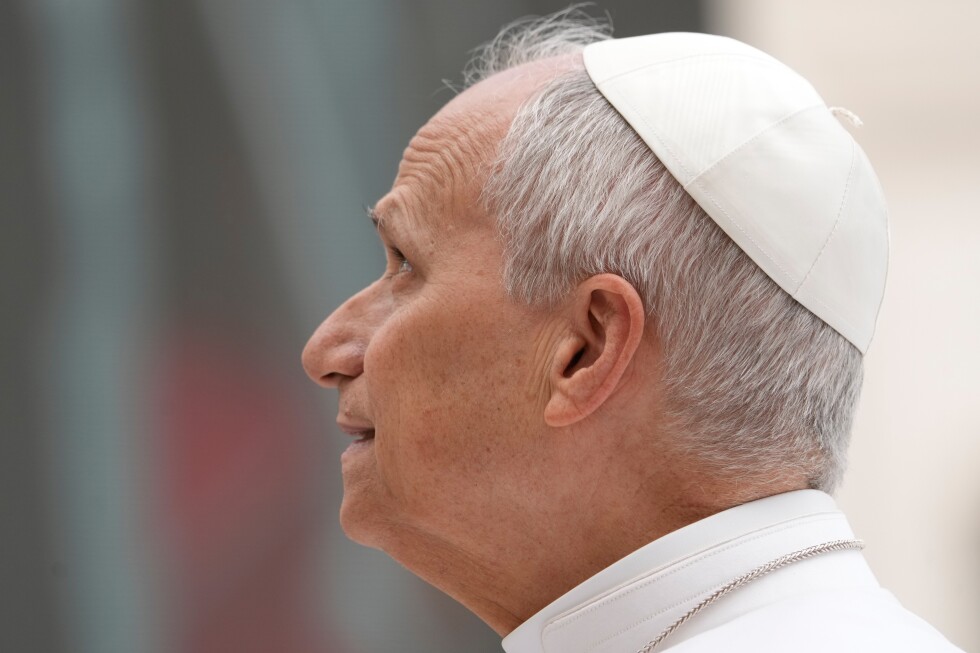
Vatican officials announced Wednesday that Pope Leo XIV will undertake a seven-day pastoral visit to Spain next month, headlined by two major engagements: the inauguration of the iconic central tower of Barcelona’s world-famous Sagrada Familia basilica, and a outreach visit to migrant communities in the Canary Islands.
The trip, scheduled to run from June 6 to 12, will kick off in Spain’s capital Madrid, where the pontiff is set to hold official meetings with top Spanish government leaders, members of parliament, and King Felipe VI and Queen Letizia. He will also lead an evening prayer vigil with young Catholics, an event that echoes the 2011 World Youth Day gathering hosted in Madrid by the late Pope Benedict XVI, the last pope to travel to Spain.
From Madrid, the papal tour will move on to Barcelona, where the visit coincides with the 100th anniversary of the death of Antoni Gaudí, the legendary Catalan architect who devoted his life to designing the Sagrada Familia, the world’s tallest church structure. During his time in the city, Pope Leo will celebrate Mass inside the UNESCO-listed basilica and formally open the recently completed Tower of Jesus Christ, the soaring central spire that was secured into its final position in February. This new tower brings the basilica to its planned maximum height of 172.5 meters (566 feet) above the Barcelona skyline, though the Sagrada Familia’s decades-long construction project remains incomplete.
Spanish bishops also confirmed Wednesday that while Gaudí is currently advancing through the canonization process toward sainthood, the ceremony will not take place during Pope Leo’s visit. This mirrors the 2010 visit of Pope Benedict XVI, who consecrated the still-unfinished basilica during his trip to the site.
The final leg of Pope Leo’s trip will take him to the Canary Islands, a Spanish archipelago off the northwest coast of Africa that serves as the primary entry point for migrants traveling from Africa to Europe. The visit fulfills a long-held priority of Pope Francis, Pope Leo’s immediate predecessor, who made outreach to migrants and refugees a defining mission of his papacy. Pope Leo has continued this legacy, consistently calling for dignified treatment of migrants even amid restrictive new migration policies put in place by the Trump administration in his native United States.
The trip to the Canaries also aligns with the migration agenda of Spain’s current socialist government led by Prime Minister Pedro Sánchez. At a time when many European governments have tightened border controls and expanded deportation programs, Sánchez’s administration has openly championed managed legal migration. The government is currently advancing a sweeping migrant amnesty that would grant legal status to an estimated 500,000 unauthorized migrants currently residing in Spain. The policy has drawn fierce pushback from conservative opposition groups, particularly the far-right Vox party, which has labeled the legalization push an “attack on Spanish national identity.”
Despite the criticism, the amnesty plan holds broad support from a coalition of backers that includes the Catholic Church and leading Spanish business groups. Sánchez has repeatedly framed the reform as a demographic and economic necessity: Spain’s population is rapidly aging, and the nation requires additional working-age people to sustain its growing economy and fund public social security programs. Currently, roughly 10 million of Spain’s 50 million residents are foreign-born — around one in five people — with the largest share hailing from Latin America and Africa.
During his time in the Canaries, Pope Leo will first meet with migrant support organizations in Las Palmas, before traveling the next day to meet with migrants at a reception center on the island of Tenerife, where he will also hold separate talks with local aid groups that work with newcomer populations.
For decades, the Canary Islands, located just 105 kilometers (65 miles) from the African mainland, have been a key transit route for migrants seeking to reach the European Union from West Africa and Morocco. To avoid interception by security forces, many migrants undertake dangerous extended sea journeys that can last days or even weeks. Arrivals peaked in 2024, when nearly 47,000 migrants reached the islands, according to data from Spain’s interior ministry. After the EU struck cooperation deals with Morocco, Mauritania, Senegal and Gambia to curb irregular crossings, arrivals have dropped sharply: just over 2,000 migrants landed in the Canaries in the first four months of 2026.
Following his Spain trip, Pope Leo — the first U.S.-born pope in history — will travel to another major European migrant entry point: the Italian island of Lampedusa, off the coast of Sicily. That visit is scheduled for July 4, the same date the United States celebrates the 250th anniversary of its Declaration of Independence.
This report includes contributions from correspondents Naishadham in Madrid and Brito in Barcelona, and is produced by the Associated Press. AP’s religion coverage is supported through a collaboration with The Conversation US, with funding from Lilly Endowment Inc. The AP retains full editorial responsibility for all content.