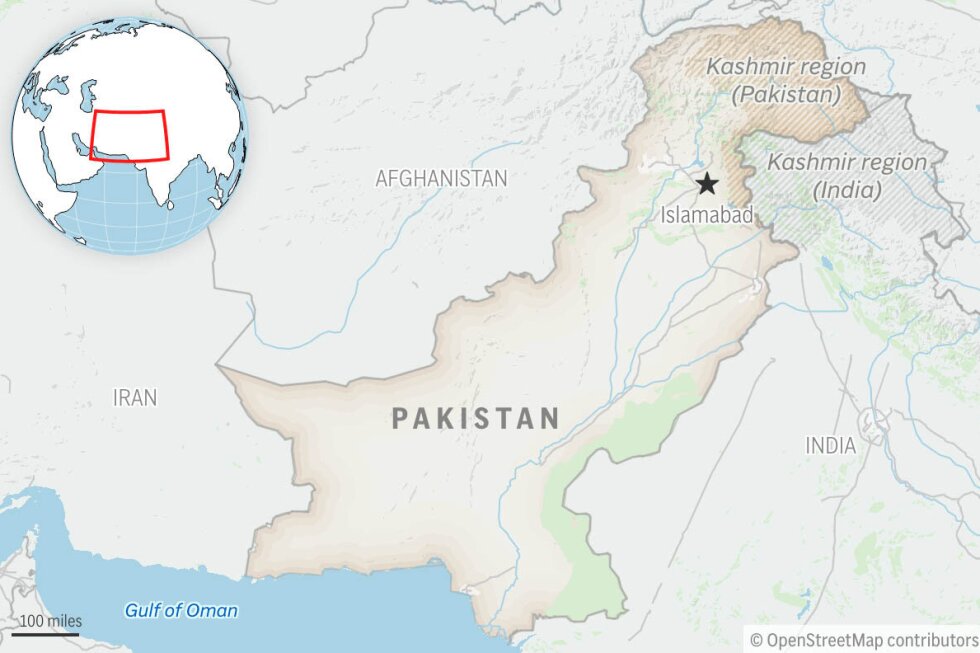
Cross-border hostilities have reignited between Afghanistan and Pakistan, marking another setback to fragile diplomatic efforts to de-escalate months of deadly confrontation between the two South Asian neighbors. On Monday, Afghanistan’s interim government issued formal accusations that Pakistan launched unprovoked cross-border artillery strikes that targeted civilian-populated areas in Afghanistan’s eastern Kunar Province.
Hamdullah Fitrat, Afghanistan’s deputy government spokesperson, announced the casualties and infrastructure damage in a post on the social platform X. According to Fitrat’s statement, the strikes left at least three civilians dead and 14 others injured. The attack also inflicted severe damage on key community infrastructure, destroying two local schools, two neighborhood mosques and a primary health care center that served residents of the affected area.
Pakistan’s Ministry of Information swiftly rejected Kabul’s allegations in a counter-statement posted to X, pushing back against the claims and shifting blame for escalating tensions to the Afghan Taliban-led administration. The ministry noted that Afghanistan’s accusations come in direct response to a series of cross-border shootings launched from Afghan territory into Pakistan that took place in March and April. Those incursions, Pakistan says, killed nine civilian women and children in Bajaur District, located in Pakistan’s northwestern Khyber Pakhtunkhwa Province.
In its statement, the Information Ministry labeled the earlier cross-border attacks from Afghanistan “reckless and shameful actions” that expose the Kabul administration’s failure to control militant activity along the shared border. The ministry also questioned the veracity of the damage imagery released alongside Afghanistan’s latest accusation, pointing out that the photos show only localized structural damage with largely intact roofs, a pattern the ministry says is inconsistent with artillery impact and suggests the damage may have been deliberately staged.
The latest exchange of accusations comes amid a months-long cycle of deadly cross-border clashes that has killed hundreds of people on both sides. The current spiral of violence began in late February, when Afghanistan launched a retaliatory cross-border strike against Pakistan after Pakistani warplanes carried out airstrikes inside Afghan territory that targeted militant groups Islamabad says operate from Afghan soil.
Pakistan has long maintained that the Afghan Taliban government allows the Tehrik-e-Taliban Pakistan (TTP), also known as the Pakistani Taliban, to use Afghan territory as a base to plan and launch deadly attacks inside Pakistan. The TTP is a separate militant organization from the Afghan Taliban, but the two groups share close ideological and organizational ties and have remained allied since the Afghan Taliban seized control of Afghanistan in 2021 during the chaotic withdrawal of U.S.-led international forces. Afghan officials have repeatedly denied Pakistan’s accusations that they harbor TTP militants.
In early April, senior officials from both countries met in western China for peace talks mediated by the Chinese government. Following the negotiations, Beijing announced that the two sides had reached a preliminary agreement to avoid further escalation of hostilities and committed to work toward exploring a comprehensive, long-term solution to their border disputes. Despite that diplomatic breakthrough, low-level cross-border clashes have continued intermittently in the weeks since the talks, failing to cement a lasting ceasefire along the 2,640-kilometer shared border.