In a striking escalation of rhetorical and tactical posturing amid the ongoing full-scale war, Russia and Ukraine have announced competing unilateral ceasefires, even as deadly cross-border attacks left multiple civilians dead on both sides Monday. This exchange comes as U.S.-led diplomatic efforts to resolve the conflict have stalled, with Washington redirecting its foreign policy focus to the worsening crisis in the Middle East.
Russian authorities first announced their planned ceasefire last week via the country’s state-backed messaging platform MAX, made official Monday by the Russian Defence Ministry. The ceasefire is scheduled to run May 8 through 9, aligning with Moscow’s annual national commemoration of Victory Day, the holiday marking the Soviet Union’s defeat of Nazi Germany in World War II. The announcement carried an explicit threat of retaliation: if Ukraine violates the truce to disrupt the 81st anniversary celebrations, Russia will carry out a massive missile strike targeting central Kyiv. The ministry also urged Kyiv civilians and foreign diplomatic staff to evacuate the capital immediately to avoid harm. Each year, Russia marks the holiday with a high-profile military parade through Moscow’s iconic Red Square.
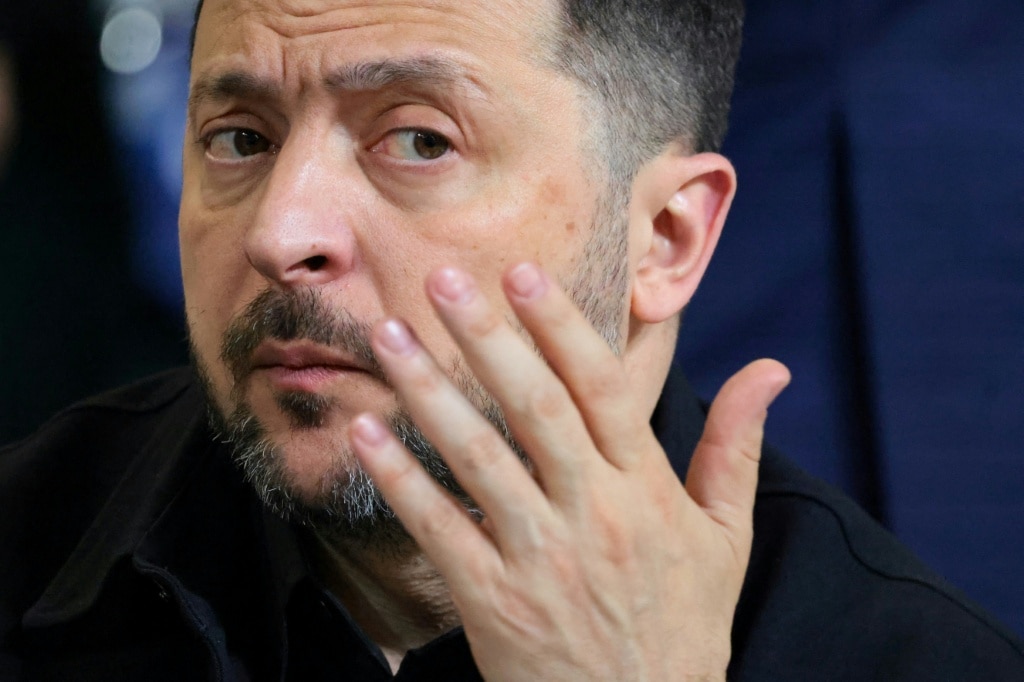
Ukrainian President Volodymyr Zelenskyy rejected Moscow’s proposal as disingenuous, countering with a separate unilateral truce scheduled to take effect May 5 through 6, three days ahead of Russia’s planned pause. Zelenskyy argued that expecting Ukraine to adhere to a ceasefire to accommodate a Russian national military holiday was unreasonable, suggesting Moscow’s proposal stemmed from fear that Ukrainian drones would disrupt the Red Square celebrations. He added that as of Monday, Ukraine had not received any formal official communication from Russia outlining the terms of the proposed ceasefire that had been circulated on Russian social media.
Alongside the ceasefire exchange, Zelenskyy made an unannounced trip to Bahrain on Monday for bilateral talks focused on expanding security cooperation, a source within the Ukrainian delegation confirmed to Agence France-Presse.
Even as the two sides traded truce announcements, deadly violence continued across the front lines and deep inside both countries. Ukrainian officials reported that Russian strikes across Ukrainian territory killed nine civilians on Monday. A Russian ballistic missile attack on Merefa, a town located just outside Kharkiv, Ukraine’s second-largest city, left seven civilians dead and dozens more injured. AFP reporters on the scene saw multiple bodies covered by blankets and sheets strewn across the town’s street, with extensive damage to local homes, shops, and civilian vehicles. A second strike in the southern Zaporizhzhia region’s village of Vilnyansk killed a married couple, a 51-year-old man and his 62-year-old wife, and wounded their 31-year-old son along with three other bystanders, regional governor Ivan Fedorov confirmed.
Cross-border attacks also targeted Russian territory overnight. A Ukrainian drone strike killed one civilian in Russia’s Belgorod region, a border area that has faced regular attacks throughout the war, regional governor Vyacheslav Gladkov said. In addition, a Ukrainian drone crashed into a residential high-rise building in an upscale neighborhood of Moscow, Russian capital mayor Sergei Sobyanin confirmed.
An AFP analysis of data from the U.S.-based Institute for the Study of War (ISW) shows that April marked the first time Russia lost more territory in Ukraine than it gained since Ukraine’s 2023 summer counteroffensive. ISW data indicates Moscow ceded roughly 120 square kilometers of occupied territory between late March and April. While frontline fighting has largely reached a stalemate in recent months, relentless drone attacks on both sides have continued to claim civilian lives and damage infrastructure. Russia’s territorial advances have slowed dramatically since late 2025, as systemic communication failures within the Russian military combined with consistent Ukrainian counterattacks allowed Kyiv to secure small localized breakthroughs in Ukraine’s southeast.
Despite these small net gains for Ukraine — the first the country has recorded in more than two years — the territorial shifts remain marginal, representing just 0.02 percent of Ukraine’s total national territory. Currently, Moscow maintains control of just over 19 percent of Ukraine. Roughly seven percent of that territory, including Crimea and large swathes of the Donbas region, was already controlled by Russia or pro-Russian separatist groups prior to Russia’s full-scale invasion in February 2022, with the remainder seized in the opening weeks of the 2022 invasion.