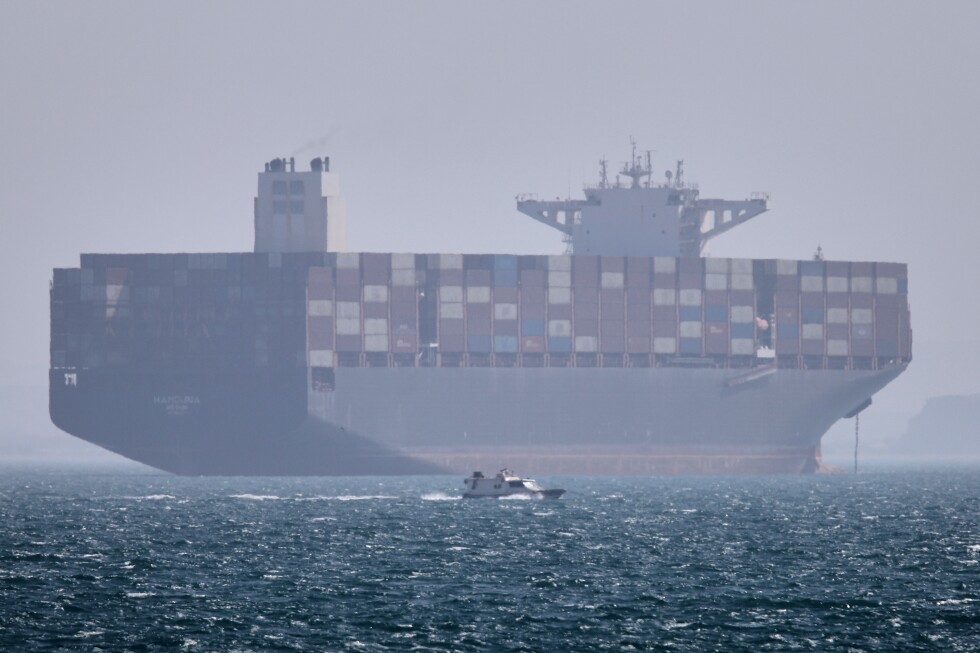
On a tense Monday in the Persian Gulf region, the United Arab Emirates confirmed it had faced direct Iranian attacks — the first such escalation since a fragile ceasefire took effect in early April. The confrontation unfolded hours after the U.S. launched a new push, dubbed “Project Freedom,” to reopen the Strait of Hormuz, the world’s most critical chokepoint for global energy supplies that Iran has controlled effectively since the U.S. and Israel launched their military campaign in late February.
According to the UAE Defense Ministry, Iran fired four cruise missiles toward the emirate; three were successfully intercepted by air defenses, while the fourth fell harmlessly into the Gulf waters off the country’s coast. Separately, authorities in the eastern emirate of Fujairah — a key oil infrastructure hub that serves as the UAE’s main maritime access point outside the Strait of Hormuz and the terminus of an oil pipeline built to bypass the strait — confirmed an Iranian drone sparked a fire at a major oil facility. The UK Maritime Trade Operations center, which monitors regional shipping security, later reported two cargo vessels were ablaze in waters off the UAE coast. A South Korean government statement confirmed an explosion and fire broke out on a South Korean-operated vessel anchored in the strait near the UAE, though no injuries were reported; it remained unclear Monday if this was one of the vessels noted by British officials.
The new U.S. initiative kicked off Monday, when U.S. Central Command confirmed two American-flagged merchant ships completed a successful transit of the strait, with guided-missile destroyers from the U.S. Navy providing escort. “Both transiting vessels are safely headed on their journey,” the command said in a post on X, adding that U.S. Navy destroyers also transited the waterway as part of the effort to restore commercial traffic. The U.S.-led Joint Maritime Information Center has advised commercial ships to route through Omani territorial waters, establishing what it calls an “enhanced security area” for transits, and warned that traveling near traditional shipping lanes remains “extremely hazardous” due to uncleared mines scattered across the waterway.
The confrontation threatens to upend the three-week-old ceasefire and reignite large-scale fighting across the region. Iran has repeatedly condemned the U.S. initiative as a direct violation of the ceasefire agreement, and has vowed to continue targeting vessels that ignore its requirement that all transiting ships coordinate with Iranian authorities. “We warn that any foreign military force — especially the aggressive U.S. military — that intends to approach or enter the Strait of Hormuz will be targeted,” Major General Ali Abdollahi, a senior Iranian military commander, told state broadcaster IRIB Monday. Iran’s state-run IRNA news agency dismissed Project Freedom as an outgrowth of U.S. President Donald Trump’s “delirium”, after Trump warned Iran Sunday that any attempt to interfere with the U.S.-led transit effort would be met with a “forceful” response.
Trump framed the initiative as a humanitarian measure, designed to assist hundreds of stranded seafarers trapped on vessels stuck in the Persian Gulf since the war began. Crew members of stranded ships have previously told the Associated Press they have faced dwindling supplies of drinking water, food, and other essentials, while watching drones and missiles explode overhead amid earlier hostilities.
Iranian state media stirred further tension Monday when multiple outlets reported Iranian forces had struck a U.S. military vessel near an Iranian port southeast of the strait, claiming the ship was forced to turn back after violating maritime security rules. U.S. Central Command quickly debunked the claim, saying in a statement on X that “no U.S. Navy ships have been struck” in the region.
The closure of the strait has already sent global fuel prices soaring and sent shockwaves through the already fragile global economy, squeezing energy-dependent nations in Europe, Asia, and beyond. The U.S. has also levied sanctions that penalize shipping companies that pay Iran transit fees for passage through the waterway, and enforced a naval blockade of Iranian ports since April 13 that has turned away at least 49 commercial vessels, depriving Tehran of critical oil revenue needed to prop up its ailing domestic economy. U.S. officials have said they hope the pressure will force Iran to make concessions in ongoing ceasefire and peace negotiations, which have so far shown little sign of progress.
As of Monday, questions remain about whether the U.S. initiative can actually restore consistent commercial traffic, as shipping companies and their insurers weigh the growing risk of attacks. “No formal guidance or details about the U.S. effort had been issued to the industry,” said Jakob Larsen, head of security for the Baltic and International Maritime Council, a leading global shipping trade group. Larsen added that the initiative carries clear long-term risks, saying “it carries a risk of hostilities breaking out again” and questioned whether the effort could be sustained over time.
Talks to end the broader conflict remain stalled as both sides dig in on competing demands. Iran’s latest peace proposal calls for the U.S. to lift all sanctions, end its naval blockade, withdraw all military forces from the region, and force Israel to end its military operations in Lebanon, according to Iranian news outlets with close ties to the country’s security apparatus. Iranian officials said they are still reviewing the U.S. response to the proposal, but Foreign Ministry spokesperson Esmail Baghaei noted Monday that shifting U.S. negotiating demands have made meaningful diplomacy difficult. Iran has also claimed its proposal excludes discussion of its nuclear program and enriched uranium stockpiles — a core point of tension between Iran, the U.S., and Israel for over a decade — and wants all outstanding issues resolved within 30 days to end the war permanently, rather than extend the current temporary ceasefire. Trump cast doubt on the prospects of a breakthrough over the weekend, saying he did not expect Iran’s proposal to lead to a lasting negotiated deal.