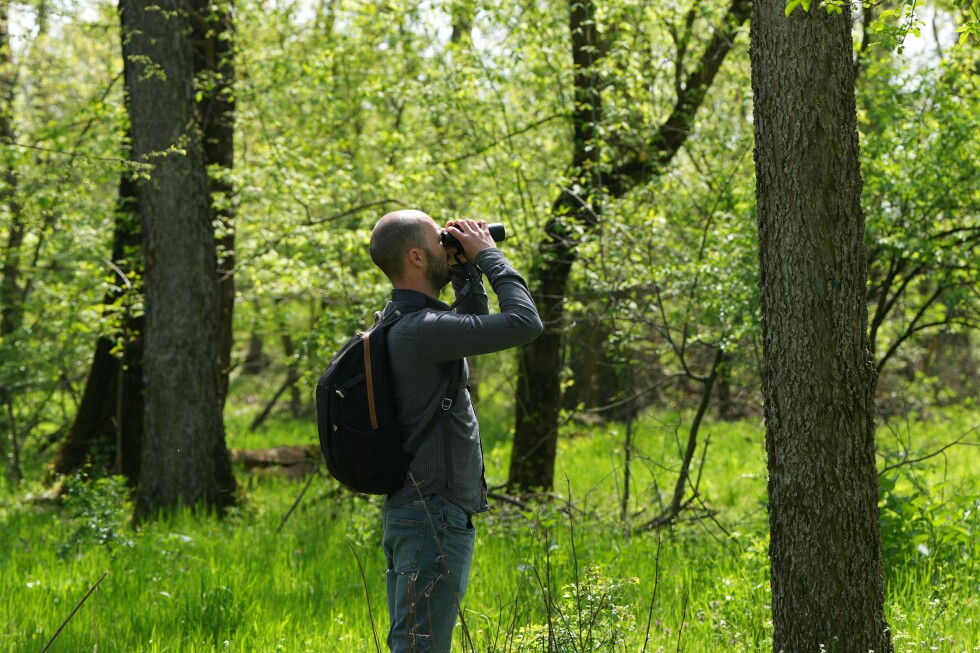
Nestled in the rolling farmlands of northeastern Serbia, a 2-hectare patch of dense old woodland called Nightingale’s Forest stands as a quiet triumph for grassroots environmental action. Today, bird song drifts through its towering tree canopies, and animal tracks wind across damp, mossy grass — a landscape that very nearly was cleared for timber.
Last year, Serbia’s Bird Protection and Study Society stepped in to purchase the private plot via a public crowdfunding campaign, saving it from being felled by a commercial buyer. Uros Stojiljkovic, a representative for the society, told the Associated Press that the market value of the forest’s timber already exceeded the land’s asking price, meaning logging was all but guaranteed if the group had not acted. “We protected it this way,” Stojiljkovic said.
The rapid success of the crowdfunding drive — which raised the full 8,000 euro ($9,500) purchase price in less than a month — has emerged as a telling indicator of shifting public attitudes toward conservation in Serbia, a nation grappling with a cascade of environmental threats. From widespread air and river pollution and failing waste management systems to unregulated profit-driven development that erases green spaces in urban centers, the country’s natural habitats face growing pressure.
While Serbian authorities have promised to strengthen environmental protections as a requirement for the country’s ongoing European Union membership bid, local conservation groups argue that tangible action has been almost nonexistent. Against this policy gap, the successful campaign for Nightingale’s Forest fills a void, led by ordinary citizens rather than state institutions.
Natasa Jancic, one of the organizers of the crowdfunding effort, noted that hundreds of donors have continued to contribute even after the purchase goal was met. Extra funds will be put toward ongoing maintenance of the existing forest and future purchases of at-risk green land. “Individually, we can’t do much, but as an active and stable community, we can achieve a lot,” Jancic said.
Founded three decades ago as a small group of specialized wildlife researchers, the Bird Protection and Study Society has grown dramatically into a broad community of casual and dedicated nature lovers, a shift Jancic says reflects rising public concern for the environment. “We have many families who are members, many nature lovers who may not be that active in the field but they want to contribute somehow,” she explained.
Nightingale’s Forest now supports a diverse array of native bird and mammal species, sustained by its unique moist undergrowth that is rare in Serbia’s predominantly agricultural northeastern lowlands. Conservationists next plan to conduct a full biodiversity survey to catalog all plant and wildlife species on the land, while leaving the woodland itself untouched.
Stojiljkovic acknowledges that protecting just 2 hectares of land will not reverse widespread environmental degradation across Serbia on its own. But he frames the project as a critical first step that can be replicated across the country. “Every village or town should have a Nightingale’s Forest of its own for a cumulative effect,” he said. “It is important to start somewhere.”