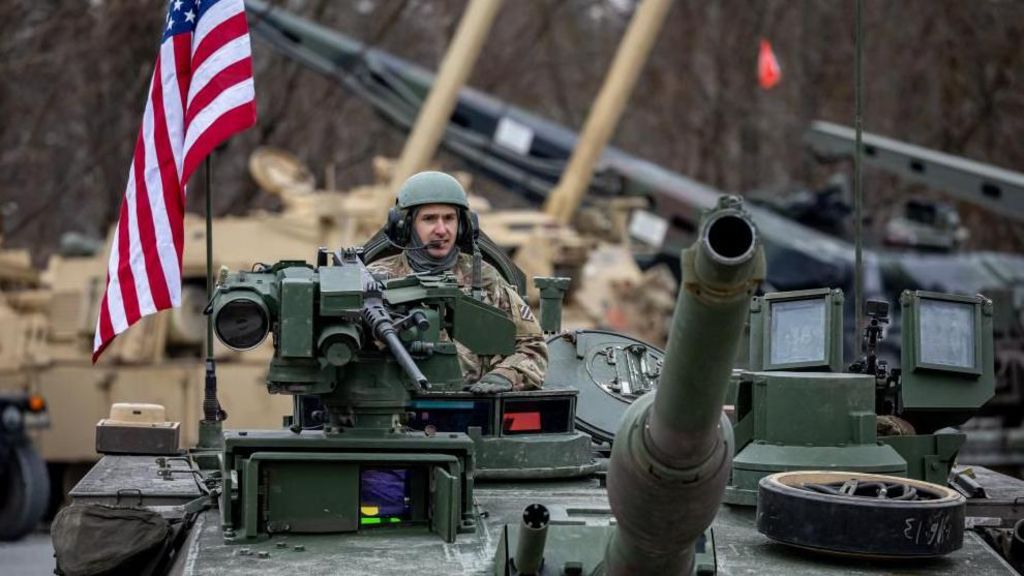
A deepening rift between the United States and Germany has triggered a major shift in American military posture in Europe, with Washington set to withdraw 5,000 active-duty troops from Germany over the next year, a move that has sent shockwaves through the 32-member NATO alliance and raised urgent questions about the future of transatlantic security.
The drawdown, the latest in a series of American troop reductions across Europe under the second Trump administration, cuts the US military presence in Germany from the current 36,000 troops — by far the largest American force deployment on the continent, far outstripping roughly 12,000 troops in Italy and 10,000 in the United Kingdom. The decision follows a heated public exchange between US President Donald Trump and German Chancellor Friedrich Merz, sparked by comments Merz made criticizing American diplomatic strategy amid the ongoing conflict with Iran.
Speaking to Germany’s DPA news agency, German Defence Minister Boris Pistorius struck a measured tone, framing the withdrawal announcement as a development that had long been foreseeable. He reaffirmed that the persistent American military footprint in Europe, anchored in Germany, serves the strategic interests of both Berlin and Washington. Even so, Pistorius emphasized that the geopolitical shift demands that European nations step up to take greater ownership of their own collective security. He noted that Germany has already made substantial progress in this area, having ramped up military spending dramatically in recent years after years of falling short of NATO’s previous 2% of GDP defence spending target — a point of consistent criticism from Trump. Under the current Merz government, Germany is on track to hit a total defence expenditure of 3.1% of GDP by 2027, including a €105.8 billion (£91 billion) annual defence budget and ongoing military aid to Ukraine as it defends against Russian invasion.
NATO, for its part, has moved quickly to seek full clarity from Washington on the details of the drawdown plan. Alliance spokeswoman Allison Hart noted that the US decision reinforces the need for continued European defence investment and greater burden-sharing for transatlantic security. She added that the alliance is already seeing positive progress after member states agreed to a new target of investing 5% of GDP in defence at last year’s NATO summit in The Hague.
The diplomatic row that preceded the troop withdrawal announcement erupted earlier this month, when Merz told university students that the US had suffered a public humiliation at the hands of Iranian negotiators. Merz argued that Washington lacked a coherent strategy for the ongoing conflict, accusing Iranian negotiators of skillfully stalling talks that saw American officials travel to Islamabad only to return without any diplomatic breakthrough. Trump hit back fiercely on his Truth Social platform, dismissing Merz as misinformed and falsely claiming that the German chancellor supported Iran acquiring a nuclear weapon. Within days, the troop withdrawal order was issued.
Pentagon spokesman Sean Parnell confirmed that the drawdown directive came from US Defence Secretary Pete Hegseth, and that the full withdrawal of the 5,000 troops will be completed within a six to 12 month timeline. This move is the latest in Trump’s broader strategy to reorient American military focus away from Europe and toward the Indo-Pacific region, a policy that already saw a troop reduction in Romania last year. Trump has also openly floated the possibility of additional drawdowns from other major American deployments in Europe, including Italy and Spain, and has long been a vocal critic of NATO, arguing that the alliance burdens the US with unfair security costs while European allies underinvest in their own defence.
The announcement has sparked widespread alarm across NATO and even among senior members of Trump’s own Republican Party. Two top Republican congressional leaders — Senate Armed Services Committee Chair Roger Wicker and House Armed Services Committee Chair Mike Rogers — issued a joint statement saying they are deeply concerned by the decision to withdraw an entire US brigade from German soil. They argued that maintaining a strong deterrent presence in Europe is a core core national interest of the United States, and that full withdrawal of forces from the continent runs counter to that goal.
Polish Prime Minister Donald Tusk issued one of the starkest warnings from within the alliance Saturday, saying that the greatest threat facing the transatlantic community today is not external adversaries, but the ongoing internal disintegration of the NATO alliance. He called on all member states to take urgent, decisive action to reverse what he described as a dangerous and disastrous trend. Even as anxiety mounts, German officials have signalled they will move forward with deeper defence integration with other European allies, insisting Germany is already on the right path to shoulder a larger share of regional security responsibilities.