In a clear indication that the Trump administration’s attention on the war-ravaged Gaza Strip is fading as it prioritizes its military campaign against Iran, the United States is moving forward with plans to close down the joint civil-military monitoring hub it set up in Israel to oversee the 2025 Gaza ceasefire agreement, according to recent regional reporting.
Reuters first confirmed the shutdown of the Civil-Military Coordination Centre (CMCC) in a Friday report, noting that the body’s core functions – which include monitoring ceasefire compliance and coordinating humanitarian aid deliveries to Gaza – will be transferred to a US-led international stabilization task force that has been mandated to deploy to the besieged Palestinian enclave. The operation will be brought under the umbrella of the International Stabilisation Force (ISF), headed by US Major General Jasper Jeffers, but the future of that broader multinational force remains far from settled.
Per the report, the drawdown of US personnel at the former CMCC is already underway: the troop count will fall from roughly 190 service members to just 40, before those remaining military roles are ultimately taken over by civilian employees from third-party countries. To date, it remains unclear what tangible effects the closure will have on on-the-ground conditions in Gaza.
When the CMCC was first established, its primary mandate centered on facilitating and verifying the delivery of humanitarian aid to Palestinian civilians in the territory, which was heavily damaged by months of conflict. However, anonymous senior officials told Reuters that aid flows into Gaza have remained largely frozen since the center launched, even with the monitoring body in operation. While Germany, France, the United Kingdom, Egypt and the United Arab Emirates took part in initial planning sessions at the hub in its first months of operation, most of these partner nations have all but stopped sending permanent representatives to the site in recent months.
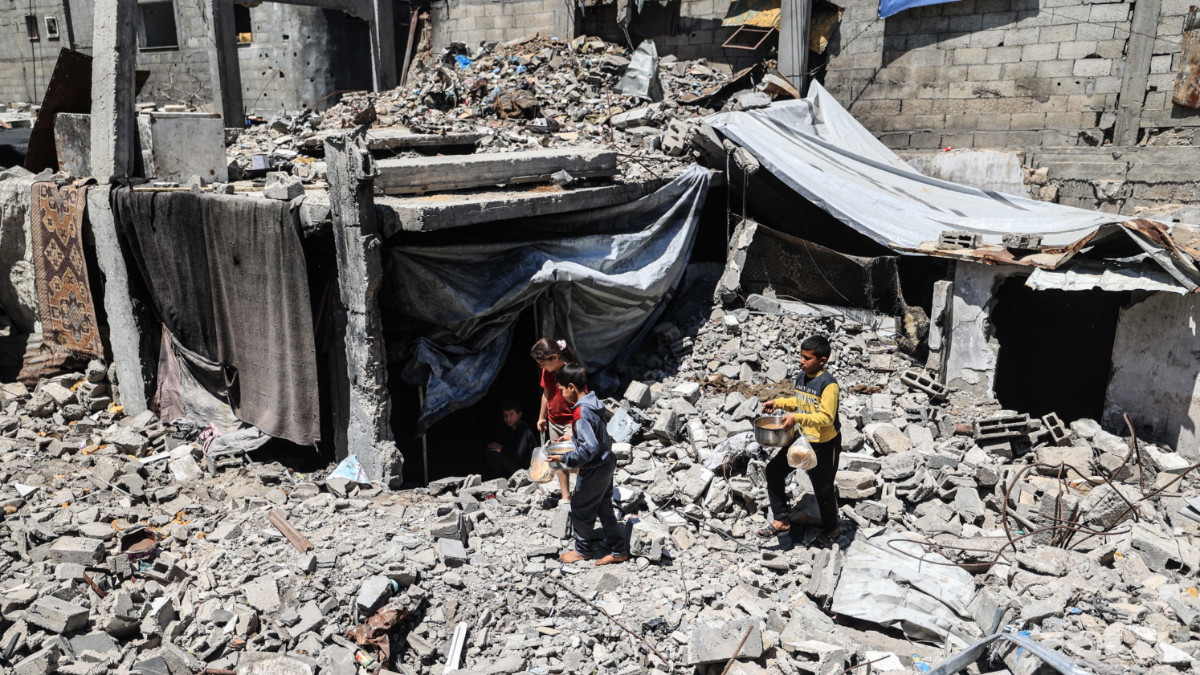
The ceasefire agreement that the CMCC was tasked to upholding has been systematically violated by Israeli forces since it took effect in October 2025, leading to a complete halt in all progress on reconstruction efforts across Gaza. Official data and UN reports confirm that more than 800 Palestinian civilians and fighters have been killed in ongoing Israeli strikes and incursions since the ceasefire was signed.
When the truce was first announced, then-President Donald Trump celebrated the deal with high-profile fanfare, embarking on a Middle East victory tour to mark the breakthrough. Speaking at a landmark peace summit hosted in the Egyptian Red Sea resort of Sharm el-Sheikh, Trump declared publicly that “The war in Gaza is over…now the rebuilding begins.” But even at that time, diplomats and independent analysts warned Middle East Eye (MEE) that the White House would quickly lose interest in the agreement, and that the US would step back from enforcing Israeli compliance with its ceasefire commitments.
This week, Khaled Khiari, United Nations Assistant Secretary-General for the Middle East, issued a stark warning reaffirming that the blockaded enclave continues to face “ongoing and deadly Israeli strikes” despite the US-brokered ceasefire arrangement. Critics have long noted that even when the CMCC was fully staffed and operational, there were almost no meaningful checks in place to prevent Israeli violations of the truce, and Israeli officials exercised disproportionate control over the center’s operations.
A December 2025 report from The Guardian exposed that Israeli intelligence carried out such extensive surveillance activities within the CMCC that US and other international partners formally lodged complaints. The Israeli military was found to be recording both open and closed discussions and meetings at the hub through overt and covert means, prompting the CMCC’s US commander, Lieutenant General Patrick Frank, to privately confront his Israeli counterpart and demand that the espionage campaign end.
The US secured a United Nations Security Council mandate to launch the ISF back in November 2025. Earlier this year, the initiative appeared to gain momentum: regional sources indicated Indonesia was preparing to deploy up to 8,000 troops to the force, while Jordan and Egypt began training security personnel aligned with the Palestinian Authority to support operations in Gaza. However, the recent US-Israeli military offensive against Iran has dramatically altered regional priorities, throwing the entire ISF deployment plan into doubt. A senior anonymous US official told MEE that key Arab and Muslim states that had previously committed to joining the force are now reassessing their participation in the project.
Middle East Eye, which provides independent, in-depth coverage of the Middle East and North Africa region, first reported on the growing uncertainty surrounding the monitoring center and the ISF deployment.