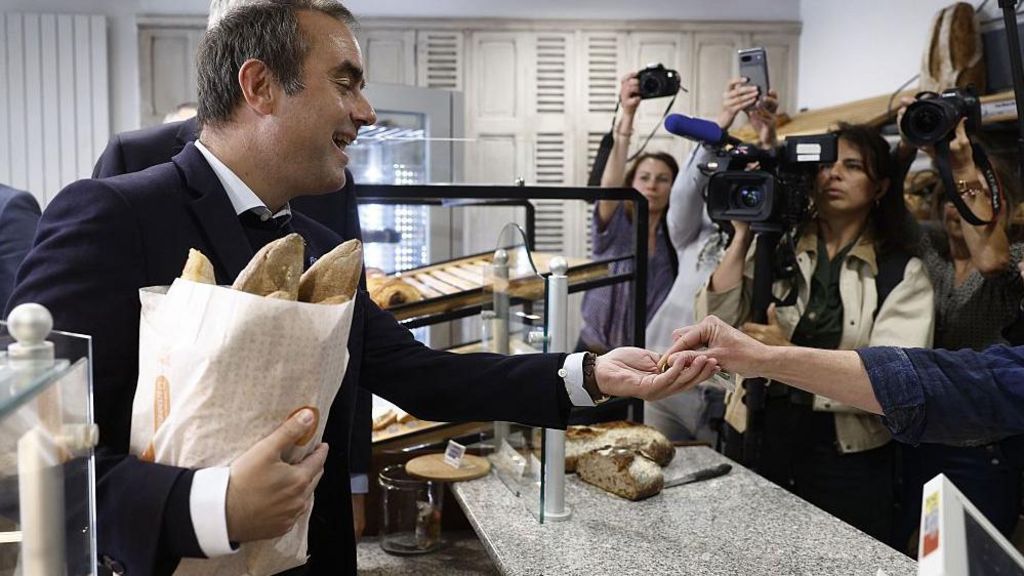
On France’s annual Labour Day public holiday, French Prime Minister Sébastien Lecornu stepped into a small village bakery in the central French community of Saint-Julien-Chapteuil, smiled for assembled press cameras, and completed a purchase of at least four baguettes, before stopping at a neighboring florist to pick up a bouquet of flowers. What was intended as a show of support for small independent food and flower businesses quickly escalated into a fresh public dispute with major French labor unions, which have fiercely opposed the government’s push to carve out a permanent exception to the country’s mandatory Labour Day rest rule for bakeries and florists.
Current French labor law strictly limits which businesses can operate on the 1 May public holiday, with only core essential services such as hospitals and hotels granted legal permission to open, requiring any working staff to receive double their standard daily wages. The regulatory status of small-scale bakeries and flower shops has long remained ambiguous in this framework, creating confusion for business owners that the Macron administration is seeking to resolve through new legislation.
The controversial proposal, introduced to parliament earlier this month, would formally exempt independent bakeries and florists from the mandatory rest requirement, on the condition that any employee working on the holiday provides written confirmation of voluntary participation and receives double pay for their shift. Government officials have framed the change as a common-sense adjustment, arguing that these local small businesses are “indispensable to the continuity of social life” and that the exemption would support independent operators who rely on the holiday foot traffic for revenue.
Unions have pushed back hard against the plan, warning that the policy creates a dangerous opening for employers to pressure vulnerable workers into agreeing to work on a holiday that is legally protected for rest. Marylise Léon, General Secretary of France’s largest union, dismissed Lecornu’s public bakery visit as an unnecessary political stunt. “Politicians going to a bakery, I think that’s part of a political spectacle that we don’t need today,” Léon said. “We need to show what the reality of a bakery worker is like.” Unions argue that the formalization of this exemption sets a worrying precedent, pointing to a pattern where incremental carve-outs to protected labor rights eventually erode core rules entirely. In a joint statement released in April, unions warned: “social history shows us that each time a principle is undermined, exemptions gradually increase until they become the rule”, with many leaders fearing the change could eventually lead to widespread rollbacks of mandatory rest for all public holidays across France.
The dispute deepened after it emerged that Lecornu had personally intervened to waive a heavy fine issued to a baker who opened his shop on Labour Day earlier this year. According to reports from BFMTV and Europe1, the prime minister spoke by phone with the baker, identified only as Eric, who had been cited by labor inspectors for operating on the holiday and faced a total fine of €5,250 — €750 for each of his seven employees working that day. Lecornu reportedly reassured Eric that he would not be required to pay the penalty, a move that unions have decried as a politically motivated bypassing of existing labor regulations.
The government’s bill now moves to parliamentary debate for approval, with the outcome likely to shape both future labor policy and the already tense relationship between the Macron administration and France’s powerful labor movement in the coming months.