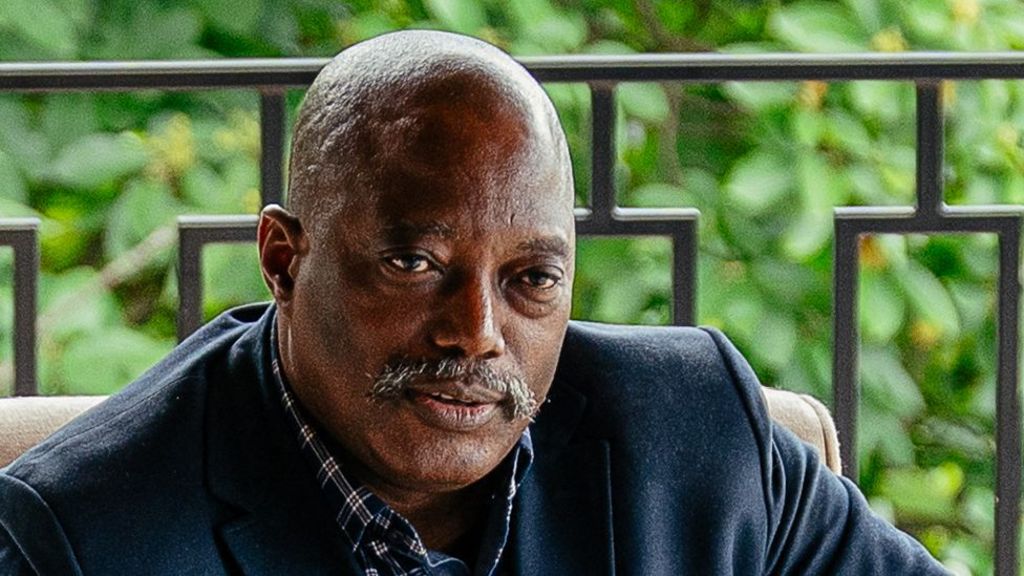
The United States has announced wide-ranging sanctions against former Democratic Republic of Congo (DRC) President Joseph Kabila, leveling serious accusations that the long-time former leader has provided direct support to the M23 rebel group active in eastern DRC.
According to U.S. officials, Kabila has delivered critical financial backing to the insurgent group, encouraged defections from the official Congolese national army, and even plotted to launch coordinated attacks against Congolese military forces from his base outside the country. The 54-year-old ex-president, who held the DRC’s highest office for 18 years starting in 2001, has not issued any public response after the BBC reached out for comment on the new sanctions. Kabila’s current location remains unconfirmed publicly, though he entered self-imposed exile in South Africa in 2023; he was last spotted publicly one year ago in Goma, a major eastern DRC city that is currently controlled by M23 forces.
This latest punitive action by Washington is framed as a key component of its broader efforts to uphold the 2024 peace deal between DRC and neighboring Rwanda that the U.S. helped broker. The U.S. has long alleged that Rwanda provides military and logistical support to M23, a claim that Kigali has repeatedly denied despite overwhelming independent evidence to the contrary. Rwandan officials maintain that any military presence they have in the border region is strictly a defensive measure to counter cross-border security threats from armed groups based in eastern DRC. Washington previously sanctioned top Rwandan army commanders over their ties to M23 back in March 2025.
In its official statement announcing the sanctions, the U.S. Treasury Department claims Kabila’s ultimate goal is to destabilize the current DRC government based in Kinshasa, clearing the way for an allied opposition candidate to seize power and restore his political control over the country. Under the newly imposed measures, all assets owned by Kabila that fall under U.S. jurisdiction are immediately frozen, and any U.S. citizen or registered company is prohibited from conducting financial or commercial activity with the former president. Global financial institutions and foreign business partners have also received formal warnings against engaging in even indirect transactions with Kabila, with violations carrying severe civil and criminal penalties. U.S. officials note the sanctions serve both as a punitive measure and a tool to force a change in Kabila’s behavior, sending a clear signal that Washington is prepared to target even former heads of state accused of fueling deadly conflict in central Africa.
Eastern DRC has been plagued by persistent armed conflict for decades, with dozens of competing armed groups vying for control of the region’s resource-rich territory. M23 launched major offensive operations in early 2025, seizing large swathes of land and multiple major population centers in the area. Beyond advancing regional peace and security goals, the U.S. says the new sanctions against Kabila will also strengthen a recent regional economic agreement focused on improving transparency in global critical mineral supply chains. Last December, the U.S. and DRC formalized a bilateral partnership to expand U.S. access to DRC’s massive reserves of strategically critical minerals, including cobalt, coltan, and copper, all of which are core inputs for global clean energy and electronics manufacturing.
The punitive actions against Kabila are not limited to international sanctions: last September, a Congolese military court sentenced the former leader to death in absentia after convicting him of war crimes and treason tied to his alleged support for M23. Kabila rejected the charges as politically motivated and arbitrary, and refused to appear in court to mount a defense against the accusations.