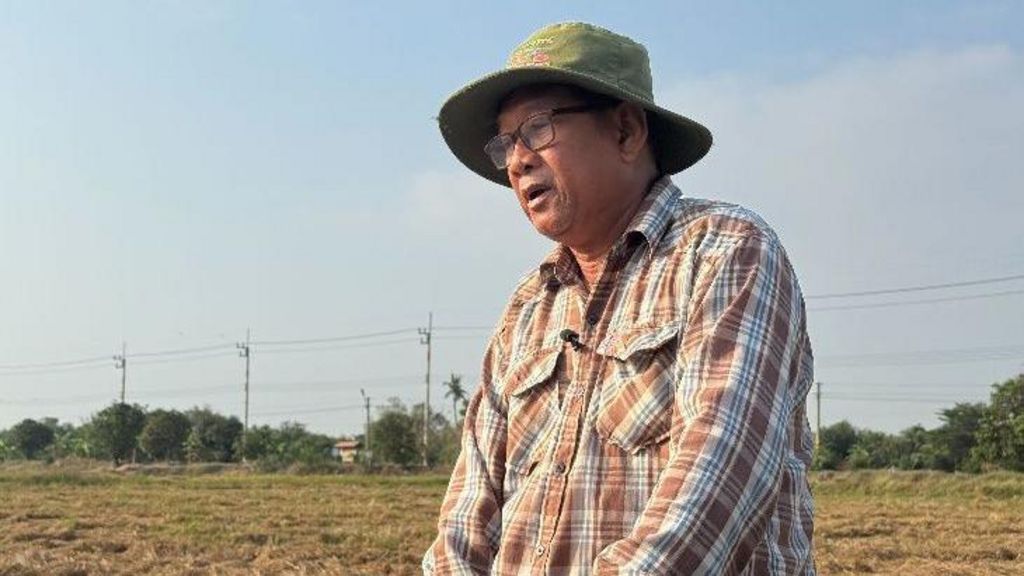
As the annual rice planting season gets underway across Southeast Asia’s vast agricultural expanses, thousands of smallholder farmers are facing an impossible choice that could reshape global food security for the year ahead. Among them is 60-year-old Suchart Piamsomboon, a third-generation rice farmer based in Thailand’s Chachoengsao province, who traveled to his local agricultural supply shop earlier this spring ready to stock up on fertiliser for the new growing cycle. What he found there changed his entire planting plan. No fertiliser shipment had arrived, and the shop owner warned it might not come at all. Even if a shipment turned up, the cost would exceed 1,100 Thai baht per 50-kilogram sack – a steep jump from the 800 to 900 baht price tag just five weeks prior. By the time Piamsomboon returned to his small farm, rumors were already spreading that prices could climb as high as 1,200 baht per sack.
Faced with runaway input costs that far outpace the revenue he can earn selling his harvested rice, Piamsomboon made the difficult decision to walk away from planting this season. “Farming only leads to financial losses now,” he explained. “I’d rather work as a day laborer, earning 100 to 200 baht a day just to get by. My everyday expenses don’t go down, but my farming income keeps falling year after year.”
Piamsomboon is far from alone in this choice. From Thailand’s central rice belt to Vietnam’s fertile Mekong Delta, rice producers across the Asia-Pacific are running the same financial calculations and landing on the same grim outcome: the planting season is here, but affordable fertiliser is not. The decisions these farmers make over the coming weeks will directly shape the size of the year-end global rice harvest, a staple that feeds half the world’s population.
The root of this unfolding crisis traces back to a conflict thousands of miles away, one that most Asian smallholders never expected to impact their daily lives. In late February, military strikes on Iran by the United States and Israel effectively closed the Strait of Hormuz, the narrow strategic waterway that carries roughly one-third of all globally traded seaborne fertiliser. With exports through the strait halted completely, global fertiliser markets erupted: within weeks, the price of urea, the world’s most widely used nitrogen fertiliser, surged by more than 40%.
As major importers scrambled to replace lost Gulf supply, the global community turned its attention to China, the world’s single largest fertiliser producer. In 2025, China accounted for 25% of total global fertiliser output and exported more than $13 billion worth of the product to markets worldwide. But Beijing closed its export doors in early March, implementing an immediate ban on several key fertiliser varieties critical to rice and staple crop production. This latest move builds on a series of incremental export restrictions China has rolled out since 2021. A Reuters analysis of Chinese customs data finds that between 50% and 80% of China’s total fertiliser exports are now restricted under the new rules.
One fertiliser exporter based in China’s Shandong province, who requested anonymity to avoid government repercussions, described the sudden order to halt all shipments to international clients. His firm has supplied fertilisers to Asia-Pacific markets including Thailand, Indonesia, and New Zealand for nearly a decade, and had already signed contracts and confirmed shipping dates for shipments to at least five countries before the ban was announced. “We already had the orders in hand, and our clients were waiting for the cargo to arrive,” he said. “But now we’ve been ordered not to ship anything. Of course we’re worried about our business, but we understand the government’s reasoning: they need to guarantee enough supply for domestic farmers first, so we will follow the regulations.”
The only major fertiliser product China still exports in large volumes is ammonium sulfate, a low-grade industrial byproduct that cannot serve as an effective replacement for the more nutrient-dense fertilisers required to produce high-yield rice harvests.
Joseph Glauber, Research Fellow Emeritus at the Washington-based International Food Policy Research Institute, warned that the dual shocks of the Strait of Hormuz closure and China’s export ban will inevitably send shockwaves through global fertiliser markets and put worldwide food security at severe risk.
For the Chinese government, guaranteeing domestic food security has become a core political priority. A national food security law passed in 2023 requires all local governments to embed mandatory grain production targets directly into their regional economic plans. Allowing fertiliser exports to continue amid global price spikes would drive up domestic fertiliser costs in China, squeezing the same domestic farmers the policy is designed to protect. Paul Teng, a senior food security fellow based in Singapore, explained: “In China, food security is a non-negotiable political issue. The government is not willing to compromise on ensuring there is enough grain for the domestic population, no matter the global impact.”
Compounding the issue, China’s own access to liquefied natural gas – the key feedstock for manufacturing nitrogen fertilisers – is now threatened by the closure of the Strait of Hormuz, leaving Beijing with even less incentive to release domestic supply to global markets.
For Southeast Asia, a region that is structurally dependent on Chinese fertiliser imports, Beijing’s export halt has triggered an immediate crisis. Vietnam, one of the world’s top rice exporters that supplies much of the Philippines and parts of Africa, sourced more than half of its total fertiliser imports by volume from China in the first quarter of 2026 – totaling more than 480,000 tonnes. Put simply: the country that feeds much of Southeast Asia cannot grow its rice without Chinese fertiliser inputs.
The Philippines faces an even more precarious situation. The island nation relies on China for 75% of its total fertiliser supply, with almost no domestic fertiliser production to fall back on. To make matters worse, the Philippines sources roughly 80% of its imported rice from Vietnam, creating a tightly interconnected supply chain of dependencies: Filipino consumers depend on Vietnamese rice, and Vietnamese farmers depend on Chinese fertiliser. Break just one link in this chain, and the entire system could collapse.
Thailand, another regional agricultural powerhouse whose rice exports feed much of Asia, faced a dual supply shock: in 2024, it sourced 20% of its fertiliser from China and 32% of imports from the Persian Gulf. Both supply routes are now blocked at the same time.
Analysts emphasize that the full impact of this crisis will not show up in global food prices immediately. The consequences will only become visible at the end of 2026, when this spring’s planted harvests come in far smaller than expected – or fail to materialize entirely. Teng noted: “Many countries do have enough fertiliser stockpiled to get through the immediate planting season, but if the crisis stretches on for months, we will see severe production shortfalls for rice and other staple crops in the second half of the year.”
The United Nations World Food Programme estimates that the combined fallout from the Middle East conflict and resulting fertiliser crisis could push an additional 45 million people into acute hunger by the end of 2026. Across Asia and the Pacific, the prevalence of food insecurity is projected to rise by 24% – the largest relative increase of any region in the world.
For smallholder farmers already on the edge of financial ruin, the hardship is already overwhelming. “Sometimes I wish every rice farmer across the country would stop planting altogether, so that government officials would have no rice to eat and finally understand what we’re going through,” said Pratheuang Piamsomboon, a 48-year-old rice farmer in Bangkok’s Nong Chok district. “This hardship is impossible to put into words.”