In the wake of a landmark U.S. Supreme Court ruling that weakened key protections of the federal Voting Rights Act, former President Donald Trump moved swiftly Thursday to leverage the decision for partisan gain, pushing Republican governors to redraw congressional district maps to boost his party’s electoral odds ahead of November’s midterm elections.
The high court’s Wednesday decision, which struck down Louisiana’s existing congressional map as unconstitutional, opened a legal pathway for Republican-led states to split majority-Black electoral districts to cement partisan advantage. The ruling has already upended election scheduling and sparked a nationwide rush by both major parties to rewrite district boundaries ahead of the critical congressional contests.
Louisiana’s top officials, Democratic Governor Jeff Landry and state Attorney General Liz Murrill, announced Thursday they would suspend the state’s upcoming congressional primary, originally scheduled for mid-May. The pause grants state lawmakers extra time to draft a new map designed to eliminate at least one, and potentially two, congressional seats held by Black Democrats. Trump praised the move in a post on his Truth Social platform, thanking Landry for acting quickly to “fix the Unconstitutionality” of the state’s prior map.
In a separate social media post, Trump revealed he had held a conversation with Tennessee’s Republican Governor Bill Lee, who faces growing pressure from within his party to immediately redraw the state’s congressional maps. “I had a very good conversation with Governor Bill Lee, of Tennessee, this morning, wherein he stated that he would work hard to correct the unconstitutional flaw in the Congressional Maps of the Great State of Tennessee,” Trump wrote. A spokesperson for Lee has not yet issued a public response to requests for comment on the exchange.
While conventional redistricting follows a decade-long cycle aligned with national census counts, eight states have already broken with this longstanding norm after Trump openly called on Republican officials to pursue aggressive partisan gerrymandering. Ahead of the Supreme Court ruling, five states — Texas, Missouri, North Carolina, Ohio, and Utah — had already adopted new maps tilted in Republicans’ favor, while Florida’s GOP-controlled legislature approved a new gerrymandered map just hours after the high court released its decision. Democrats have pursued parallel efforts in blue states: California and Virginia have already enacted new maps that favor Democratic candidates.
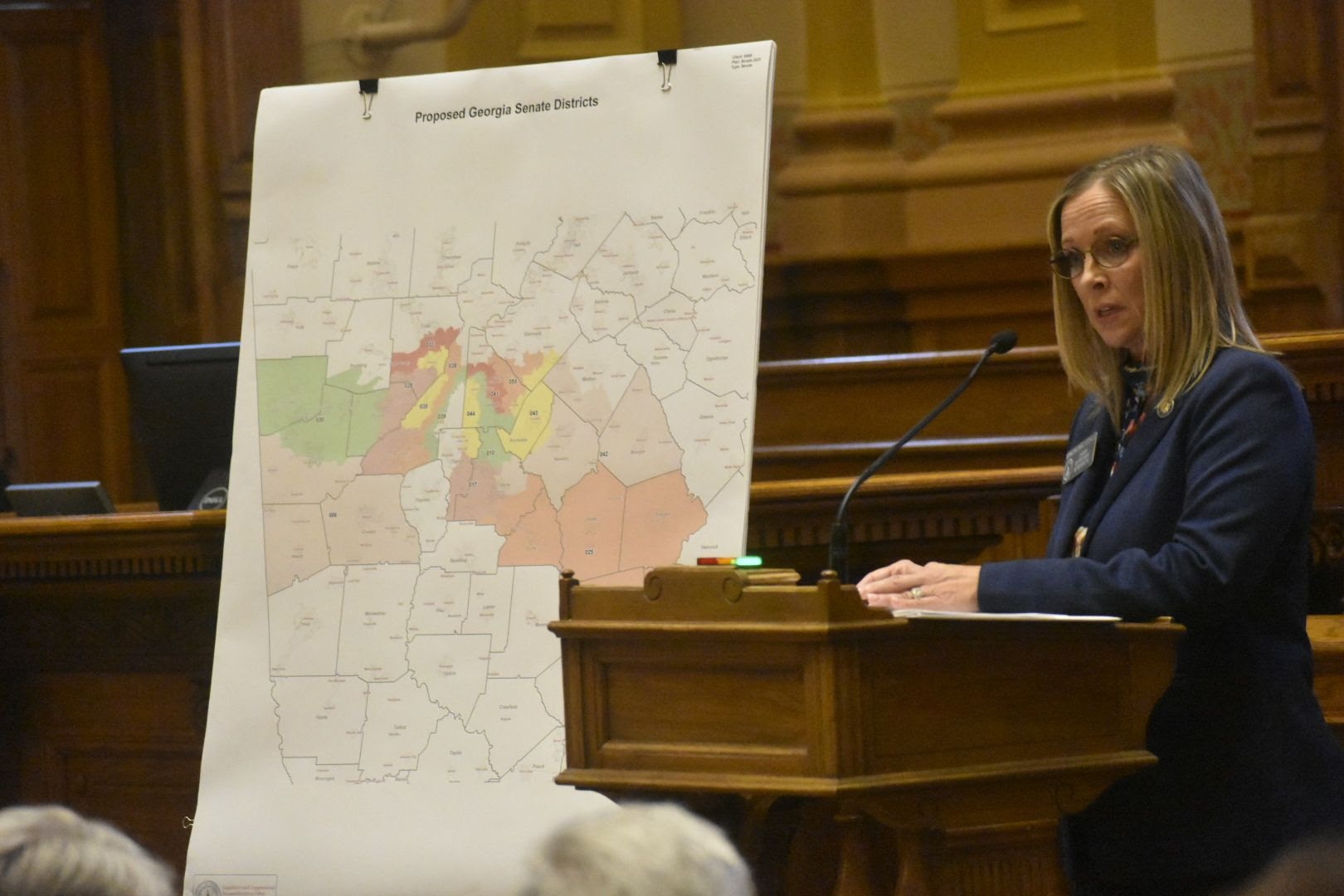
Before Wednesday’s ruling, the national battle over redistricting had resulted in a near partisan draw. But the Supreme Court’s decision has shifted momentum firmly toward Republicans, who can now gain a structural advantage if state legislatures act quickly before candidate filing deadlines and primary elections. Multiple Republican-led states with upcoming primaries are currently weighing immediate map changes: Alabama, Georgia, Missouri, and Tennessee are all considered potential targets. While top GOP leaders in Alabama have ruled out or downplayed changes for 2026, some Tennessee Republicans have left the door open for action. In Georgia, Lieutenant Governor Burt Jones and other state GOP officials immediately called for new maps after the ruling, though candidate qualification already closed under the existing boundaries, and early voting has begun for the state’s May primaries, meaning any changes would not take effect until the 2028 election cycle at the earliest.
U.S. House Speaker Mike Johnson, a Louisiana Republican, echoed Trump’s call in comments to CNN Thursday, urging all states with maps deemed unconstitutional to revise their boundaries before November’s midterms. “I think all states that have unconstitutional maps should look at that very carefully and I think they should do it before the midterms,” Johnson said.
Democratic leaders have not rejected the push for partisan gerrymandering in response, instead signaling they will pursue their own map changes to counter Republican gains. New York Governor Kathy Hochul, a Democrat, announced post-ruling that she would work with the state legislature to revise New York’s current redistricting process, which currently relies on an independent commission that limits the scope for partisan map-drawing. Representative Terri Sewell, an Alabama Democrat, argued at a Congressional Black Caucus press conference Wednesday that the Supreme Court’s ruling prioritizes partisan gain over anti-discrimination protections, and effectively invites both sides to pursue aggressive gerrymandering. “It values partisan politics over discrimination. It’s really, really, really — I mean, it takes us back. So to the extent it’s urging, it’s inviting red states to totally take away all of the Democratic seats and be totally red, it also encourages blue states to do exactly the same,” Sewell said.
With Republicans historically facing headwinds in midterm elections and Trump’s approval ratings remaining under water in public polling, Democrats have high hopes of retaking control of the U.S. House in November. The new push for redistricting represents a high-stakes effort by Republicans to rewrite the electoral map to lock in their majority before votes are cast.