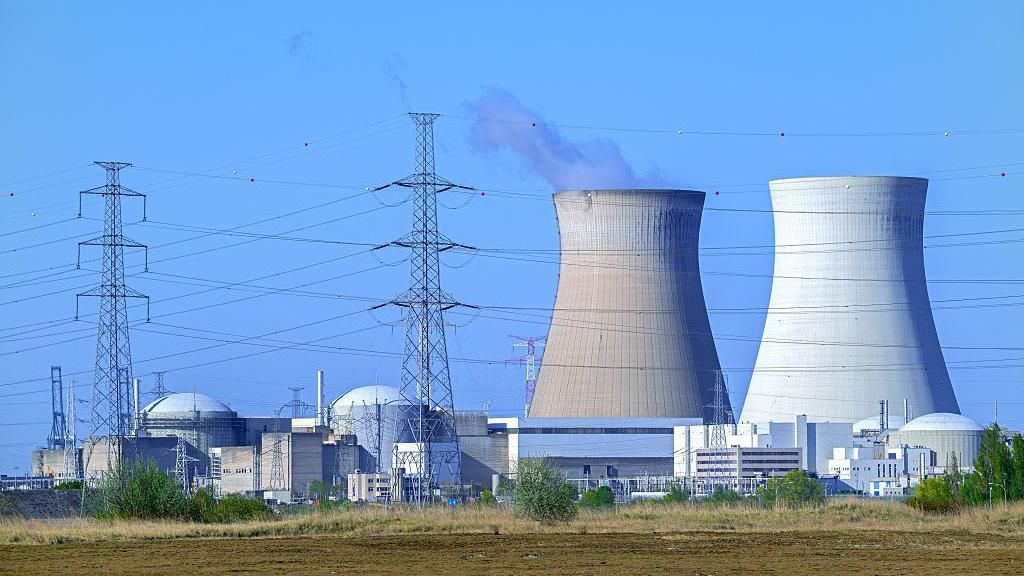
In a landmark shift for European energy policy, Belgium’s federal government has announced a sweeping plan to acquire the country’s entire nuclear reactor fleet from French energy multinational Engie, a move designed to shore up long-term energy security and roll back a 20-year commitment to phasing out nuclear power entirely.
Prime Minister Bart De Wever confirmed the proposal would involve a full acquisition of all seven Belgian nuclear reactors, most of which have aged past their originally planned 40-year operating lifespans. The announcement immediately pauses all ongoing decommissioning work for the reactors, turning decades of existing energy policy on its head.
“This government is choosing safe, affordable and sustainable energy, with less dependence on fossil fuel imports and more control over our own supply,” De Wever wrote in a post on social platform X.
The decision reverses nuclear phase-out legislation passed in the early 2000s, which was drafted in response to widespread public safety concerns following the 1986 Chernobyl disaster. That original law banned the construction of new nuclear facilities and capped the operating life of all existing reactors at 40 years, setting a full phase-out deadline of 2025 for the entire fleet.
Currently, only two reactors — one at the Doel plant and one at the Tihange facility — remain operational. Their operating licenses were extended to 2035 in recent years amid growing energy instability across Europe. The remaining five reactors were taken offline between 2022 and 2025, and all planned dismantling work for these units will now be put on hold as the government explores options to restart or repurpose them.
Both the Belgian government and Engie have set a target of October 1 to finalize the terms of the full takeover. In a joint statement released alongside Engie, the administration noted that the acquisition supports two broader goals: extending the operating lifespan of the still-functional reactors and developing new nuclear generation capacity across the country in the coming years.
“By doing so, the Belgian Government is taking responsibility for Belgium’s long-term energy future, with the objective of building a financially and economically viable activity that supports security of supply, climate objectives, industrial resilience and socio-economic prosperity,” the statement added.
Belgium is far from alone in making this dramatic policy shift. Across the European continent, a growing number of nations that once committed to phasing out nuclear power are now reversing course amid multiple interconnected crises: volatility in global fossil fuel markets triggered by the 2022 Russian invasion of Ukraine, escalating pressure to cut carbon emissions to meet EU climate targets, and growing demand for stable baseload power to complement intermittent renewable energy sources like wind and solar.
For decades, Belgium’s nuclear program has been mired in controversy. The aging reactors have been repeatedly shut down for emergency safety inspections, and their extended operation has sparked persistent anxiety in neighboring countries. Tensions reached a peak in 2015, when cross-border communities and local governments issued formal complaints over plans to extend the reactors’ operating lives beyond their original 40-year design parameters. In 2017, the German city of Aachen, located just tens of kilometers from the Belgian border, began distributing free iodine tablets to residents as a precaution against potential radiation leaks from the Tihange plant, which had recently been shut down to fix discovered cracks and water pipe leaks.