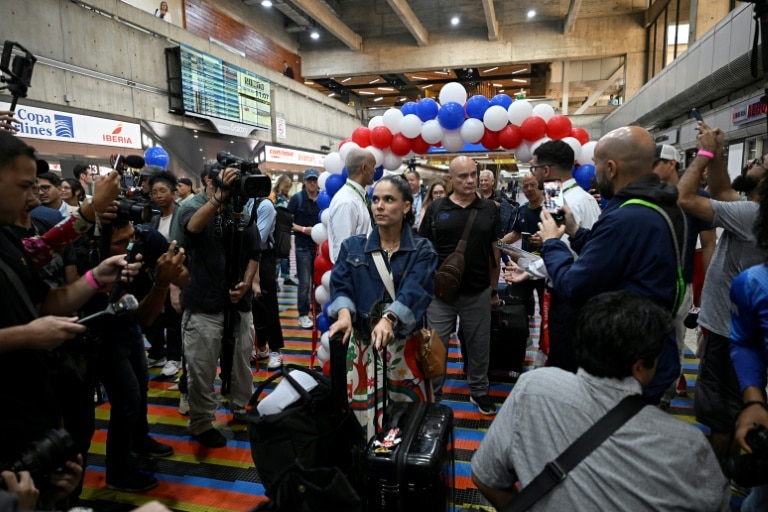
After nearly a decade of severed air connectivity and strained diplomatic ties, the first direct commercial flight between the United States and Venezuela touched down in Caracas on Thursday, marking the most visible milestone yet in the rapid normalization of relations between the two nations following Washington’s removal of former leftist leader Nicolás Maduro.
The inaugural American Airlines service departed Miami International Airport at 10:26 a.m. local time (1426 GMT), touching down at Simón Bolívar International Airport less than three hours after takeoff. A second Envoy Air flight followed shortly after the American Airlines arrival, launching the resumption of regular direct air links that were completely halted in 2019 amid spiraling bilateral tensions.
Notably, the flight manifest included senior U.S. officials traveling to Caracas for high-level government meetings — a development that would have been considered unimaginable just six months ago, according to diplomatic sources on the ground.
For frequent transnational travelers with ties to both countries, the resumption of direct flights eliminates years of logistical hassle and extended travel times. Claudia Varesano, a 44-year-old traveler who maintains family and business operations in Venezuela, has long commuted between the two nations but was forced to rely on connecting routes through third countries that stretched short trips into all-day journeys. “A three-hour flight would become an eight-hour flight. I’m celebrating today because I’m a frequent traveler. I can go, have breakfast and come back,” Varesano told reporters ahead of arrival.
Isabel Parra, a Venezuela-born travel agent who had not returned to her home country since 2018, echoed that excitement, saying she felt “super excited” to step back on Venezuelan soil after years of traveling via layovers in Curaçao, the Dominican Republic, or Bogotá. “For years we had to go through those intermediate stops, so having this direct flight is a real pleasure,” Parra said. She added that the inaugural flight carried a steep $3,000 price tag, but expects ticket costs to drop sharply once American Airlines launches a second daily round-trip route on May 21, increasing service capacity.
To mark the historic occasion, American Airlines outfitted the flight with a specialty Venezuelan-themed menu, featuring local favorites including cachapas (traditional sweet corn pancakes) and Venezuelan-style chicken salad. Greeting passengers upon departure from Miami — a major hub for the Latin American diaspora and a long-recognized gateway to the region — were city representatives and Félix Plasencia, Venezuela’s ambassador to Washington.
The resumption of direct flights comes as the two nations rapidly rebuild economic and diplomatic ties after years of estrangement. Roughly 1.2 million Venezuelans currently reside in the United States, many of whom split time between the two countries or send regular remittances back to family. Analysts widely expect the thaw in relations, paired with restored air links, to draw increased U.S. business investment into Venezuela, which holds the world’s largest proven crude oil reserves.
Despite the progress on normalization, significant complexities remain in the bilateral relationship. U.S. President Donald Trump has simultaneously pushed aggressive deportation policies targeting Venezuelan migrants, terminating a humanitarian protection program that shielded thousands of migrants from deportation back to the country’s high-crime areas.
The diplomatic shift traces back to a January 3 U.S. special forces raid in Caracas that resulted in the capture of Maduro, a longstanding U.S. antagonist, who was extradited to New York to face federal drug trafficking charges that he and his supporters deny. Maduro was succeeded by his former vice president Delcy Rodríguez, who has moved to cooperate extensively with Washington despite her historical ideological alignment with Maduro’s leftist government. Trump has publicly praised Rodríguez’s policy opening to U.S. companies, and has eased broad sanctions imposed on Venezuela in recent years, including lifting personal sanctions targeting Rodríguez. In line with this opening, Venezuela has moved to fully open its critical oil and mining sectors to private international investment.
American Airlines, a Texas-based carrier with an extensive route network across Latin America, first launched service to Venezuela in 1987 and at its peak carried more passengers between the two countries than any other airline. The carrier suspended all service in 2019, when relations collapsed after the U.S. and a bloc of Western and Latin American nations refused to recognize Maduro’s 2018 re-election, citing widespread electoral irregularities.
Even with the resumption of flights, U.S. travel guidance retains limited warnings: the State Department still urges U.S. citizens to reconsider travel to Venezuela due to persistent widespread violent crime, but lifted its full blanket ban on all travel to the country in March.
The launch of direct flights also comes amid a period of upheaval for the global aviation industry, which has faced severe financial pressure from a sharp spike in global oil prices following recent military escalations between the U.S., Israel, and Iran.