The United Arab Emirates will officially withdraw from the Organization of the Petroleum Exporting Countries (OPEC) on Friday, a decision that has already earned public praise from former U.S. President Donald Trump amid ongoing regional volatility sparked by the US-Israeli war on Iran.
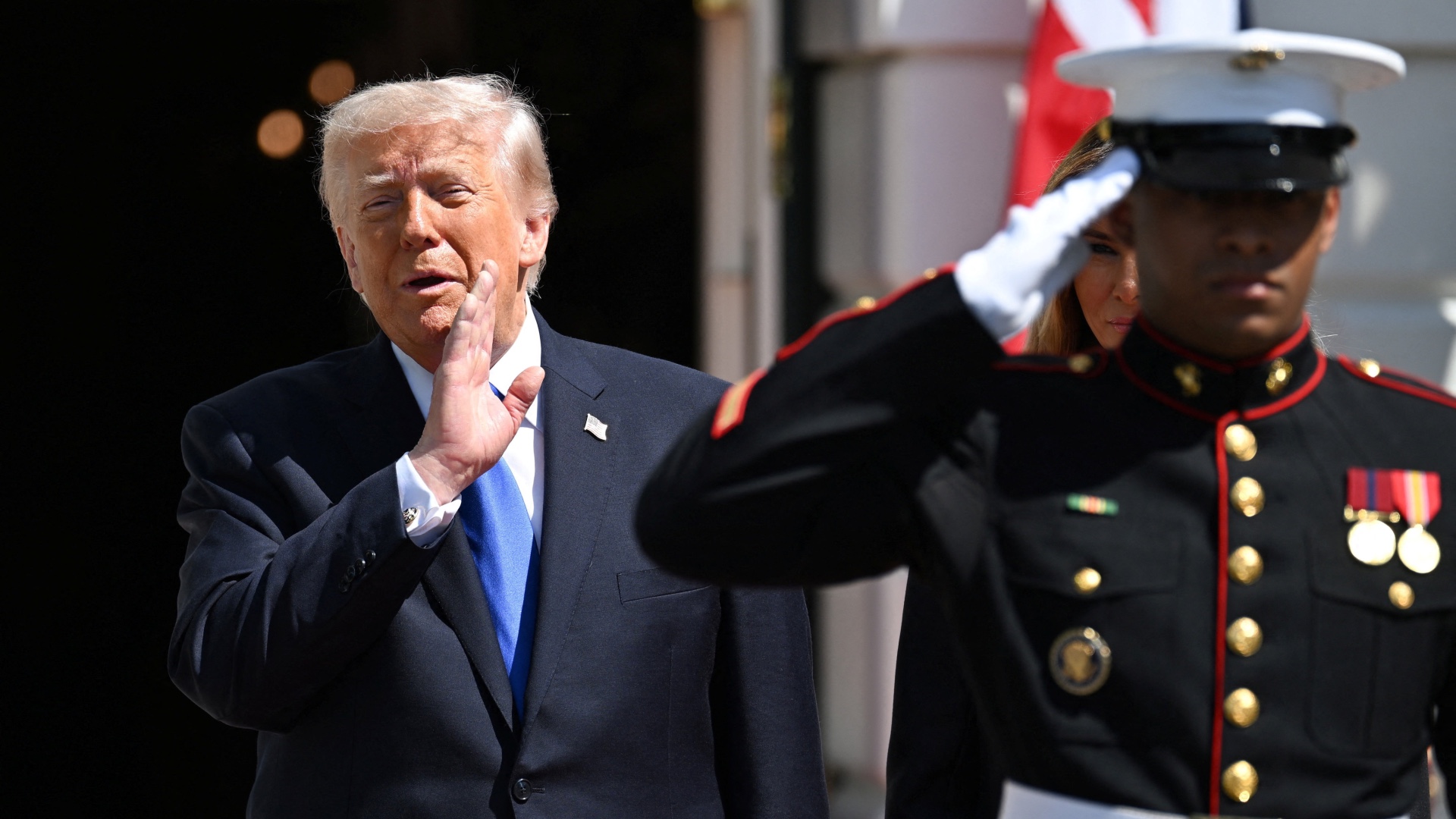
Speaking to reporters at the White House on Wednesday, Trump voiced clear support for the Gulf nation’s move, singling out UAE leader Mohamed bin Zayed (MBZ) for praise. “I think it’s great. I know him very well. Mohamed. Very smart, and he probably maybe wants to go his own way,” Trump said. The former president argued the exit would ultimately help push down global energy prices, noting “They’re having some problems in OPEC” and describing MBZ as “a great leader.”
Outside OPEC’s production quota system, the UAE will gain full flexibility to ramp up its crude output, an outcome the Trump administration has prioritized to ease energy market disruptions tied to the war on Iran. Analysts view the withdrawal as part of a broader shift by Abu Dhabi to deepen its strategic alignment with Washington while hedging against prolonged regional conflict.
Previously unreported details from Middle East Eye (MEE) reveal that UAE Foreign Minister Sheikh Abdullah bin Zayed informed U.S. Secretary of State Marco Rubio earlier this year that Abu Dhabi is already preparing for the conflict to last as long as nine months. Just weeks prior, the UAE also requested a currency swap line from the Trump administration to secure access to U.S. dollars should its foreign reserves be depleted by extended market volatility.
The UAE’s decision has also gained backing from Fox News, a outlet that Trump regularly relies on to gauge conservative support for policy priorities. Speaking on Fox Business, host Charles Payne argued the UAE is uniquely positioned to increase production after years of targeted investment in energy infrastructure, unlike many other OPEC members that have underinvested in capacity.
“They have the ability to produce. Right now, there’s about 3.6 million barrels a day. They can do anywhere up to one and a half million more, but they’re locked in because of Opec pricing,” Payne said. “UAE has been brilliant. Everyone knows Dubai [and] what they’ve done economically. And so Saudi Arabia can’t control them anymore.”
In an official statement released earlier this week, the UAE Energy Ministry framed the exit as the outcome of a “comprehensive review” of its long-term national production strategy. The ministry acknowledged that near-term market instability, including supply disruptions from conflict in the Arabian Gulf and Strait of Hormuz, has reshaped regional energy dynamics, but noted that medium and long-term forecasts still point to sustained growth in global energy demand.
The statement also emphasized the country’s decades of constructive participation in the cartel: the UAE, then represented by Abu Dhabi, first joined OPEC in 1967 and retained its membership after the formal unification of the Emirates in 1971. “Throughout this period, the UAE has played an active role in supporting global oil market stability and strengthening dialogue among producing nations,” the statement read.
The US-Israeli war on Iran, which began in late February, has already inflicted significant economic damage on the UAE, the Gulf state with the closest formal ties to Israel. Iranian drone and ballistic missile attacks targeting the country have damaged Dubai’s reputation as a top luxury tourism destination and drastically slowed the country’s oil export volumes. Unlike some Gulf nations that have pushed for diplomatic negotiations to de-escalate tensions with Iran, the UAE has taken a hardline stance, publicly calling for the U.S. to continue military operations.
MEE, which provides independent, on-the-ground coverage of the Middle East, North Africa and surrounding regions, first broke details of the UAE’s pre-exit preparations for extended conflict.