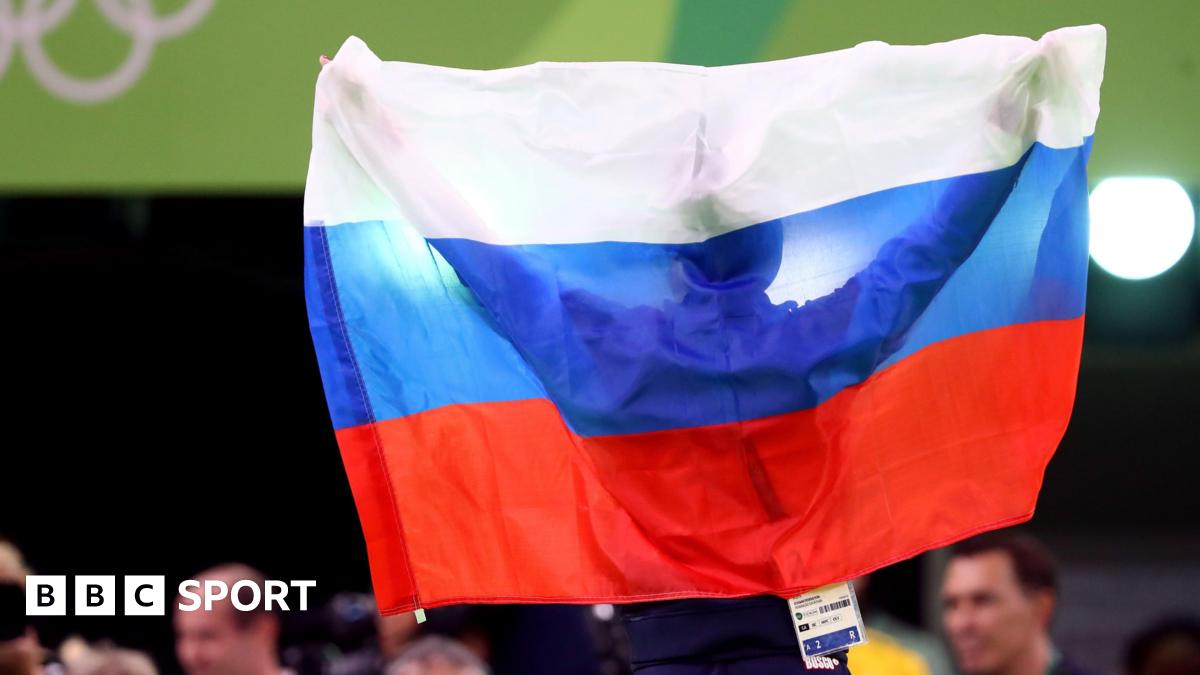
The World Anti-Doping Agency (Wada) has announced the final results of its landmark anti-doping investigation Operation Lims, revealing that more than 300 sanctions have been issued against Russian athletes following the 2019 seizure of data from Moscow’s accredited doping laboratory. After years of global scrutiny and investigative work, the agency has formally closed the probe, confirming that 291 Russian athletes have received disciplinary action, with a total of 302 separate sanctions imposed across 22 different Olympic and non-Olympic sports.
Among the sanctioned athletes, 107 are weightlifters – more than from any other sport – followed by 93 track and field athletes, marking these two disciplines as the most heavily affected by the state-sponsored doping scheme uncovered by investigators. Eleven athletes have been penalized multiple times for repeated anti-doping code violations, while four additional cases remain open, with final rulings still pending as of the announcement. Twenty-three independent national and international anti-doping bodies collaborated to hand down the penalties, reflecting the global coordination behind the investigation.
Operation Lims traces its origins back to 2015, when Wada first exposed the existence of a systemic, state-orchestrated doping program operating within Russian elite sports. Following the revelation, Wada formally declared the Russian Anti-Doping Agency (Rusada) non-compliant with global anti-doping rules, a status that remained in place until September 2018, when Wada’s executive committee voted to reinstate Rusada under a strict set of compliance conditions.
That controversial reinstatement drew widespread condemnation from clean sport advocates at the time, with one prominent critic describing the decision as “the greatest treachery against clean athletes in Olympic history.” But Wada has defended the move, noting that it was a calculated strategic choice that allowed investigators to access and retrieve 24 terabytes of raw laboratory data from the Moscow facility in early 2019.
“Put simply, Operation Lims is the most successful investigation in anti-doping history,” Wada President Witold Banka said in a statement following the conclusion of the probe. “The decision taken in 2018 to reinstate Rusada under strict conditions – despite opposition from a vocal minority of critics – was made precisely in order to get to the truth and formed part of a sophisticated investigative strategy. Without that decision, we would never have been able to obtain the critical evidence from the Moscow laboratory needed to prosecute these cases. I am pleased to say that history has shown this approach to be effective and that the entire process has been a remarkable success in ensuring fairness for athletes around the world.”
During the review of the seized Moscow laboratory data, investigators discovered that portions of the evidence had been deliberately manipulated to cover up positive doping tests, a finding that ultimately led the Court of Arbitration for Sport to issue Russia a four-year ban from all major international sporting events in 2019. That ban expired in 2023, but Russian athletes have remained largely barred from top-level competition under their own national flag and anthem following international sporting bodies’ collective response to Russia’s full-scale invasion of Ukraine in 2022. In recent months, however, a small number of international sports governing bodies have begun to allow individual Russian competitors to return to competition under their national flag, a shift that has reignited debate over the inclusion of sanctioned Russian athletes in global sport.
The breakdown of sanctioned athletes across all 22 sports included in Operation Lims is as follows: aquatics (7), archery (1), athletics (93), biathlon (9.5, with the decimal accounting for a joint biathlon-cross-country skiing case), bobsleigh and skeleton (9), boxing (5), canoe (4), football (3), ice hockey (4), judo (6), kettlebell (1), modern pentathlon (2), powerlifting (9), rowing (5), sambo (1), skating (2), skiing (2.5), taekwondo (3), triathlon (1), volleyball (8), weightlifting (107) and wrestling (19).