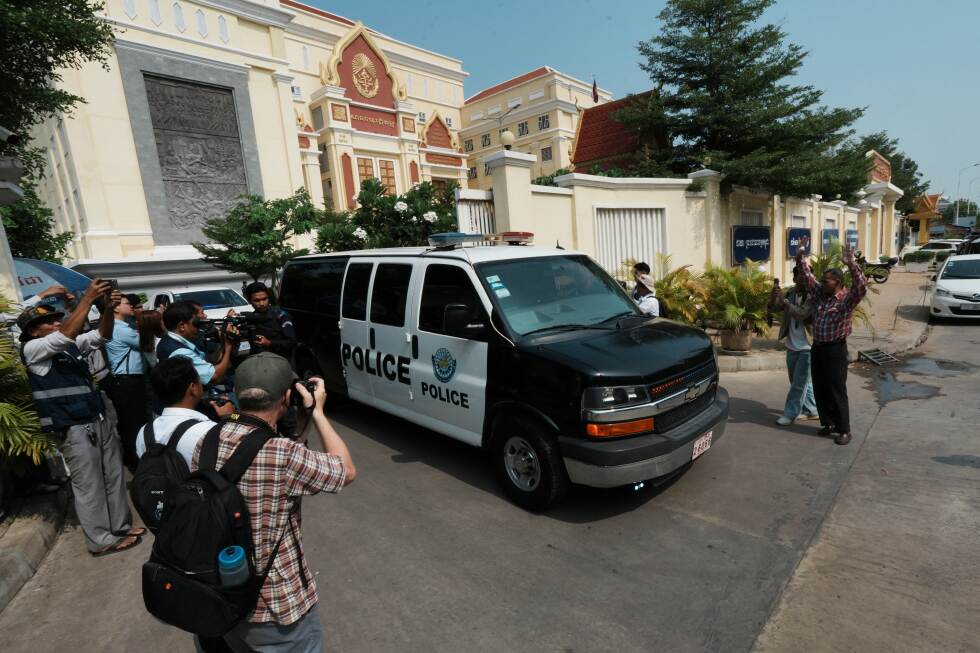
In a ruling that has reignited international scrutiny of Cambodia’s political landscape, the Phnom Penh Appeals Court confirmed Thursday a longstanding treason conviction and 27-year prison sentence for prominent opposition figure Kem Sokha, a decision that comes six years after his arrest triggered a sweeping nationwide crackdown on government critics.
In addition to upholding the original sentence, which the 72-year-old leader has been serving under house arrest, the court added a new restriction: a five-year ban on international travel that will take effect once he completes his prison term.
Kem Sokha’s legal saga stretches back to 2017, when his arrest cleared the way for the government to target all organized political opposition. At the time, his Cambodia National Rescue Party (CNRP) stood as the only major viable challenger to the long-ruling Cambodian People’s Party (CPP). Within months of the arrest, the country’s Supreme Court ordered the CNRP dissolved, barring the party from competing in the 2018 general election. The CPP, led by then-prime minister Hun Sen, subsequently won every seat in the National Assembly, consolidating its absolute control over national governance. Hun Sen handed power to his son, Hun Manet, in 2023, but the new administration has not moved to open up the country’s political system or roll back restrictions on opposition activity.
Kem Sokha was ultimately convicted of treason in 2023 following years of extended pretrial detention. The charges against him center on allegations that he conspired with the United States to overthrow the Cambodian government, with the prosecution’s core evidence consisting of a leaked video of him speaking about receiving political guidance from U.S.-based pro-democracy organizations.
During his most recent appearance before the appeals court earlier this month, Kem Sokha issued a firm denial of all accusations. He stated he never had collaborated with any foreign power at the expense of Cambodian citizens or national sovereignty, emphasizing that all his political work had been rooted in principles of nonviolence and national unity.
Following Thursday’s ruling, Kem Sokha’s defense attorney Pheng Heng told reporters he was disappointed by the court’s decision. The legal team will now deliberate whether to take the case to Cambodia’s Supreme Court in a final appeal, and Pheng Heng called on the ruling government to prioritize national reconciliation as a path forward for the country.
The ruling has already drawn formal concern from Western diplomatic missions based in Phnom Penh. The British Embassy released an official statement calling for Kem Sokha’s immediate release and the restoration of his full political rights, noting that such a move would support the strengthening of democratic institutions in Cambodia.
For years, international observers have repeatedly accused the Cambodian government of weaponizing the country’s judicial system to target political opponents and dissenting voices. Government officials have consistently pushed back against these claims, asserting that the state upholds the rule of law within a framework of electoral democracy. Despite this assertion, all major opposition groups have faced systematic legal action: parties perceived as electoral threats have been dissolved by courts, their leaders imprisoned or subjected to ongoing harassment.