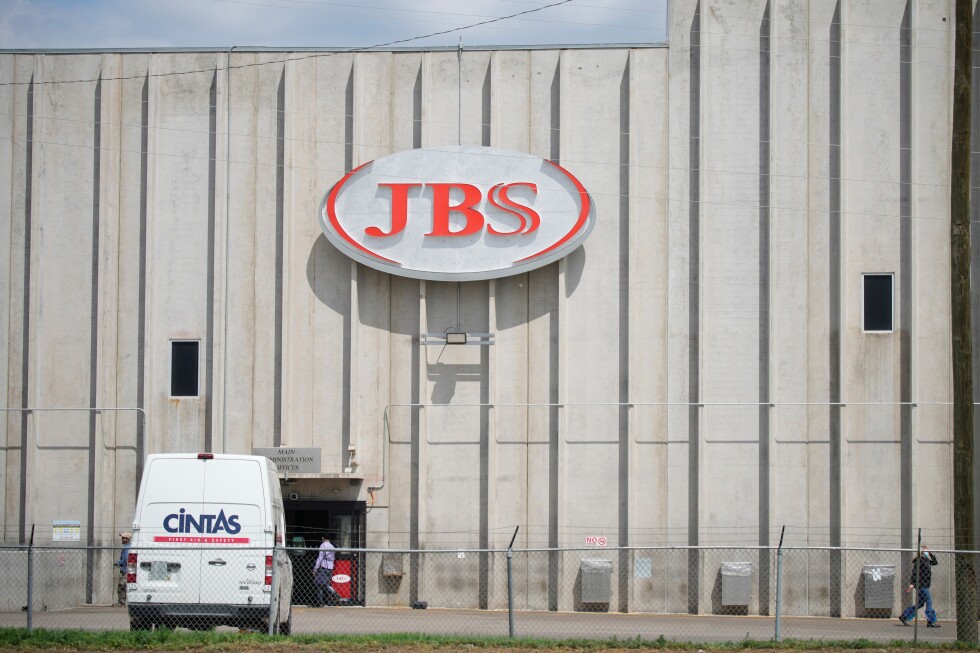
SAO PAULO – In a landmark legal action that casts a fresh spotlight on labor abuses in global supply chains, Brazilian labor prosecutors have filed a civil suit against global meatpacking leader JBS, alleging the multinational knowingly purchased cattle from Amazon-region ranches where workers were trapped in slavery-like working conditions. The claim, filed before a labor court in Para — a northern Brazilian state that falls within the Amazon basin — seeks 119 million reais, equivalent to roughly $24 million in compensatory damages. Prosecutors note this figure matches the total value of all business dealings between JBS and the accused suppliers over the past decade.
Court documents outline that between 2014 and 2025, authorities rescued 53 workers from properties controlled by seven JBS-supplied ranchers. All seven of these producers are already listed on Brazil’s official public registry of entities found to have forced workers into conditions analogous to chattel slavery, a designation reserved for cases of extreme exploitation, forced confinement and debt bondage.
Prosecutors argue that JBS demonstrated a repeated, systematic pattern of negligence in its supply chain oversight, failing to conduct adequate due diligence to screen out suppliers with documented histories of labor abuse even though such records are publicly available. As of Thursday, JBS had not issued an immediate response to requests for comment from reporters on the allegations.
This legal action comes against a backdrop of longstanding concerns about labor practices in Brazil’s massive beef sector. The country is currently the world’s top beef producer, contributing roughly 20% of total global output, after recently overtaking the United States which now holds a 19% global market share, per data from the U.S. Department of Agriculture. Brazilian labor officials confirm that cattle ranching consistently accounts for the highest number of rescued exploited workers across the country, and the industry is also a leading driver of deforestation in the Amazon rainforest, the world’s largest tropical ecosystem that plays a critical role in global climate regulation.
Just months earlier, in March 2025, the Office of the United States Trade Representative added Brazil to a watchlist of 60 nations facing active investigation for ties to forced labor in exported goods. JBS, which boasts a global market capitalization of approximately $17 billion, already faced labor unrest this year at one of its U.S. facilities in Colorado, where workers conducted a three-week strike over pay and working conditions before reaching a negotiated settlement to raise wages.
The Associated Press’ climate and environmental reporting for this story is supported by grants from multiple private foundations, with the AP retaining full editorial independence over all content produced.