LONDON – As a high-stakes legal case got underway in a British court this week, prosecutors laid out detailed allegations that three foreign nationals were paid by an anonymous online contact to carry out a series of coordinated arson attacks targeting properties connected to United Kingdom Prime Minister Keir Starmer last year.
Opening the trial on Wednesday, lead prosecutor Duncan Atkinson outlined the timeline of the alleged plot, which unfolded across north London over five days in May. The three defendants are identified as 22-year-old Ukrainian national Roman Lavrynovych, 35-year-old Ukrainian national Petro Pochynok, and 27-year-old Romanian citizen Stanislav Carpiuc. All three have formally denied the charges of conspiracy to commit arson brought against them.
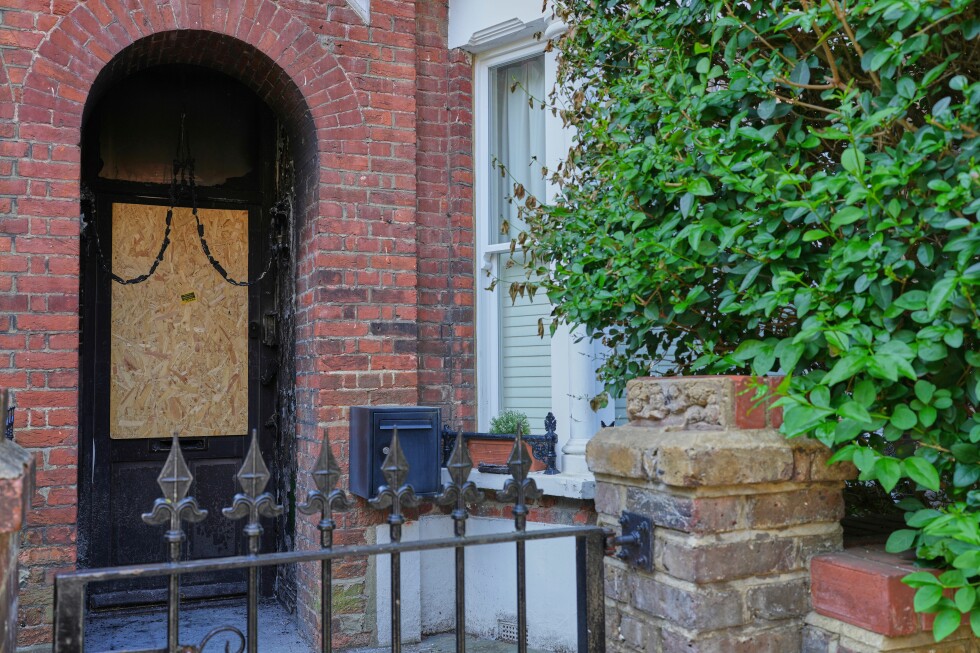
According to Atkinson’s account to the jury, the string of attacks began in the early hours of May 8, when a Toyota vehicle – previously owned by Starmer – was deliberately set on fire in the Kentish Town neighborhood. Three days later, on May 11, a blaze was ignited at a residential property on Ellington Road, a building managed by a firm where Starmer previously held a position as a director and shareholder. The final attack followed 24 hours later at a second home on Countess Road: a property still owned by Starmer, currently occupied by the prime minister’s sister-in-law.
Atkinson emphasized that the sequence of targeted blazes was far from a random coincidence. “Three fires in the same area within five days would be pretty unusual. However, three fires all involving property linked to the same person were beyond a coincidence,” he told the court. All three fires were started using matching incendiary materials and set in the dead of night, when the occupants of the targeted properties would certainly be asleep, a detail Atkinson said proves the attackers intended to put lives at risk.
Both occupied homes had residents who escaped harm after waking to detect smoke and flames, though the encounters were traumatic. On May 11, a top-floor resident of the divided Ellington Road property woke to the smell of smoke around 3 a.m. After opening his front door to find thick smoke filling the communal hallway, he was forced to retreat to the building’s roof to wait for emergency responders, struggling to breathe through the ordeal. The following morning, around 1 a.m. on May 12, Starmer’s sister-in-law heard loud popping bangs before seeing thick smoke pour through her front door and fill the home’s staircase. She also experienced respiratory distress, and her 9-year-old daughter was left severely frightened by the incident, Atkinson confirmed.
Prosecutors confirm Lavrynovych is identified as the primary offender who set all three fires, while the other two defendants are charged as co-conspirators. Beyond the conspiracy count, Lavrynovych faces two additional charges of damaging property by fire, with intent to endanger life or reckless disregard for potential loss of life. Atkinson told the court that the plot was coordinated through the encrypted messaging platform Telegram, where Lavrynovych was promised payment for the attacks by an anonymous contact operating under the username “El Money,” described as a Russian-speaking contact. Court documents do not include details on the total amount of payment offered, and no fatalities or serious injuries were reported in connection with the blazes.
Investigators have recovered more than 320 messages exchanged between Lavrynovych and “El Money” dating back to September 2024, but Atkinson instructed the jury that they do not need to determine the ultimate motivation for the alleged attacks, nor do they need to rule on the identity of the anonymous contact who organized the plot. It also does not matter whether the defendants themselves knew the targeted properties were connected to Starmer, Atkinson argued, as that question has no bearing on the conspiracy charges before the court.