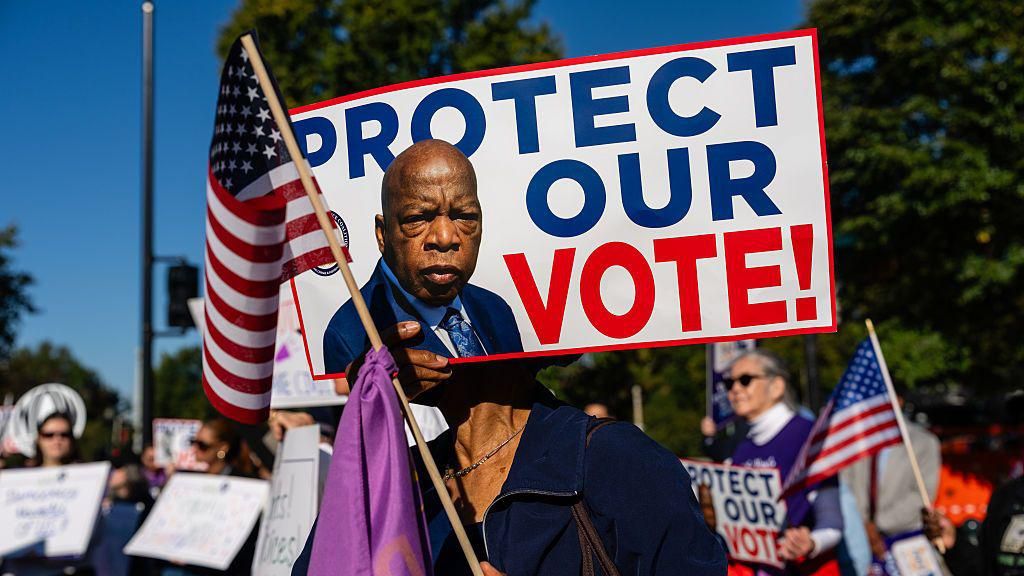
The U.S. Supreme Court has delivered a landmark 6-3 ruling along ideological lines that places new limits on lawmakers’ ability to account for a state’s racial demographics when crafting congressional and legislative voting maps, a decision widely expected to reshape electoral politics across the American South.
The case centered on a legal challenge to Louisiana’s newly drawn legislative districts, which had been designed to align with the Voting Rights Act of 1965, a pillar of the mid-20th century civil rights movement created to shield Black voters from systemic racial discrimination at the polls. The court’s conservative majority backed the challengers, a coalition of mostly white voters who argued that race-based districting violated the U.S. Constitution.
Writing for the majority opinion, Justice Samuel Alito argued that past judicial interpretations of Section 2 of the Voting Rights Act have at times compelled states to practice the same race-based discrimination that the Constitution prohibits. While the majority stopped short of granting challengers’ full demand to strike down the relevant provision of the Voting Rights Act as entirely unconstitutional, the new ruling creates far higher legal barriers for groups seeking to challenge maps that dilute the voting power of racial minorities. Going forward, litigants must prove that lawmakers intentionally drew district lines to reduce electoral opportunity for minority voters to successfully argue a Section 2 violation.
The court’s three liberal justices issued a sharp dissent. In her dissenting opinion, Justice Elena Kagan called the decision a major setback for the foundational right to racial equality in electoral access that Congress enshrined in the Voting Rights Act.
Partisan fights over redistricting have intensified in recent years, as both major U.S. political parties work to draw district boundaries that maximize their chances of securing control of congressional and state legislative majorities. The White House applauded the ruling, framing it as a win for all American voters. White House spokeswoman Abigail Jackson stated in comments to CBS, a BBC partner, that a person’s skin color should not determine which congressional district they are assigned to, adding that the administration commended the court for ending what it called unconstitutional misuse of the Voting Rights Act and upholding civil rights protections.
The ruling is already expected to have immediate tangible impacts across Republican-led Southern states. Florida is currently in the process of redrawing its own legislative maps in a move that Republicans hope will net the party additional U.S. House seats. Legal analysts say the new Supreme Court decision could clear the way for the state to further weaken the electoral position of incumbent Democrats representing districts with large minority populations. Other GOP-led states, including Tennessee and Mississippi, are also preparing to revisit their own districting maps in the coming weeks, with changes widely expected to follow the high court’s new guidelines.