Ahead of its 2025 Congress in Vancouver, global football governing body FIFA has announced two major updates for the 2026 World Cup: a historic increase in financial distributions to participating teams and sweeping new rule changes designed to crack down on unsportsmanlike conduct, including aggressive anti-racism measures.
Following widespread pushback from FIFA member associations, who warned that soaring travel, tax, and operational costs would leave many national teams out of pocket for competing in the expanded 48-team tournament co-hosted by Mexico, Canada and the United States, FIFA has raised total financial distributions from the $727 million figure announced last December to $871 million. The cash boost includes direct increases to key payments: every qualified team will now receive $2.5 million for preparation costs, up from the previous $1.5 million allocation, while the qualification bonus has been raised from $9 million to $10 million. Additional funding will go toward covering team delegation expenses, and participating squads will also receive expanded ticket allocations for their staff and supporters.
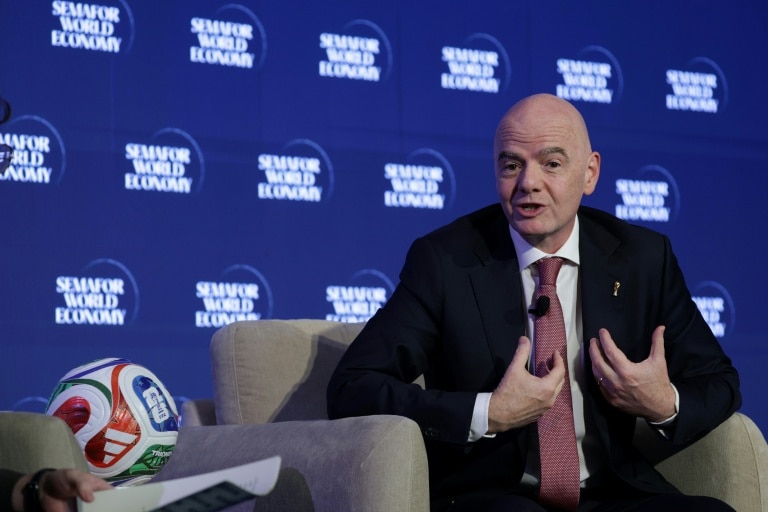
In a statement accompanying the announcement, FIFA President Gianni Infantino highlighted that the increased payout is made possible by the organization’s current unprecedented financial stability. With the current four-year World Cup cycle projected to generate roughly $13 billion in revenue — a record high for the tournament — Infantino emphasized that the cash injection is a clear example of how FIFA reinvests its resources directly back into the global football ecosystem. This latest increase follows a 50 percent jump in total prize money from the 2022 Qatar World Cup, marking the largest year-over-year increase in tournament payout history. Even with the new funding for teams, FIFA continues to face criticism over exorbitant public ticket prices for fans, as well as sharp hikes in public transport costs imposed by local host authorities in parts of the United States.
Alongside the financial boost, FIFA confirmed a series of new law changes that will take effect at the 2026 tournament, which kicks off June 11 in Mexico City. The most high-profile change introduces red card sanctions for players who cover their mouths during confrontations with opponents, a rule change crafted directly to address hidden racist abuse that has plagued the sport in recent years.
The new policy comes in response to a high-profile controversy during a February 2025 Champions League match, where Benfica winger Gianluca Prestianni was accused of repeatedly using a racial slur against Real Madrid star Vinicius Junior while covering his mouth to avoid being detected by broadcast microphones and match officials. Though Prestianni denied the racial abuse allegation, he ultimately received a six-match ban (three suspended) for homophobic conduct arising from the incident. The new rule gives competition organizers discretion to issue a direct red card for any mouth covering during confrontational interactions between players.
Two additional major rule changes are also being rolled out: players who leave the pitch in protest of a referee’s decision will now receive an automatic red card, and any team that causes a match to be abandoned will forfeit the result automatically. This update follows the 2025 Africa Cup of Nations final controversy, where Senegal’s players, coaching staff, and support personnel walked off the pitch in Rabat after Morocco was awarded a late stoppage-time penalty. Senegal went on to win the match 1-0 in extra time, but Confederation of African Football (CAF) stripped them of the title in a shocking ruling last month. The new FIFA rule is designed to eliminate similar disruptive incidents at the World Cup.
Finally, FIFA has adjusted yellow card sanction rules to avoid punishing star players with unnecessary suspensions for key knockout matches. Going forward, all single yellow cards accumulated during the group stage will be cleared after the round concludes, and a second clearing of accumulated single yellows will happen after the quarter-finals. The adjustment ensures that players cannot be suspended for the final or semi-final stages of the tournament based on minor bookings picked up in earlier rounds of the competition.