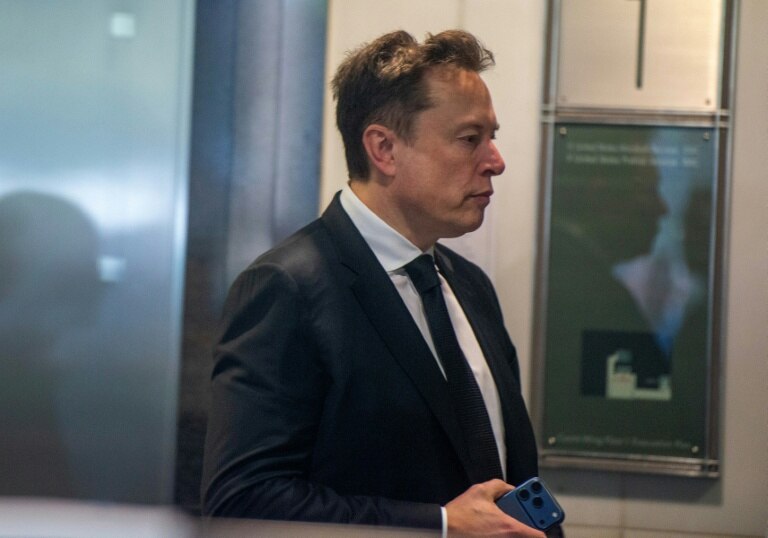
A high-stakes legal battle that could reshape the future of the global artificial intelligence industry kicked off Tuesday in a California federal court, where Tesla and SpaceX CEO Elon Musk went head-to-head with OpenAI leader Sam Altman over allegations of broken founding promises. The Oakland trial, held just across the San Francisco Bay from OpenAI’s headquarters, is already being framed by industry observers as more than a corporate dispute: it is a fundamental clash over who gets to control the rapidly advancing AI sector, and for what ultimate purpose. Opening statements began Tuesday morning, with Musk’s legal team taking the podium first to lay out the tech billionaire’s case against OpenAI and its major backer Microsoft. Lead attorney Steven Molo told the nine-seat jury that the defendants “stole a charity” from its original mission of open, altruistic AI development for the public good. Molo acknowledged Musk’s polarizing public standing, telling jurors “He is a legend, like him or dislike him.” The jury selection process, completed Monday, laid bare the deep divide in American public opinion toward Musk: while the entrepreneur is celebrated globally for revolutionizing electric vehicles and commercial space travel, his sharp shift to conservative politics and public alliance with former President Donald Trump has alienated large swathes of the public. Just ahead of opening remarks, Judge Yvonne Gonzalez Rogers issued a rare public directive to both Musk and Altman: the two rivals would need to limit inflammatory social media posts for the duration of the trial. The order came after Musk unleashed a barrage of critical posts on X — the social platform he owns — on Monday, derisively referring to Altman as “Scam Altman.” What began as a professional partnership between the two men has curdled into open enmity, with Altman now widely regarded as Musk’s most high-profile nemesis in the global AI race. The roots of the feud stretch back to OpenAI’s founding in 2015, when Altman recruited Musk to join as a co-founder. At the time, the organization was billed as a non-profit research laboratory, with a stated mission to develop AI technology that “would belong to the world.” Musk put at least $38 million into the venture in its early days, but the pair split acrimoniously in 2018. One year later, the OpenAI Foundation launched a for-profit commercial subsidiary, and tech giant Microsoft stepped in with a series of large investments that have now grown to a total commitment of $13 billion. Today, Microsoft’s stake in OpenAI is valued at roughly $135 billion, and the company has become a commercial juggernaut worth $80 billion on paper, riding the unprecedented global success of its ChatGPT chatbot, which launched in 2022 and changed the public perception of AI overnight. OpenAI is now preparing for a high-profile initial public offering, though its unusual governance structure — which leaves ultimate control in the hands of a non-profit board, rather than commercial shareholders — has long made investors nervous. After exiting OpenAI, Musk launched his own rival AI research firm, xAI, which he merged into SpaceX in February of this year. SpaceX is currently valued at $1.25 trillion, and its own upcoming IPO, expected to launch in June, is projected to become the largest in U.S. history. In his lawsuit, Musk argues he was deliberately deceived about OpenAI’s commitment to its original non-profit, altruistic mission. Outside the courthouse Monday, OpenAI’s legal team pushed back against the claims, with attorney William Savitt saying co-founders Altman and Greg Brockman “are confident in their position and look forward to the facts being known.” In official court filings, OpenAI has countered that the 2018 split was caused by Musk’s own desire to seize total control of the organization, not any shift away from non-profit principles. The company has dismissed Musk’s lawsuit outright in public posts, calling it “nothing more than a harassment campaign that’s driven by ego, jealousy and a desire to slow down a competitor.” The trial will wrap up with a decision from Judge Gonzalez Rogers by late May, with the jury providing an advisory finding to guide her ruling. Musk’s legal team is asking the court to force OpenAI to reverse its transition to a hybrid commercial structure and return to being a pure non-profit, as well as remove Altman and OpenAI president Greg Brockman from their leadership roles. Though Musk initially sought up to $134 billion in damages, he has since said he would not keep any award, pledging to redirect any monetary settlement to the original OpenAI non-profit foundation. The outcome of the case could force OpenAI to fundamentally restructure its business model, sending ripples through the entire fast-growing global AI industry.