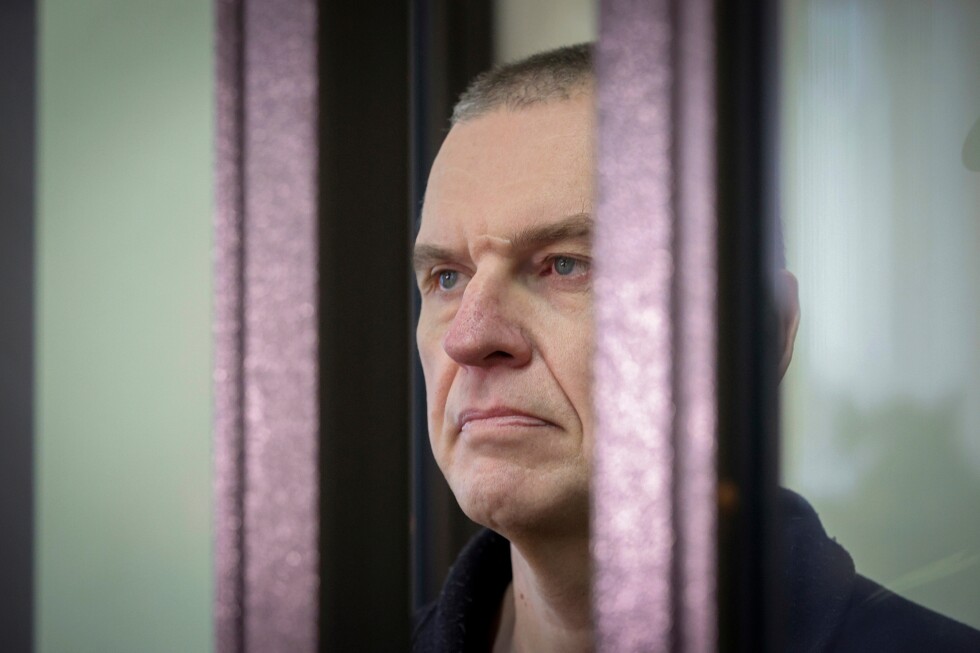
In a landmark breakthrough that signals a potential thaw in icy relations between Belarus and the West, prominent journalist Andrzej Poczobut has walked free from a Belarusian prison as part of a cross-border prisoner swap mediated by the United States, officials from both Belarus and Poland confirmed Tuesday.
The exchange, which involved a total of 10 detainees being released across multiple countries, marks the latest in a string of diplomatic breakthroughs that have unfolded during Donald Trump’s second presidential term, as Belarus’ long-ruling authoritarian leader Alexander Lukashenko pursues improved ties with Western capitals after years of international isolation.
Poczobut, a veteran correspondent for Poland’s leading independent newspaper Gazeta Wyborcza and a high-profile community leader among Belarus’ large Polish ethnic minority, had been serving an eight-year prison sentence following a 2021 conviction that was widely decried across Europe as a politically motivated prosecution. His detention drew sharp condemnation from European governments and human rights organizations, and in recognition of his advocacy for press freedom, he was later awarded the European Union’s highest honor for human rights defenders, the Sakharov Prize.
Details released by diplomatic officials confirm the structured terms of the exchange: Belarus released five detainees, three of whom traveled to Poland, in exchange for three individuals that Poland transferred back to Belarus, with the remaining four freed prisoners involving other participating partner states. John Coale, Trump’s special envoy for Belarus, confirmed the breakdown of releases in a post on X, noting that three Polish citizens and two Moldovan citizens were set free as part of the agreement. “We thank Poland, Moldova, and Romania for their invaluable support in this effort, as well as President Lukashenko’s willingness to pursue constructive engagement with the United States,” Coale wrote.
This prisoner swap builds on a broader diplomatic deal reached earlier this year between Minsk and Washington. In March, Lukashenko ordered the release of more than 250 political prisoners from Belarusian detention facilities, a concession that led to the rollback of some crippling U.S. sanctions imposed on the regime in previous years.
Belarus, a close military and political ally of Russia, has been cut off from much of the international community for decades. Lukashenko has held authoritarian control over the country of 9.5 million people for more than 30 years, and successive rounds of Western sanctions have been levied against his government over systematic human rights abuses, the violent crackdown on opposition protests following disputed elections, and Minsk’s decision to allow Russia to use Belarusian territory as a staging ground for Moscow’s full-scale 2022 invasion of Ukraine.