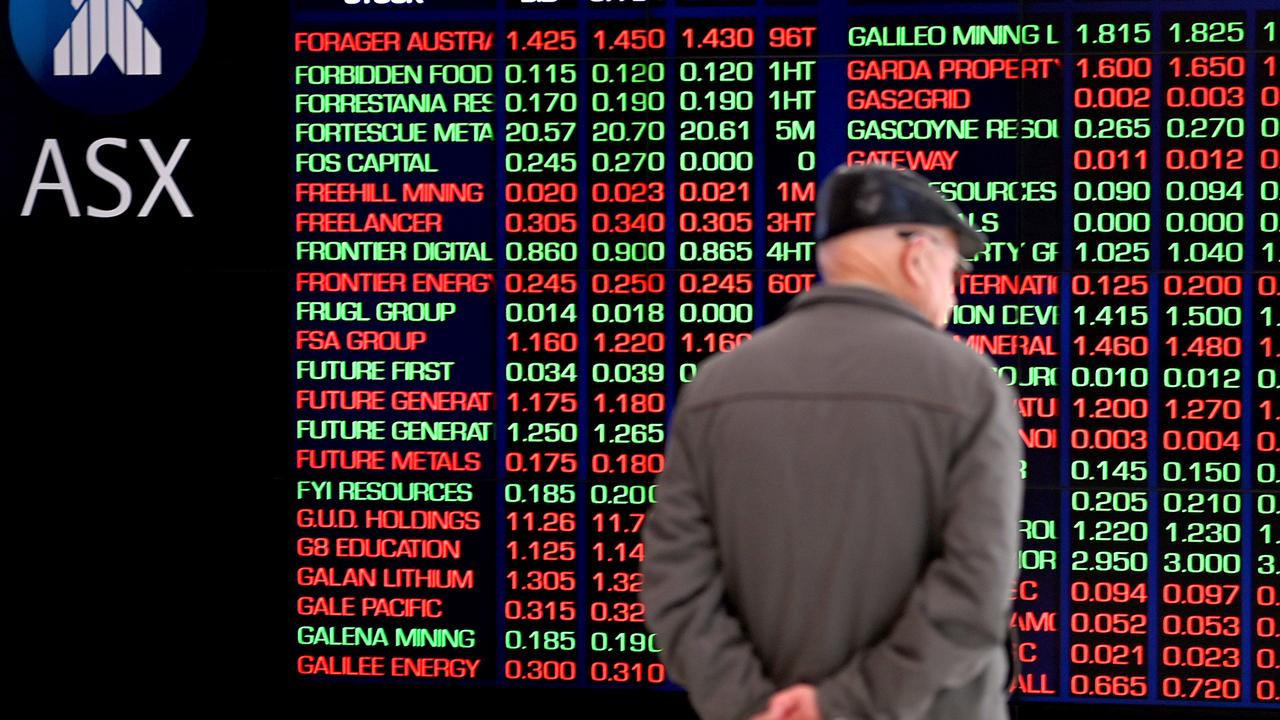
Australia’s benchmark share market extended its downward trajectory into a sixth consecutive trading session on Tuesday, marking its longest losing run in more than two years, as spiking crude oil prices and widespread investor anticipation of a key upcoming inflation reading dragged most sectors lower.
The flagship S&P/ASX 200 shed 55.70 points, a 0.64% decline, to close at 8710.70, while the wider All Ordinaries index followed a similar path, falling 55.80 points or 0.62% to settle at 8935. The Australian dollar also weakened against the U.S. dollar, ending the session at 71.63 U.S. cents. This six-session losing streak is the longest the ASX 200 has recorded since June 2022.
Out of the 11 major market sectors, nine closed in negative territory, with only the energy sector delivering consistent gains, lifted directly by the ongoing rally in global oil prices. International benchmark Brent Crude climbed an additional 2.5% to hit $US110 per barrel on Tuesday, as traders monitored stalled negotiations over a potential U.S.-Iran peace deal that has stoked concerns over global oil supply disruptions.
Major Australian energy names logged solid gains on the back of rising crude prices: Woodside Energy saw its shares rise 0.84% to $32.40, oil and gas producer Santos gained 1.18% to close at $7.74, and fuel retailer Ampol added 1.27% to end the day at $34.26.
These energy gains were more than offset by broad declines across consumer discretionary, healthcare, and materials sectors, as investors braced for Wednesday’s critical inflation data release. Markets fear that a hotter-than-expected inflation reading will give the Reserve Bank of Australia justification to resume its cycle of interest rate hikes, a prospect that has weighed heavily on rate-sensitive sectors.
Leading the declines in consumer discretionary stocks, conglomerate Wesfarmers dropped 2.10% to $72.31, gaming giant Aristocrat Leisure fell 4.21% to $46.20, and Lights Wonder slipped 3.27% to $116.32. In the healthcare space, biotechnology leader CSL extended its recent downward trend, falling 2.22% to $128.90, Sigma Healthcare declined 0.72% to $2.75, and medical technology firm Pro Medicus dropped 1.53% to $136.
AMP’s chief economist Shane Oliver warned that headline inflation is likely to spike to 5% in the March quarter data, driven by surging fuel costs and rising insurance premiums. “We are going to see a spike,” Oliver noted. “On our rough estimates fuel prices rose by 30 per cent in the month of March – a bit less for petrol, a lot more for diesel – and that is on its own going to add more than one percentage point to inflation.”
Major mining stocks also slumped, pressured by rising operational fuel costs and a 1.14% drop in gold prices to US$4628 per ounce. BHP fell 1.30% to $55.43, Rio Tinto slipped 0.47% to $172.12, though Fortescue Metals bucked the broader trend to climb 1.72% to $20.11. Gold producers were hit particularly hard: Northern Star Resources dropped 2.89% to $21.50, Evolution Mining fell 2.98% to $12.69, and Newmont sank 4.50% to $158.69.
Beyond domestic inflation expectations, market volatility continues to be driven by geopolitical tensions in the Middle East, according to Kyle Rodda, senior financial market analyst at Capital.com. Rodda noted that equity prices have fluctuated wildly on unconfirmed reports about potential plans to reopen the Strait of Hormuz, a critical global oil chokepoint. He added that those reports lack credibility, as follow-up negotiations between parties have failed to materialize, former U.S. President Donald Trump has rejected the proposed deal, and military forces continue to build up around the Persian Gulf.
Interestingly, while Australian markets grappled with downside pressure, Wall Street notched another all-time record high during overnight trading on Monday.
In individual company news, Domino’s Pizza Australia saw its shares plunge 10.70% to $15.85, mirroring a selloff in its U.S.-listed parent company after the American fast food giant reported first-quarter sales that missed analyst expectations. The company blamed weak consumer sentiment, intense industry competition, and ongoing cost-of-living pressures for the underperformance. Bega Cheese also dropped 4.28% to $5.59 even though the company did not release any price-sensitive new information to the market. In contrast, Reliance World rallied 3.68% to $3.15 after the firm confirmed its full-year trading outlook for the 2026 fiscal year ending June 30.