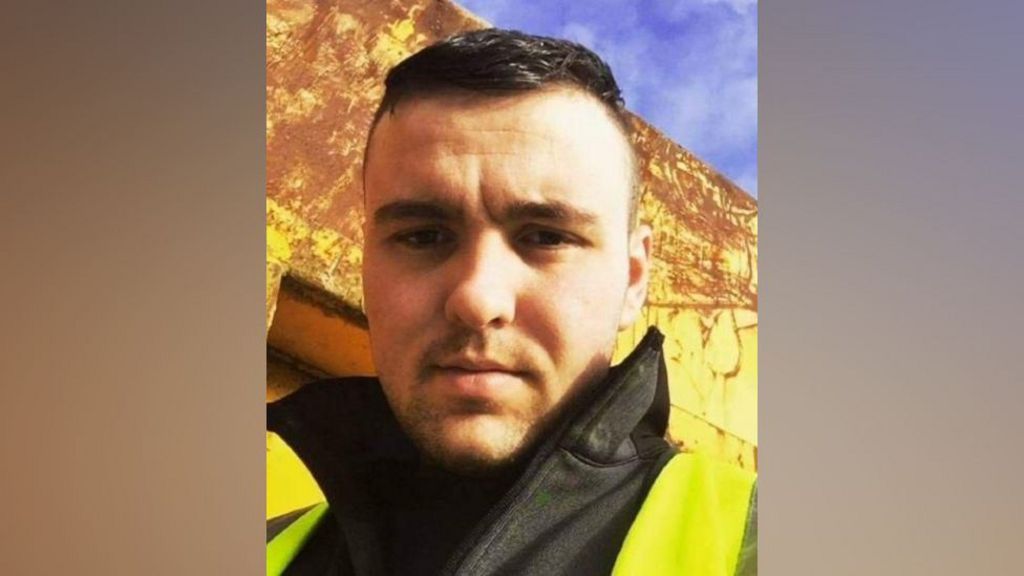
A devastating unprovoked knife attack that claimed the life of a British tourist travelling through regional Australia has concluded with a landmark legal ruling: the perpetrator has been formally declared mentally unfit to stand criminal trial for the killing.
Thirty-year-old Royce Mallett, a loving father of two from County Durham in the United Kingdom, was fatally wounded in the July 8, 2024 attack, which unfolded in the motel car park of the Hume Inn in Albury, a regional town in New South Wales. According to court testimony, Mallett had just climbed into a parked vehicle outside the accommodation when 29-year-old David Summers-Smith reached through the open car window and stabbed him once in the chest without warning or a single word, using a common steak knife as his weapon.
Summers-Smith, who has a long documented diagnosis of schizophrenia, was experiencing acute psychotic episodes at the time of the fatal assault. He entered a formal plea of not guilty to the murder charge on the grounds of severe mental impairment. Following weeks of testimony and review of psychiatric evidence, Supreme Court Justice Dina Yehia delivered her ruling on Tuesday: while the court confirmed Summers-Smith did carry out the fatal stabbing, he cannot be held criminally responsible for his actions due to his mental state.
In her written judgment, Justice Yehia described the single act of violence as “both catastrophic and tragic.” Court records show that immediately after the attack, Summers-Smith fled the scene, but within a short time contacted local police to confess he had stabbed a stranger, and reaffirmed his admission of guilt when officers took him into custody.
Psychiatrists who conducted a formal assessment of Summers-Smith detailed his long and complex mental health history: his schizophrenia and persistent psychotic symptoms have not responded to standard prescription medication, and at the time of the attack, he was receiving court-ordered outpatient mental health treatment in the community. Experts also confirmed that in the weeks leading up to the stabbing, Summers-Smith had been self-medicating with illegal substances, including crystal methamphetamine, commonly known as ice, and cannabis. His psychiatric team noted he held persistent delusional beliefs and had no insight into the severity of his illness or his need for ongoing structured treatment.
The ruling has shone a light on the devastating impact of the attack on Mallett’s grieving family, whose victim impact statements laid bare the lifelong damage the killing has caused. Mallett’s partner, Caitlin O’Keeffe, told the court she now faces the prospect of raising their two young children alone, with the permanent knowledge that the children will grow up without their father’s guidance, love and support. “It affects not just today, but every future moment that he should have been part of, and everyday moments that he’s already missed,” she wrote in her victim statement.
Mallett’s father added that he had lost not only his son, but his closest confidant and “best friend,” telling the court he now struggles to find joy in daily life or any motivation to complete routine tasks. Citing the family’s statements, Justice Yehia noted that Mallett’s loved ones remain unable to comprehend how a person with treatment-resistant severe mental illness was allowed to live and receive treatment in the community.
As part of her ruling, Justice Yehia ordered that Summers-Smith be detained indefinitely in a secured mental health facility. His case will be subject to regular periodic review by the New South Wales Mental Health Review Tribunal, which will monitor his progress and potential recovery, and holds the authority to modify or amend his detention order should his mental health improve significantly.