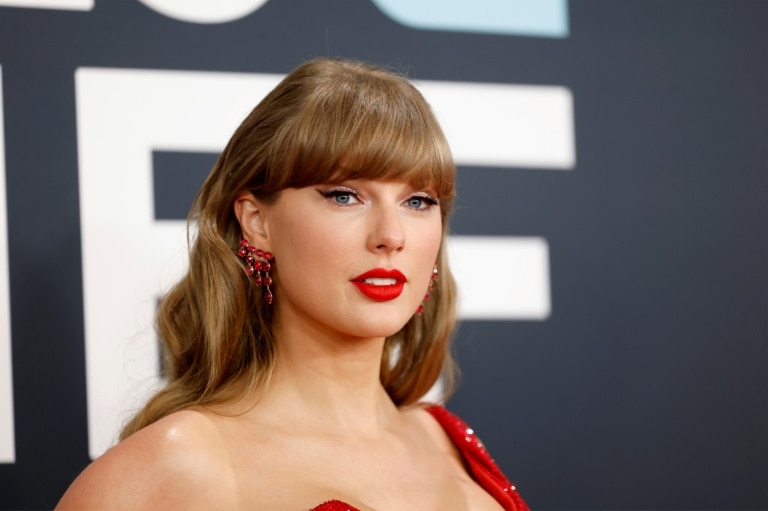
As artificial intelligence cloning technology grows more accessible and unregulated, global pop superstar Taylor Swift has taken official steps to shield her distinctive voice from unauthorized exploitation, joining a small but growing group of high-profile creators fighting to protect their intellectual property in the AI age.
Swift has filed two trademark applications with the United States Patent and Trademark Office (USPTO) centered on her voice, according to filings first uncovered by intellectual property attorney Josh Gerben. The submissions include two separate sound recordings that each open with the singer’s recognizable greeting “Hey, it’s Taylor” before promoting her recently released October album *The Life of a Showgirl*. A third filing submitted Friday includes an official promotional photograph of Swift performing on stage. No additional details about the scope of the requested trademark protections have been made public in the filings, and Swift’s publicist did not immediately provide comment when reached by Agence France-Presse.
Swift’s move mirrors a similar step taken by Academy Award-winning actor Matthew McConaughey in recent years, who filed his own USPTO application to protect his voice from unauthorized AI replication. McConaughey’s filings include audio of two of his most iconic lines: the oft-quoted “Alright, alright, alright!” from his 1993 breakout role in *Dazed and Confused*, as well as his personal mantra “Just keep livin’, right?” alongside a collection of other short signature phrases.
The growing push for voice protection from A-list creators comes as rapid advances in generative AI have drastically lowered the barrier to creating convincing deepfake vocal clones. Where replicating a person’s voice once required hours of source recordings and days of processing, modern AI models can generate a nearly indistinguishable synthetic voice from a 30-second clip in mere seconds.
This technological leap has sparked widespread anxiety among performers and creators, who warn that unregulated AI can duplicate their voice and likeness for unauthorized commercial use, scams, or deepfake content without any compensation or consent. In response, a handful of U.S. state legislatures have begun updating privacy and intellectual property laws to address the gap. Most existing state laws only ban malicious or for-profit unauthorized use, but a small number of regions have adopted broader protections — most notably Tennessee’s 2024 ELVIS Act, named for music icon Elvis Presley, which extends sweeping intellectual property protections to creators’ likenesses and voices.
To date, legal action by performers against unauthorized AI cloning remains relatively rare. The highest-profile case came in 2023, when A-list actor Scarlett Johansson filed a lawsuit against the developer of the Lisa AI app. Johansson alleged the app created an unauthorized AI avatar matching her likeness to use in a commercial advertisement without her permission or compensation.