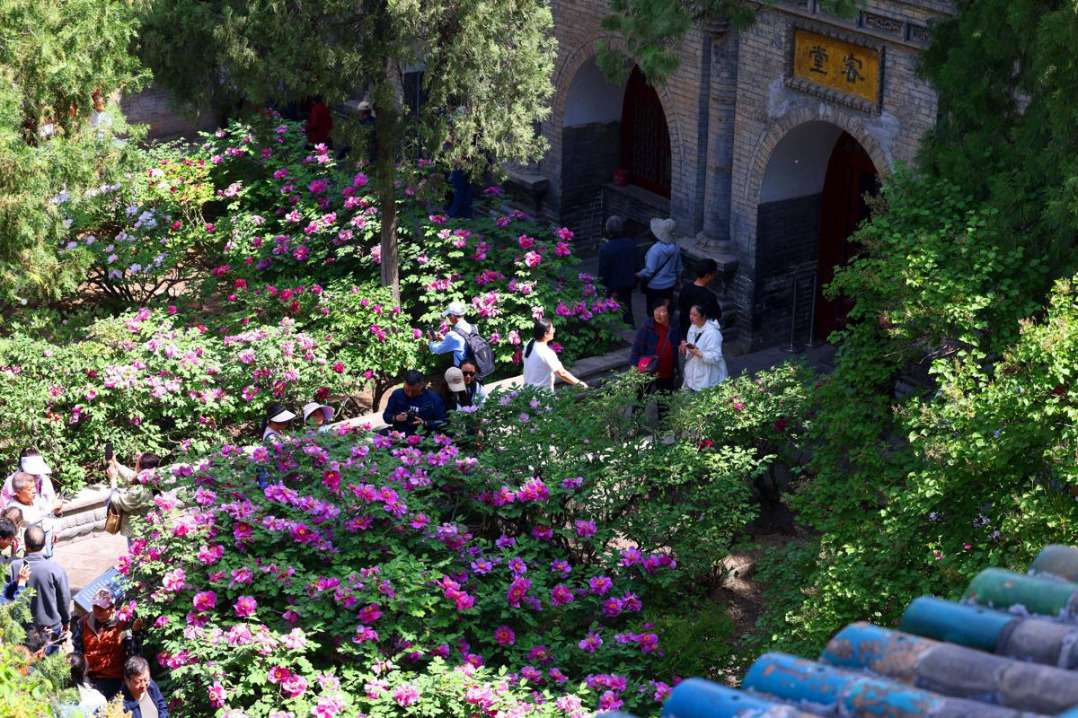
As spring unfolds across northern China, 400-year-old living treasures have turned a historic Taiyuan cultural site into a major tourist draw for the kickoff of the city’s beloved annual peony celebration. The 43rd Taiyuan Shuangta Peony Culture Month officially opened recently at Yongzuo Temple, located within the grounds of Taiyuan’s Shuangta Museum in Shanxi province, and seven ancient peony trees that have stood for more than four centuries have emerged as the event’s unrivaled centerpiece. These centuries-old botanical specimens, which have survived generations of political, environmental and social change, now draw thousands of flower enthusiasts, culture lovers and curious tourists from across the country each spring when they burst into full, vibrant bloom. For many returning visitors, the annual pilgrimage to see these ancient peonies has become a cherished intergenerational tradition. Eighty-two-year-old Hao Guixiang is one such visitor who has maintained a decades-long connection to the trees. She recalled visiting the site to admire the peonies starting from her childhood, and in her later years, she regularly returns to the temple grounds to sketch the plants, drawing natural inspiration from their lush blooms for her traditional Chinese fine brushwork paintings. First-time visitors are equally enchanted by the unique experience of seeing flowers planted centuries before the modern city took shape around them. Thirty-six-year-old Deng Li, who made her first trip to the celebration this year, chose to wear a traditional Tang Dynasty-style Hanfu garment to match the elegant, stately grandeur that peonies have long symbolized in Chinese culture, turning her visit into an immersive celebration of natural beauty and cultural heritage. The annual culture month, now in its fifth decade of operation, has grown from a small local gathering of horticulture fans into a major regional cultural event that highlights Taiyuan’s long history and blend of natural and cultural heritage, supporting local cultural tourism and creating a space for people to connect with both centuries-old natural treasures and living Chinese cultural traditions.