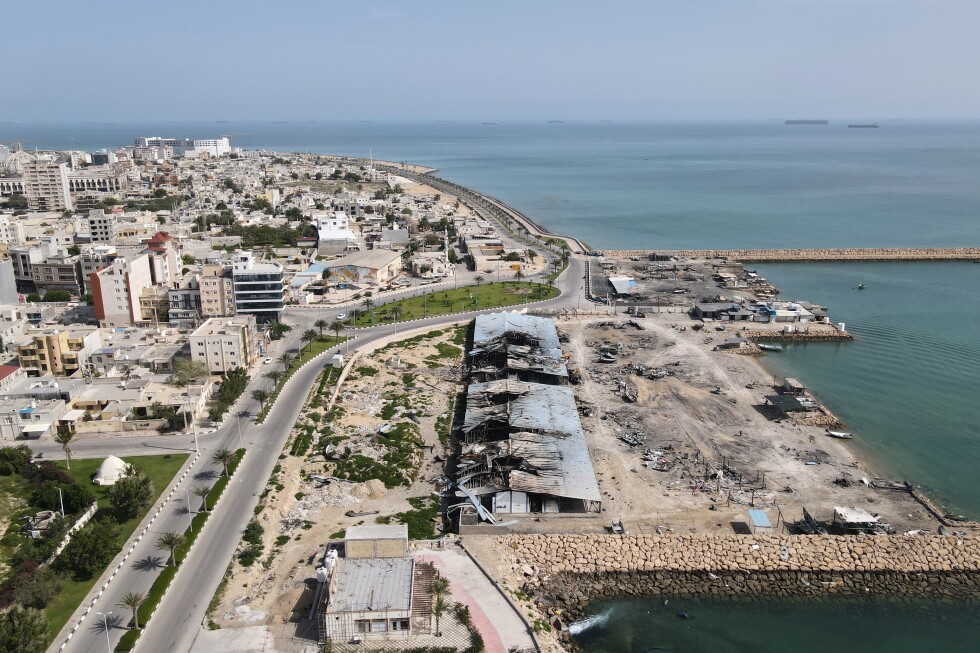
Eight weeks into the ongoing armed conflict between the United States and Iran, more than 20,000 commercial seafarers aboard hundreds of oil tankers, gas carriers and cargo ships remain stranded in the Persian Gulf, trapped by the effective closure of the Strait of Hormuz — the world’s most critical chokepoint for global energy trade. For these trapped crews, every day brings a constant backdrop of geopolitical tension, the threat of attack, and growing uncertainty about when they will be able to return home.
Indian Captain Rahul Dhar, one of the captains holding position with his crew in the gulf, told the Associated Press his team has watched drones and missiles detonate within visible range of their tanker during daily watches. While the crew has worked to maintain normal routines to preserve morale, the unrelenting strain of the situation is starting to take a toll. A fragile, indefinite ceasefire brokered between the U.S. and Iran has brought a cautious glimmer of hope, Dhar said, but no clear timeline for reopening the strait or allowing ships to exit the region has emerged.
“Day to day, we try to keep things normal with open conversations and small team activities that help lift everyone’s spirits,” Dhar explained. “Those moments when we see drones and interceptions near the ship were really difficult, and created real tension for the whole crew. None of us expected to end up in a warlike situation when we set sail.” Reliable connectivity that has allowed the crew to stay in touch with family back home has been their greatest source of strength, he added, with regular calls and messages helping the crew stay grounded amid chaos.
Dhar is far from alone in his experience. Maritime industry data confirms the staggering scale of the crisis: in the week of April 13–19, only 80 vessels total transited the Strait of Hormuz, a sharp drop from the pre-war average of more than 130 transits per day. Normally, roughly 20 percent of the world’s total oil and liquefied natural gas supplies move through the waterway, making its closure a major disruption to global energy markets and trade. Since the conflict began, dozens of commercial vessels have come under attack, and the United Nations has confirmed at least 10 seafarers have been killed in the violence. The ceasefire has not resolved hostilities entirely: the U.S. has maintained its blockade of Iranian ports, while Iran has retaliated by firing on transiting vessels and seizing two commercial ships.
India, the world’s largest supplier of maritime labor, has thousands of its nationals trapped on stranded vessels, most anchored close to major Iranian ports including Bandar Abbas and Khorramshahr. Manoj Kumar Yadav, a representative with the Forward Seamen’s Union of India, told AP that explosions have occurred as close as a few hundred meters from some anchored ships, forcing crews to witness blasts directly from their decks. Many of the trapped sailors are on their first overseas voyage, Yadav said, leaving them unprepared for the chronic fear and isolation of their current situation. His union receives daily distress calls from trapped crews and their worried families back in India.
Beyond the threat of violence, many crews are facing acute shortages of basic necessities including food and drinking water, forcing ships to implement strict rationing of supplies. Internet connectivity is often spotty or disrupted entirely by signal jamming, and when contact with home is possible, sailors face exorbitant roaming charges for just a few minutes of conversation. Most Indian sailors in the region are beyond the reach of coordinated government evacuation efforts; as of last week, India’s shipping ministry confirmed only 2,680 sailors have been evacuated since the conflict began. Families of trapped seafarers have grown increasingly anxious, mounting calls for urgent action to secure the safe return of their loved ones. The International Transport Workers’ Federation confirmed earlier this month that it has received hundreds of requests for urgent assistance, including pleas for emergency food supplies, from trapped crews across the gulf.
For many seafarers, the greatest burden of the crisis is the pervasive uncertainty. Reza Muhammad Saleh, an Indonesian chief officer on a Greek-owned cargo ship that has been stranded off Oman for more than a month, described how a drone exploded near his port of anchorage just days after the crew arrived in early March, with two additional follow-up incidents forcing the entire crew to repeatedly evacuate to reinforced bunkers. No crew members were injured in the attacks, but the constant unpredictability has worn on the team.
“The biggest problem is the uncertainty. We don’t know when Hormuz will be open again,” Saleh said. His 24-person multinational crew, which includes sailors from Indonesia, Arab states, India and Ethiopia, normally transports iron ore across Gulf states and transits Hormuz one to two times per month. Now, any crossing requires written official clearance from Iran, a requirement that makes shipping companies unwilling to take the risk of moving the vessel. Even experienced crews used to working in high-risk regions have been shaken by near-daily missile strikes and persistent GPS disruptions that force crews to navigate manually, Saleh added: “Sometimes we think it’s safe, then suddenly it’s not. Today we’re safe. Tomorrow, nobody knows.”
Shipping company leaders report that while limited crew rotations have been possible, most replacement crews are unwilling to travel to the conflict zone, a choice companies say they respect. Fleet Management Limited, which manages more than 400 seafarers across dozens of stranded vessels in the region, checks food stock levels regularly and arranges for emergency resupply by moving ships to the nearest safe points to pick up fresh provisions, said CEO Captain Rajalingam Subramaniam. Most trapped seafarers have been stuck in the gulf since the war began, and many never agreed to work in a combat zone when they signed their contracts.
“For mariners who did not sign up to be in warlike area, they also need to be respected so that they do not become the unintended collateral,” Subramaniam said. Even during the ceasefire, multiple vessels that attempted to cross Hormuz were fired on or forced to turn back, so Fleet Management has not allowed any of its managed ships to attempt a crossing. Germany’s Hapag-Lloyd, one of the world’s largest container shipping firms, has 150 sailors trapped on six vessels near the strait, and stays in daily contact with trapped crews, according to spokesman Nils Haupt. While limited rotations have occurred, months of isolation have left crews facing crippling monotony.
The International Maritime Organization (IMO), the United Nations’ global shipping regulatory body, and other international groups have called for the establishment of a safe transit corridor for commercial vessels in the strait. Despite Iran’s claims that it has opened the strait to non-hostile vessels and its demand to collect passage tolls from commercial ships, almost all vessels remain blocked. Iran has placed naval mines in the waterway, while the U.S. is currently conducting mine-clearing operations and has issued orders to attack any Iranian boats laying mines. “Under heightened risks of mines and attacks on ships, there is no safe transit anywhere in the Strait of Hormuz,” said IMO Secretary-General Arsenio Dominguez.
Industry leaders warn the ongoing crisis could worsen an already severe global shortage of skilled seafarers. Trapping seafarers against their will in conflict zones is not a new problem: the COVID-19 pandemic created widespread crew change crises, followed by Russia’s invasion of Ukraine, and ongoing Houthi rebel attacks on commercial shipping in the Red Sea. Subramaniam warned that even after the Iran conflict ends and the strait reopens, fewer skilled workers will be willing to work on commercial vessels that travel through high-risk Middle Eastern regions, exacerbating the existing global labor shortfall.
Reporting for this article was contributed by Associated Press journalists across New Delhi, Berlin, Paris, Hong Kong and Jakarta.