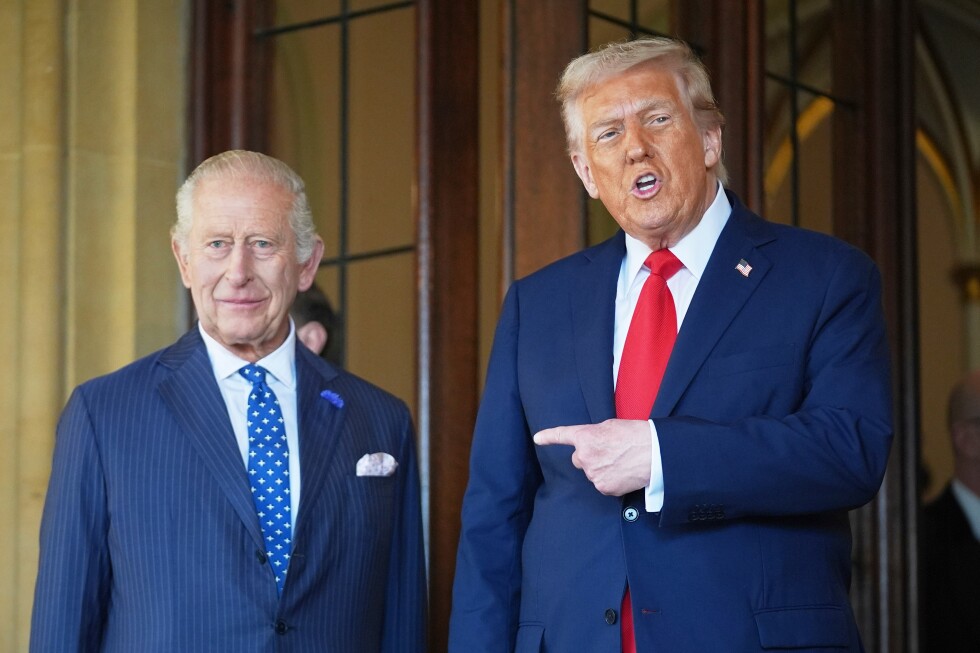
Two hundred and fifty years after the 13 American colonies severed formal political ties with the British Empire under King George III, George III’s direct descendant King Charles III will touch down in Washington, D.C. on Monday for a landmark four-day state visit — one unfolding at a moment of unprecedented strain across the Atlantic and heightened focus on security protocols.
Just two days before the king’s arrival, a shooting incident at a Washington-area dinner attended by U.S. President Donald Trump prompted urgent last-minute security reviews of the itinerary, which is designed to mark the 250th anniversary of U.S. independence and honor the longstanding “special relationship” between the two nations. Buckingham Palace quickly confirmed that the king was deeply relieved to learn Trump, First Lady Melania Trump, and all other attendees escaped unharmed, and that after a full security assessment, the visit would go forward as originally scheduled.
Political tensions have loomed over the trip long before the security scare. A growing rift between the Trump administration and the U.K.’s Labour government led by Prime Minister Keir Starmer, rooted primarily in disagreements over U.S. military action against Iran, has elevated the political stakes of the royal visit. In recent weeks, Trump has launched repeated public attacks on Starmer, criticizing the prime minister for refusing to join U.S. strikes on Iran and dismissing him as a far cry from Winston Churchill — the World War II leader who first coined the term “special relationship” to describe the bilateral bond.
This friction with the U.K. is part of a broader rift between Trump and NATO allies, whom the president has publicly derided as “cowards” and “useless” for declining to participate in anti-Iran military action. Adding to the unease, a leaked Pentagon email recently suggested the U.S. could revisit its longstanding position backing British sovereignty over the Falkland Islands — the South Atlantic territory that sparked a 1982 war between the U.K. and Argentina.
Despite these public disagreements, Trump has repeatedly emphasized that political tensions will not overshadow the royal visit, noting the British monarch holds no formal governing power and bears no responsibility for NATO policy disputes. The president has spoken in consistently glowing terms about King Charles, referring to him as a personal friend and a “great guy,” and has highlighted his own landmark September 2024 state visit to the U.K. — an unprecedented second state visit for a U.S. president, hosted by the royal family at Windsor Castle with full ceremonial pomp including scarlet guardsmen, military brass bands, and a state banquet. Starmer personally delivered the king’s invitation for this return visit to the Oval Office just five weeks after Trump’s second inauguration, a deliberate public outreach effort to mend bilateral relations.
“President Trump has always had great respect for King Charles, and their relationship was further strengthened by the president’s historic visit to the United Kingdom last year,” White House spokesperson Anna Kelly told the Associated Press. “The president looks forward to a special visit by Their Majesties, which will include a beautiful state dinner and multiple events throughout the week.” Trump himself told the BBC he believes the king’s visit “absolutely” can help repair frayed transatlantic ties, adding, “He’s fantastic. He’s a fantastic man. Absolutely the answer is yes.”
Not all stakeholders have supported proceeding with the visit, however. Some U.K. politicians have publicly called for the trip to be canceled, warning it puts the monarchy in an awkward and potentially embarrassing position amid Trump’s controversial rhetoric. Those concerns were amplified after recent public broadsides Trump launched against Pope Leo XIV. Ed Davey, leader of the U.K.’s centrist opposition Liberal Democrats, labeled Trump “a dangerous and corrupt gangster” in remarks to the House of Commons earlier this month and urged the government to scrap the itinerary. “I really fear for what Trump might say or do while our king is forced to stand by his side,” Davey said. “We cannot put His Majesty in that position.” Starmer has pushed back against those calls, defending the visit by noting that the monarchy has long built cross-generational connections that bolster critical bilateral ties.
Another shadow hanging over the visit is the ongoing controversy surrounding the king’s younger brother, Prince Andrew, who was stripped of his honorary royal titles and exiled from public life over his long-standing friendship with convicted sex offender Jeffrey Epstein. Andrew has repeatedly denied any criminal wrongdoing, but survivors of Epstein’s abuse have publicly called on King Charles to meet with them during the U.S. trip, a step that observers widely expect the king will not take.
This visit marks a historic first for King Charles: while he has traveled to the U.S. 19 times previously, this is his first official state visit to the country since he ascended the throne following Queen Elizabeth II’s death in 2022. The 77-year-old monarch, who revealed an undisclosed cancer diagnosis in early 2024, will be accompanied throughout the four-day trip by Queen Camilla. Beyond the core Washington engagements — which include a private tea with the Trumps, a White House garden party, a formal state dinner, and a one-on-one bilateral meeting with President Trump — the royal couple will travel to New York to visit the National September 11 Memorial and Museum, then to Virginia for a public 250th anniversary “block party” where the king will meet Indigenous leaders working on nature conservation, a policy issue he has championed for decades.
The diplomatic centerpiece of the visit will come on Tuesday, when King Charles addresses a joint meeting of the U.S. Congress. He will be only the second British monarch ever to receive this honor, following Queen Elizabeth II’s 1991 address to Congress. On that occasion, the late queen praised liberal democratic values, rejected the idea that “power grows from the barrel of a gun,” and celebrated the shared cultural and ethnic diversity of both nations.
As University of Exeter American history professor Kristofer Allerfeldt notes, the two governments hold sharply different objectives for the high-profile visit. “For Charles, the trip is about reinforcing long-term ties, showcasing the monarchy’s soft power and reminding the world that Britain still carries diplomatic weight,” Allerfeldt explained. For Trump, by contrast, the event is largely a media spectacle focused on ceremonial optics, resembling a meeting “of two gilded monarchs.”
While the king’s long-held policy priorities — from climate action to interfaith harmony — stand in clear contrast to Trump’s policy agenda, observers do not expect him to openly highlight those differences. Instead, Allerfeldt suggests the monarch will likely use subtle rhetoric to convey his perspective in the congressional address. “He does have an unorthodox way of looking at the world, and I think maybe he can actually have something valid to say when he addresses Congress,” Allerfeldt said.
More broadly, the visit underscores the enduring role of the British monarchy as a tool of soft power, more than three centuries after the crown lost all formal political power in the U.K. Elected governments continue to deploy royal state visits to smooth strained international relationships and signal the U.K.’s core global priorities, a tradition King Charles is carrying forward with this trip.